
Yes, Owala is safe in the conventional sense — no lead in your drink, BPA-free materials, food-grade 18/8 stainless steel body. The real story is the FreeSip’s polypropylene (#5 plastic) lid: its built-in straw, flip spout, and locking mechanism have more moving plastic parts than any other major water bottle brand’s lid, creating more daily friction — and more potential microplastic shedding — than a simpler cap. Great for cold water, best approached with a few small habits for hot drinks.
The Owala FreeSip surged into mainstream popularity because of its clever two-in-one lid: press the button and you can sip through the integrated straw or tip the bottle back and drink from the spout. It is genuinely one of the most convenient water bottle designs on the market. That convenience, however, comes from a lid mechanism that is more mechanically complex — and more plastic-intensive — than anything Stanley, Hydro Flask, or Klean Kanteen currently offers.
Here is the complete, honest safety breakdown: what the research actually says about lead, BPA, and microplastics in the Owala, with specific model comparisons and practical guidance for people who already own one.
Is Owala lead-free?
Yes — no lead reaches your drink. Like every major vacuum-insulated stainless bottle, Owala uses a small lead-containing pellet during manufacturing to seal the vacuum at the base of the double-walled body. The pellet is then covered permanently by a stainless steel base cap. Under normal use, the lead is sealed inside the base, not in contact with your beverage or with you.
This is the same manufacturing method used by Stanley, Hydro Flask, Klean Kanteen, and essentially every brand that makes a vacuum-insulated double-walled steel bottle. It became widely discussed after the 2024 Stanley scare, but the method predates that controversy by decades and has not been found to result in lead leaching into beverages. Consumer Reports and independent labs have tested the water inside these bottles and found no detectable lead.
The one real caveat applies to all brands equally: if the stainless steel base cap becomes damaged, cracked, or falls off, the lead pellet underneath could become exposed. This is not a normal use scenario, but it is why you should not drop these bottles repeatedly onto hard surfaces, pry at the base cap, or give them to young children who might mouth the underside. If your base cap ever comes loose, stop using the bottle and contact the manufacturer.
Do not pry at or intentionally remove the stainless steel cap on the bottom of any vacuum-insulated bottle — Owala, Stanley, Hydro Flask, or any other brand. That cap covers the vacuum seal. Keep it intact, and the lead pellet beneath it will never touch you or your drink.
Is Owala BPA-free — and what plastic does it actually use?
Yes, Owala is BPA-free and BPS-free. The body is 18/8 food-grade stainless steel. The lid components — the flip spout cover, the flip spout itself, the integrated straw, the locking ring, and all internal mechanisms — are made from polypropylene (PP, plastic #5). Polypropylene is widely used in food-contact applications, does not contain bisphenols, and does not leach the phthalates or hormone-disrupting chemicals associated with older plastics like polycarbonate (#7).
However, “BPA-free” is not the same as “particle-free.” The current and growing concern with plastic water bottle components is not primarily chemical leaching — it is physical particle shedding. Polypropylene, like all plastics, sheds microplastic particles when it is abraded, when it undergoes mechanical stress through repeated use, and when it is exposed to heat. The recycling number on a lid tells you about its chemical composition; it tells you nothing about how many particles it sheds each day.
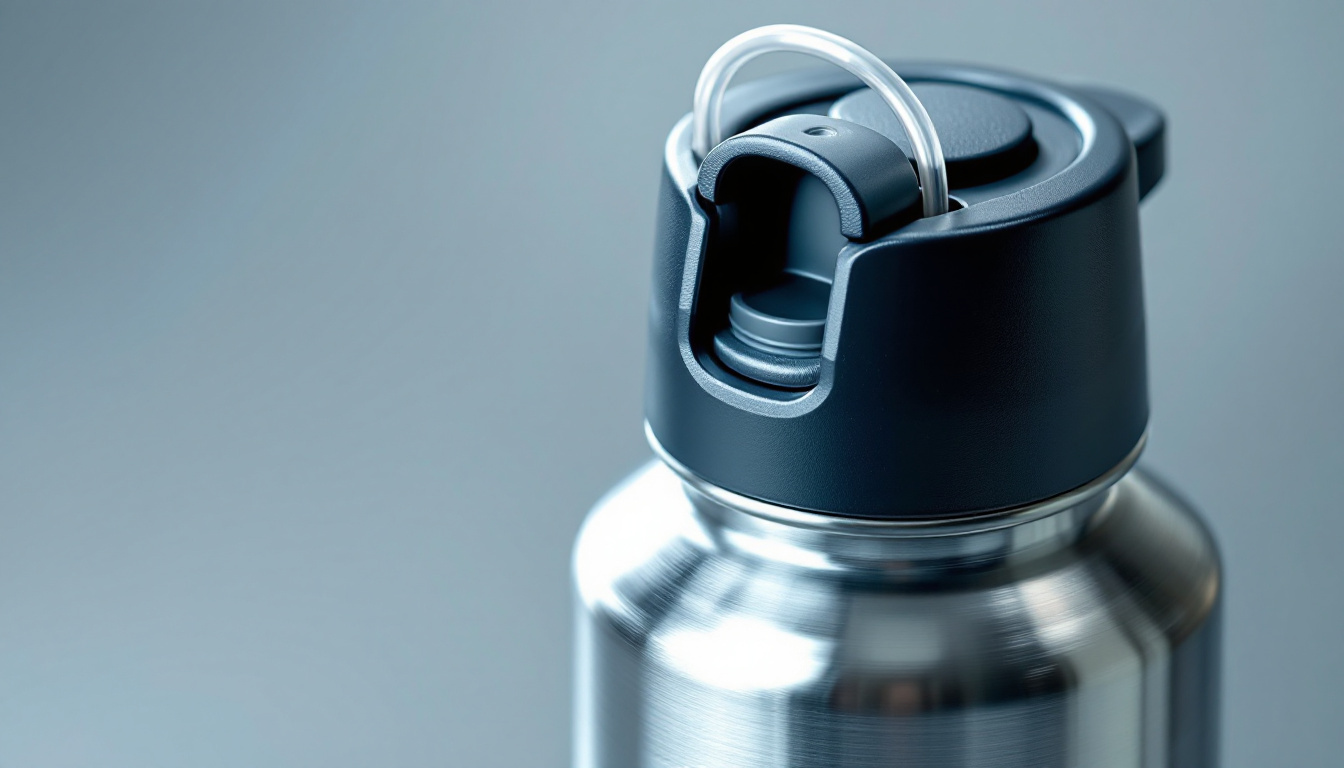
Does the Owala FreeSip leach microplastics?
To a degree, yes — and this is the key issue that most “is it safe?” searches never fully address. The stainless steel body sheds zero microplastics; steel is completely inert at ambient and drinking temperatures. The polypropylene lid and straw are where particle shedding occurs, driven primarily by two forces: mechanical friction and heat.
What makes the FreeSip specifically notable is that its lid has more moving plastic parts than the lid of any other major water bottle brand. Every press of the button, flip of the spout cover, sip through the straw, and engagement of the lock involves polypropylene surfaces rubbing against each other or against the bottle neck. Research published in the Journal of Water and Health found that the simple act of opening and closing a plastic bottle cap can release on the order of hundreds of microplastic particles per interaction. A FreeSip lid is activated and sipped through many more times per day than a simple Stanley Quencher lid — that is the trade-off behind its convenience.
To be clear about scale: the number of particles shed by even a heavily used Owala lid is small compared to the microplastic load found in bottled water (roughly 240,000 nanoplastic particles per liter in PNAS 2024). Moving from disposable plastic bottles to any stainless bottle — including an Owala — still cuts your daily exposure dramatically. The lid is where the remaining, smaller exposure lives after you’ve made that switch.
Is Owala safe for hot drinks?
The stainless steel body handles hot drinks exactly as well as any other steel bottle — the metal is inert at coffee, tea, and soup temperatures. The concern is the polypropylene lid and integrated straw. Heat is one of the two primary drivers of plastic particle and chemical release: a hot liquid sitting in contact with a polypropylene lid and straw sheds measurably more than cold water does.
The Owala’s lid design compounds this slightly: when you fill the bottle with hot coffee and tip it back to drink, the hot liquid flows up through and past the integrated straw and into contact with the lid’s underside. That is precisely the combination — elevated temperature, plastic contact, and mechanical sipping action — that maximizes shedding. For cold water, the microplastic contribution from the Owala lid is modest. For a daily hot coffee, it is the part of the bottle you would most want to eliminate.
Practical guidance: if you use your Owala primarily for cold water and room-temperature beverages, the lid’s plastic is a background concern, not an urgent one. If you use it every morning for hot coffee, consider either switching to a bottle with a plastic-free lid for that drink, or using the chug opening (if your model has one) rather than the straw to reduce how much plastic the hot liquid contacts on its way to your mouth.
Which Owala model is safest?
Not all Owala models are created equal when it comes to the lid. The FreeSip — Owala’s flagship — is the most mechanically complex. The Owala Twist has a simpler design: the lid screws off rather than flipping, there’s no integrated straw, and the cap has fewer moving parts that press together daily. Fewer moving parts means fewer daily friction events means fewer microplastic particles released per use cycle.
| Owala Model | Lid Type | Integrated Straw | Moving Plastic Parts | Microplastic Risk |
|---|---|---|---|---|
| FreeSip | Flip spout + button | Yes (built-in) | High (button, flip cover, straw, lock) | Highest of Owala lineup |
| Twist | Screw-off cap | No | Low (cap only) | Lower than FreeSip |
| Sport | Flip spout, no lock | No | Moderate (flip top) | Moderate |
If you’re buying new and want the Owala brand but less plastic engagement, the Twist is the right choice. If you already own a FreeSip, the model isn’t dangerous — it just has a more plastic-intensive lid than simpler alternatives. The body is excellent either way.
Owala FreeSip 32 oz Stainless Steel
The most popular size in Owala’s lineup. 18/8 stainless body, BPA-free polypropylene FreeSip lid with built-in straw and flip spout. Best for cold water and everyday carry. If you primarily drink cold beverages, this is a very solid bottle; the lid is the trade-off vs simpler designs. Hand-wash the lid; avoid putting very hot drinks against the straw.
Best-Selling Size Complex Plastic LidCheck Price on Amazon →
✓ Ships free with Prime · Free returns · Amazon A-to-z purchase guarantee (on eligible items)
Owala FreeSip 40 oz Stainless Steel Tumbler
The larger tumbler format for all-day hydration. Same FreeSip lid mechanism as the 32 oz — same safety profile. The bigger capacity means fewer lid actuations per oz of water consumed, which is a minor practical advantage. Same advice applies: great for cold drinks, use the spout not the straw for hot beverages, hand-wash the lid.
High Capacity Complex Plastic LidCheck Price on Amazon →
✓ Ships free with Prime · Free returns · Amazon A-to-z purchase guarantee (on eligible items)
Owala Twist 24 oz Insulated Stainless Steel
The best Owala model from a microplastic standpoint. Simpler screw-off lid, no integrated straw, fewer moving plastic components. You lose the FreeSip’s one-handed convenience but gain a significantly less plastic-intensive drinking experience. Recommended for hot drinks and for anyone actively trying to minimize lid-derived microplastic exposure while staying with the Owala brand.
Lowest Plastic of Owala Lineup Simpler LidCheck Price on Amazon →
✓ Ships free with Prime · Free returns · Amazon A-to-z purchase guarantee (on eligible items)
How does Owala compare to Stanley, Hydro Flask, and Klean Kanteen?
All four brands share the same stainless steel body and the same basic safety profile on lead — none leaches lead into the drink. The only meaningful safety difference between them is the lid. See our full head-to-head comparison of Owala vs Stanley vs Hydro Flask vs Klean Kanteen for the complete verdict, but the key points are:
- Owala FreeSip has the most moving plastic parts in the lid of any of the four brands — convenient, but the highest plastic-lid interaction of the group.
- Stanley Quencher has a polypropylene lid and a separate plastic straw — similar plastic exposure to the Owala but with simpler mechanics.
- Hydro Flask Standard Mouth with a Flex Lid is one of the simpler polypropylene caps in the lineup — a basic screw-on with a silicone loop, fewer mechanical interactions, and no built-in straw.
- Klean Kanteen with the all-stainless Steel Loop Cap is the outlier — zero polypropylene in the drinking path. A stainless body plus a stainless cap is the closest thing to a plastic-free drinking experience in the mainstream water bottle market.
Want zero plastic at your lips?
Every Owala, Stanley, and Hydro Flask lid introduces some polypropylene into your daily drinking. The MiiR Wide Mouth with a simple lift lid and the Klean Kanteen with the all-steel Loop Cap are the most practical plastic-free alternatives.
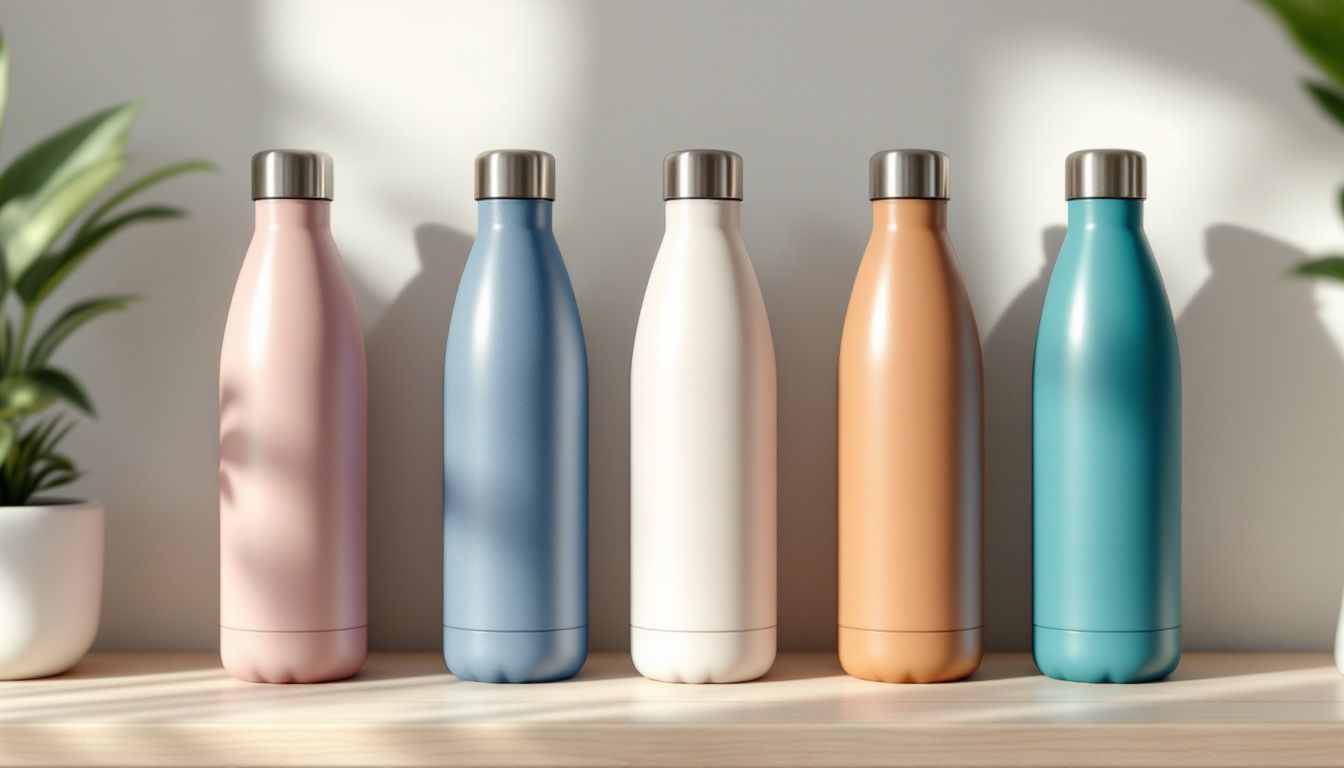
MiiR Wide Mouth 32 oz Insulated Stainless Steel
A premium American-designed stainless bottle with a simple, clean wide-mouth lid that uses far less polypropylene than the Owala FreeSip. MiiR is a certified B-Corp with strong quality standards. The wide-mouth design lets you sip directly from steel — only the small lid seal touches your drink. An excellent alternative for those who want Owala-level everyday carry with significantly less plastic at the drinking point.
B-Corp Certified Simpler LidCheck Price on Amazon →
✓ Ships free with Prime · Free returns · Amazon A-to-z purchase guarantee (on eligible items)
Hydro Flask Wide Mouth 32 oz with Flex Straw Lid
The 32 oz Wide Mouth Hydro Flask with the Flex Straw Lid is a popular Owala competitor. The lid uses a removable straw (unlike the Owala’s built-in one), which means you can swap it for a silicone or stainless straw and eliminate plastic from the drinking path almost entirely. The lid mechanism itself is simpler than the FreeSip. The body is the same 18/8 stainless as all the top brands. Good for people who want a straw bottle with lower plastic footprint.
Replaceable Straw Simpler Than FreeSipCheck Price on Amazon →
✓ Ships free with Prime · Free returns · Amazon A-to-z purchase guarantee (on eligible items)
Yeti Rambler 36 oz Straw Bottle Stainless Steel
The Yeti Rambler Straw Bottle uses a separate, removable plastic straw inside a polypropylene chug cap — mechanically simpler than the Owala FreeSip but still a plastic straw. The advantage over the Owala is that Yeti’s straw is removable and replaceable. You can swap in a stainless or silicone straw and bring the plastic-in-the-drinking-path to near zero. Yeti’s 18/8 stainless body and No Sweat Design make it a premium-feeling alternative for people comparing this size range to Owala’s 40 oz.
Replaceable Straw Premium Build QualityCheck Price on Amazon →
✓ Ships free with Prime · Free returns · Amazon A-to-z purchase guarantee (on eligible items)
If you already own an Owala, what should you do?
Nothing dramatic. The Owala is not dangerous. Lead is not in your drink. BPA is not in your drink. The lid sheds some microplastic particles over time, but it is still far better than drinking from single-use plastic bottles every day. Microplastics in disposable water bottles are measured in hundreds of thousands of particles per liter — an Owala lid is a small fraction of that.
A few low-effort habits get you most of the remaining benefit without buying a new bottle:
- Hand-wash the lid in lukewarm water. Running polypropylene through a hot dishwasher — hot water, high-pressure spray, chemical detergent — accelerates plastic degradation significantly. A gentle hand-wash extends lid life and reduces shedding.
- Don’t use the straw for very hot drinks. If you fill your Owala with hot coffee or tea, sip from the spout opening (or remove the lid entirely) rather than drawing hot liquid through the built-in plastic straw. The body handles heat fine; the straw is the plastic concern.
- Replace the lid if it’s worn or cloudy. A visibly aged, scratched, or discolored lid sheds significantly more particles than a fresh one. Replacement lids are available from Owala at modest cost and are worth swapping annually with heavy daily use.
- Consider a stainless steel straw insert. Some users find third-party stainless or silicone straw inserts that fit the FreeSip’s straw opening. If yours accepts one, swapping it eliminates the plastic straw from the drinking path entirely without buying a new bottle.
“The Owala body solved the single biggest microplastic source you drink from every day. The lid is a smaller, manageable problem — a few habits and you’ve handled it.”
Want the Complete Microplastic Reduction Guide?
Your water bottle is one daily touchpoint. The Complete Plasticproof Guide covers 80+ product recommendations across every room in your home, backed by 47+ peer-reviewed studies. Swap the things that matter most first.
The honest verdict on Owala safety
Is the Owala safe? On lead: completely. On BPA: completely. On microplastics: it is a good bottle with one specific trade-off. The 18/8 stainless body is excellent — inert, durable, and far better than a disposable plastic bottle. The FreeSip lid’s combination of a built-in straw, a flip spout, a button mechanism, and a locking ring is the most complex plastic lid in the major-brand water bottle market, which translates into more daily plastic-on-plastic contact than competing lids.
If you want to keep your Owala, use it primarily for cold drinks, hand-wash the lid, and replace it when it shows wear. If you’re buying new and microplastic reduction is the priority, look at the Owala Twist (simpler lid), the MiiR Wide Mouth, or — if you want zero plastic at your lips — the Klean Kanteen with the all-stainless Loop Cap. For a full comparison of every major stainless bottle brand, see our safest water bottle brands guide.
Frequently Asked Questions
Yes. Like all vacuum-insulated stainless bottles, Owala uses a lead pellet under the base cap to seal the vacuum — but the pellet is covered by a steel cap and never contacts your beverage. Consumer testing has found no detectable lead leaching into the drink. Keep the base cap intact and you have no lead exposure from this bottle.
Yes, Owala is BPA-free and BPS-free. The body is 18/8 stainless steel. The lid and straw are polypropylene (#5), which does not contain bisphenols. However, BPA-free does not mean microplastic-free: polypropylene still sheds particles through mechanical use. The Owala is chemically safe; its lid is where physical particle exposure occurs.
The stainless steel body does not. The FreeSip’s polypropylene lid — with its built-in straw, flip spout, button, and lock — is where microplastic particles can shed. The complex lid mechanism means more daily plastic-on-plastic friction than simpler lids. Research on cap manipulation has found hundreds of particles can shed per use event. This is far smaller than the particle load in bottled water, but it is the remaining exposure vector in an otherwise good bottle.
The steel body is perfectly safe for hot drinks. The polypropylene lid and built-in straw shed more microplastics when in contact with hot liquids, because heat accelerates plastic degradation. For hot coffee or tea, use the spout opening instead of the straw, or switch to a bottle with a plastic-free lid. Cold water is the ideal use case for the FreeSip.
The Owala Twist. It has a simpler screw-off lid with no integrated straw and fewer moving plastic components than the FreeSip. Fewer daily mechanical interactions means fewer opportunities for plastic particle release. If you want an Owala brand bottle with less plastic engagement, the Twist is the right choice over the FreeSip.
Both have identical 18/8 stainless bodies and no lead in the drink. The difference is the lid. Klean Kanteen offers an all-stainless Steel Loop Cap with zero polypropylene in the drinking path. The Owala FreeSip has the most complex polypropylene lid of any major brand. For minimum microplastic exposure, Klean Kanteen with the steel cap wins clearly. If you value the Owala’s convenience for cold drinks, it is a reasonable bottle — but it does not compete with Klean Kanteen on lid purity.
Sources
- Winkler A, et al. “Does mechanical stress cause microplastic release from plastic water bottles?” Journal of Water and Health, 2019–2022.
- Qian N, et al. “Rapid single-particle chemical imaging of nanoplastics by SRS microscopy.” Proceedings of the National Academy of Sciences, 2024. (240,000 nanoplastic particles per liter in bottled water)
- Consumer Reports. “Are Stanley Cups Safe? What to Know About the Lead Concerns.” 2024. (Methodology also applicable to comparable vacuum-insulated bottles from other brands.)
- Mason SA, et al. “Synthetic Polymer Contamination in Bottled Water.” Frontiers in Chemistry, 2018.
- FDA. “Food Contact Substances: Polypropylene.” Code of Federal Regulations Title 21.
- Owala. Brand safety certifications and material disclosures, 2024. (BPA-free, BPS-free, food-grade 18/8 stainless body.)