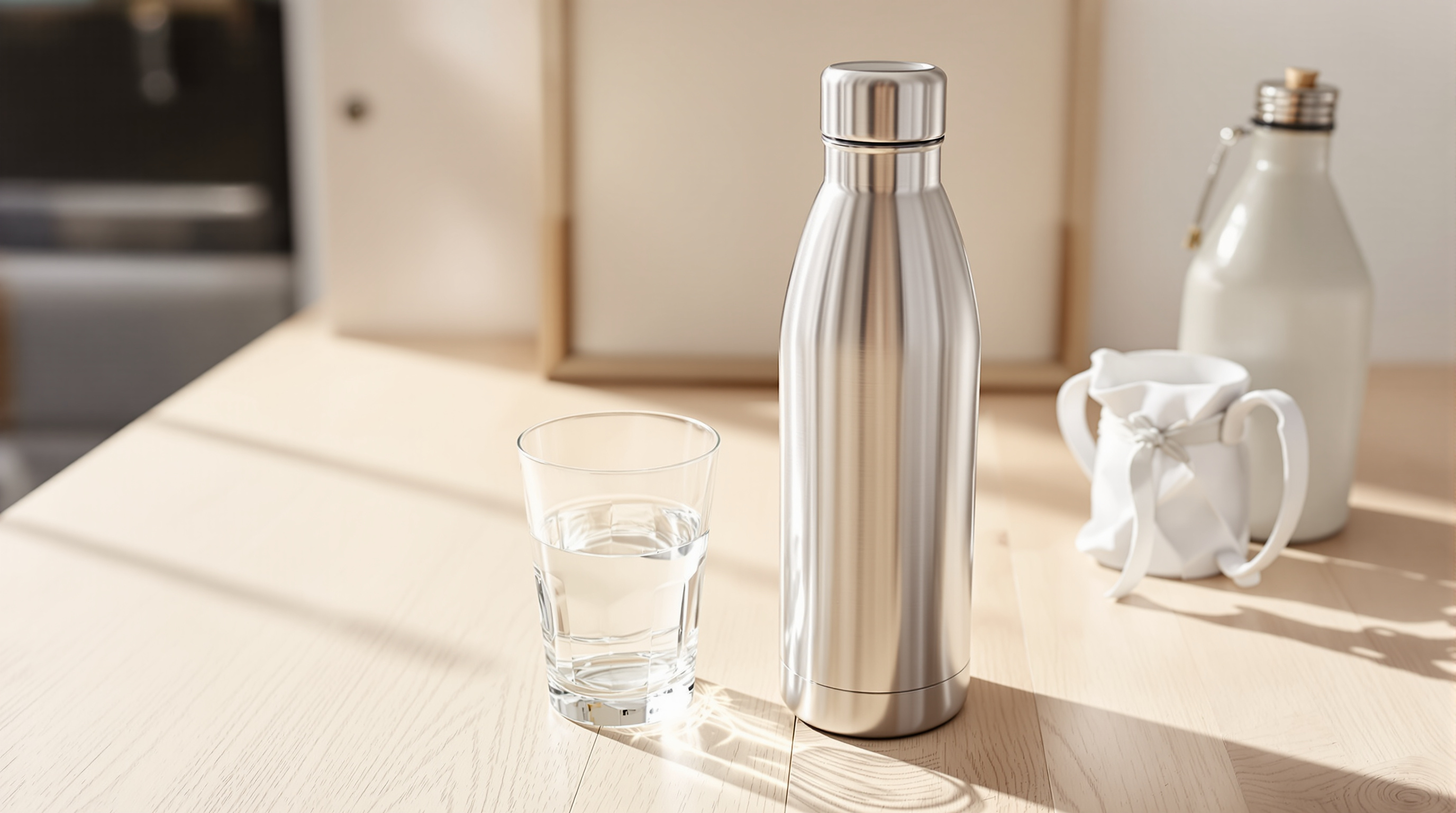
The Stanley cup does not leach lead into your drink. The lead is sealed inside a small pellet under the base, capped with stainless steel, and Consumer Reports found no lead in the water. The real, ongoing concern is the polypropylene (#5 plastic) lid and straw, which shed microplastics — especially with heat, abrasion, and repeated use. The steel body is safe; the plastic drinking path is where the residual exposure lives.
In January 2024, a wave of viral videos showed Stanley owners swabbing the bottom of their Quenchers with lead test kits and watching them turn positive. The internet panicked. Class-action lawsuits followed. Stanley issued a statement. And millions of people who had just spent $45 on a tumbler suddenly wondered whether they were poisoning themselves.
The short version: the lead panic was mostly a misread of where the lead actually is. But "your Stanley won't give you lead poisoning" is not the same as "your Stanley is perfectly inert." There's a second, quieter issue that the lead story completely buried — and it's the one that matters for daily exposure. Let's go through both, with the actual evidence.
Does the Stanley cup contain lead?
Yes — but not where you drink from. Stanley confirmed it uses a small lead-containing pellet to seal the vacuum insulation at the bottom of the cup, then covers it with a stainless steel base cap. Consumer Reports tested the water inside and found no lead leaching into the drink. The lead never touches your beverage.
This sealing method is not unique to Stanley. Many vacuum-insulated stainless steel bottles — across multiple major brands — use a small lead-based solder dot to seal the hole left after the air is vacuumed out of the double wall. It's an industry-standard manufacturing technique. On a finished cup, that dot is hidden beneath a stainless steel cap on the underside of the base.
The viral test-kit videos were detecting lead because people were swabbing aggressively at the exterior base, sometimes after the protective cap had been damaged or removed. That's a real but narrow scenario. Under normal use — cap intact, drinking from the top — the lead is not in contact with you or your liquid.
If the stainless steel base cap on the bottom of your cup comes loose, cracks, or falls off, the underlying lead seal could become exposed. Don't pry at the base, don't use a cup with a damaged bottom cap, and keep cups out of the hands of small children who might mouth the base. Stanley's warranty covers cups where the seal becomes exposed — contact them rather than continuing to use a compromised cup.
Do Stanley cups leach microplastics?
Yes, to a degree — and this is the part the lead story overshadowed. The stainless steel body is inert and sheds nothing. But the lid, splash guard, straw, and gaskets are polypropylene (plastic #5) and silicone. Every twist of the lid, sip through the straw, and trip through a hot dishwasher can release microplastic particles from those parts.
This is the trade-off baked into nearly every "stainless steel" tumbler on the market: the body solves the biggest exposure problem (you're not drinking from a PET bottle anymore), but the lid reintroduces plastic right at the point of contact — your lips, and the liquid sitting against the underside of the lid.
How much microplastic? The honest answer is that no one has published a definitive particle count for a Stanley specifically. But research on plastic bottle caps gives a useful proxy. A study in the Journal of Water and Health examining how mechanical action releases microplastics from caps found that repeatedly opening and closing a single plastic cap can release on the order of hundreds of microplastic particles — one widely-cited figure is roughly 500 particles released through repeated cap manipulation. A Stanley lid is twisted, snapped, and sipped from many times a day, every day, for months.
Two factors make it worse over time. First, abrasion: as the lid threads and straw scuff against the steel and against the dishwasher rack, plastic wears away into particles. A scratched, cloudy, year-old lid sheds more than a fresh one. Second, heat: which brings us to the next question.
Is it safe to put hot drinks in a Stanley?
The stainless steel body is completely safe for hot drinks — steel is inert at coffee and tea temperatures. The risk is the polypropylene lid and straw. Heat accelerates how fast plastics shed microplastics and release chemical additives, so a hot drink sitting against a #5 lid and straw sheds more than cold water does.
This is the single most actionable finding in this whole article. People buy a Stanley to keep coffee hot for hours — which means a hot, mildly acidic liquid sits in prolonged contact with a polypropylene lid and straw, at exactly the temperature that maximizes plastic shedding. Cold water in the same cup is far less of an issue.
If you mostly drink cold water, the microplastic exposure from a Stanley is modest. If you use it as a daily hot-coffee vessel with the straw lid, you're maximizing the one weakness in the design. For hot drinks, sip from a plain stainless or plastic-free lid instead of the straw lid, or choose a different vessel entirely.
"The steel body solved the big problem. The plastic lid quietly brought a smaller one back — right to your lips, every single sip."
Stanley vs Owala vs Hydro Flask vs Klean Kanteen — which is safest?
All four use 18/8 stainless steel bodies, so none is a lead risk in the drink and none sheds microplastics from the body. The deciding factor is the lid. Stanley, Owala, and Hydro Flask all use polypropylene (#5) lids and plastic straws on most models. Klean Kanteen is the outlier — it offers an all-stainless Steel Loop Cap with zero plastic in the drinking path.
| Cup | Body | Lead in Drink | Lid / Straw Material | Microplastic in Drinking Path |
|---|---|---|---|---|
| Stanley Quencher | 18/8 stainless | None (sealed under base) | Polypropylene (#5) lid + plastic straw | Yes — lid & straw |
| Owala FreeSip | 18/8 stainless | None (sealed under base) | Polypropylene (#5) lid + built-in straw | Yes — lid & straw |
| Hydro Flask | 18/8 stainless | None (sealed under base) | Polypropylene (#5) Flex/straw cap | Yes — lid (straw on some) |
| Klean Kanteen | 18/8 stainless | None | All-steel Loop Cap option, silicone gasket | None with steel cap |
The takeaway: Stanley, Owala, and Hydro Flask are roughly equivalent on safety — all fine on lead, all sharing the same polypropylene-lid microplastic source. Klean Kanteen is the genuinely different option because you can remove plastic from the drinking path entirely. If you want a Stanley-style experience with less plastic at your lips, a steel-capped bottle is the upgrade.
Want a tumbler with zero plastic at your lips?
The Klean Kanteen TKWide with the all-steel Loop Cap gives you Stanley-grade insulation with no polypropylene in the drinking path — just steel and a food-grade silicone gasket.
What is the #5 on the Stanley lid?
The #5 inside the recycling triangle means the lid is polypropylene (PP). Polypropylene is one of the safer food-contact plastics — it's BPA-free and doesn't leach the hormone-disrupting chemicals tied to polycarbonate (#7). But "safer plastic" is not "no plastic": #5 still sheds microplastic particles through abrasion, twisting, and heat.
So when someone says "the Stanley lid is BPA-free, so it's fine," they're half right. It is BPA-free. It is also the part of the cup most likely to shed microplastics into your drink. Those two facts coexist. The recycling number tells you about chemical additives; it tells you nothing about physical particle shedding, which is the real microplastic concern.
If you already own a Stanley, should you throw it away?
No. The lead is sealed under the base and doesn't reach your drink, so there's no lead reason to toss it. The realistic move is to reduce the microplastic exposure from the lid and straw. A few small changes get you most of the benefit without buying anything new:
- Swap the plastic straw for a stainless steel or silicone straw. This removes one of the two main shedding surfaces.
- Hand-wash the lid in lukewarm water instead of running it through a hot dishwasher cycle. Heat plus high-pressure jets accelerate plastic breakdown.
- Use it for cold drinks, not hot coffee. If you want hot coffee, use a plain steel-lidded vessel.
- Replace worn lids. A scratched, cloudy lid sheds more than a fresh one. Replacement lids are inexpensive.
- Don't pry at the base cap. Leave the bottom intact so the lead seal stays covered.
For most people, these five habits make a Stanley a perfectly reasonable cup. The body was never the problem.
Want the Full Home Protection Guide?
Your water cup is one of dozens of daily plastic touchpoints. The Complete Plasticproof Guide covers every room — kitchen, nursery, bathroom, bedroom — with 80+ product recommendations backed by 47+ studies.
The honest verdict
Is the Stanley cup safe? On lead: yes — the panic was overblown, the lead is sealed away from your drink, and you do not need to throw your cup out. On microplastics: it's a "mostly yes, with an asterisk." The stainless body is excellent. The polypropylene #5 lid and plastic straw are the weak link, and they matter most when you add heat and time.
If you're shopping new and want to minimize plastic at the point of contact, a bottle with an all-steel cap — like the Klean Kanteen TKWide — gives you the same insulation with none of the lid trade-off. If you already love your Stanley, swap the straw, keep your hot drinks out of it, and hand-wash the lid. Either way, you're dramatically better off than the person still drinking from disposable plastic bottles.
Cut your daily microplastic exposure
A stainless body with a plastic lid is a good start. A genuinely plastic-free drinking path is the finish line. See the bottles we actually recommend.
Frequently Asked Questions
Yes, but not where you drink. Stanley uses a small lead pellet to seal the vacuum insulation at the bottom, then covers it with a stainless steel cap. Consumer Reports tested the water inside Quenchers and found no lead leaching into the drink. The lead never contacts your beverage under normal use.
Yes, to a degree. The steel body is inert, but the lid, splash guard, straw, and gaskets are polypropylene (#5) and silicone. Twisting the lid, sipping through the straw, and hot dishwasher cycles all shed microplastic. Research on plastic caps has measured roughly 500 particles released through repeated opening and closing.
The steel body is safe for hot drinks, but the polypropylene lid and straw shed more microplastic when hot. Heat accelerates plastic breakdown. For hot coffee or tea, sip from a plain steel or plastic-free lid rather than the straw lid, or use a different vessel.
All four use safe 18/8 stainless bodies with no lead in the drink. Stanley, Owala, and Hydro Flask all use polypropylene (#5) lids and plastic straws, so they share the same microplastic source. Klean Kanteen stands out with an all-steel Loop Cap that removes plastic from the drinking path entirely.
No. The lead is sealed under the base and doesn't reach your drink. To reduce microplastic exposure, swap the plastic straw for steel or silicone, hand-wash the lid in lukewarm water, avoid hot drinks in it, replace worn lids, and don't pry at the base cap.
The #5 means polypropylene (PP), one of the safer BPA-free food plastics. It doesn't leach BPA, but it still sheds microplastic particles through abrasion, twisting, and heat. So it's "safe" in that it's BPA-free, yet it's the part of the Stanley most likely to put microplastics in your drink.
Sources
- Consumer Reports. "Are Stanley Cups Safe? What to Know About the Lead Concerns." 2024.
- Stanley (PMI). Public statement on lead-based sealing material used in vacuum-insulation manufacturing. 2024.
- Winkler A, et al. "Does mechanical stress cause microplastic release from plastic water bottles?" Water Research / Journal of Water and Health literature on cap-derived microplastic release, 2019–2022.
- Qian N, et al. "Rapid single-particle chemical imaging of nanoplastics by SRS microscopy." Proceedings of the National Academy of Sciences, 2024.
- FDA. "Food Contact Substances: Polypropylene and Stainless Steel." Code of Federal Regulations Title 21.
- Mason SA, et al. "Synthetic Polymer Contamination in Bottled Water." Frontiers in Chemistry, 2018.