Melamine dinnerware is a hard plastic resin, and it is FDA-approved and generally safe for cold or room-temperature food — the real issue is heat. Melamine (melamine-formaldehyde resin) sheds tiny amounts of melamine into food, and that migration rises sharply with heat, acidity, and surface wear. In one controlled study, people who ate hot soup from melamine bowls excreted about six times more melamine in their urine than those who used ceramic. Normal cold use stays far below safety limits. The fix is simple: never microwave it, keep it off hot and acidic food, and retire any piece that is scratched, cracked, or discolored.
"Is melamine safe?" is one of the most common questions people ask about the dishes already in their cupboard. Melamine is the hard, glossy, almost-unbreakable material behind most colorful kids' plates, outdoor and camping dinnerware, and a lot of restaurant and cafeteria service. It is cheap, light, and nearly impossible to shatter — and it is also a plastic, which is exactly why people wonder what it might be leaving in their food.
The honest answer is reassuring with one firm asterisk: melamine is safe for cold and room-temperature food and genuinely risky only when you heat it. This guide covers what melamine actually is, whether it leaches, what the studies measured, the "natural" bamboo-dish myth, who should be most careful, and the safer swaps worth making — drawn from our full guide to non-toxic dinnerware.
The bottom line up front: keep your melamine for cold and dry food if you like it, but never microwave it and never use it for hot soup, coffee, tea, or acidic dishes — that is when it leaches. If you want a true swap, move to plain tempered glass, high-fired porcelain, verified lead-free ceramic, or 18/8 stainless steel. All four are in our best non-toxic dinnerware guide, and the same heat rule applies to microwaving Tupperware and other food plastics.
Is melamine safe to eat off of?
For cold and room-temperature food, yes. Melamine-formaldehyde resin is approved by the US FDA for food-contact tableware, and under normal use the trace that migrates into food stays well below the tolerable daily intake. Heat is the real exception: migration climbs steeply with hot or acidic food, so the dish is fine for a sandwich but wrong for soup.
Regulators have set a tolerable daily intake (TDI) for melamine precisely because a little migration is expected and acceptable. The FDA uses a TDI of 0.063 mg per kilogram of body weight per day; the World Health Organization and the European Food Safety Authority use 0.2 mg/kg/day. For a plate of cold or dry food used briefly, the amount that comes off is a small fraction of those limits. The European Union goes a step further and caps how much melamine and formaldehyde may migrate from any food-contact plastic, so compliant dishware is tested against a hard ceiling rather than left to chance. The practical point: melamine is not "poison," and you do not need to panic over every plate — you need to understand the one condition that changes the math, which is heat.
What is melamine, and is it actually plastic?
Yes. Melamine dinnerware is melamine-formaldehyde resin, a thermoset plastic made by curing the chemical melamine together with formaldehyde into a hard, heat-set solid. It is not the soft, flexible plastic of a storage tub; once cured it cannot be remelted, which is why it feels almost like ceramic and survives drops.
That thermoset structure is exactly why melamine is popular: it is rigid, glossy, dishwasher-friendly, and nearly unbreakable, so it dominates kids' dishes, outdoor and camping sets, and commercial service. It is a different material question from the BPA in hard polycarbonate or the silicone in bakeware and bottle parts — melamine's issue is not an additive but the resin itself slowly releasing its building blocks, melamine and formaldehyde, back into food. How much it releases depends almost entirely on how you use it.
Does melamine leach into your food?
Yes, in small amounts, and far more when it is hot. The landmark 2013 crossover study in JAMA Internal Medicine found that people who ate hot noodle soup from melamine bowls excreted about 8.35 micrograms of melamine in their urine afterward, versus about 1.31 micrograms after the same soup from ceramic — roughly six times more. Acidity, long contact time, and surface wear all push migration higher still.
Three factors drive how much melamine ends up in your food: temperature (by far the biggest), acidity (tomato sauce, citrus, vinegar), and the condition of the surface (scratched, pitted, or cloudy dishes release more than smooth new ones). Melamine exposure is common at a low background level from several dietary sources, not just dishes — a US NHANES analysis of children and adults detected melamine in the large majority of people tested. That is the right way to read the risk: a small, widespread, usually-harmless background exposure that your own habits can nudge up or down. Dishware is one of the inputs you actually control, and it is also one way plastics in the kitchen quietly add to the total load your body carries, a theme we cover in microplastics in the human body.
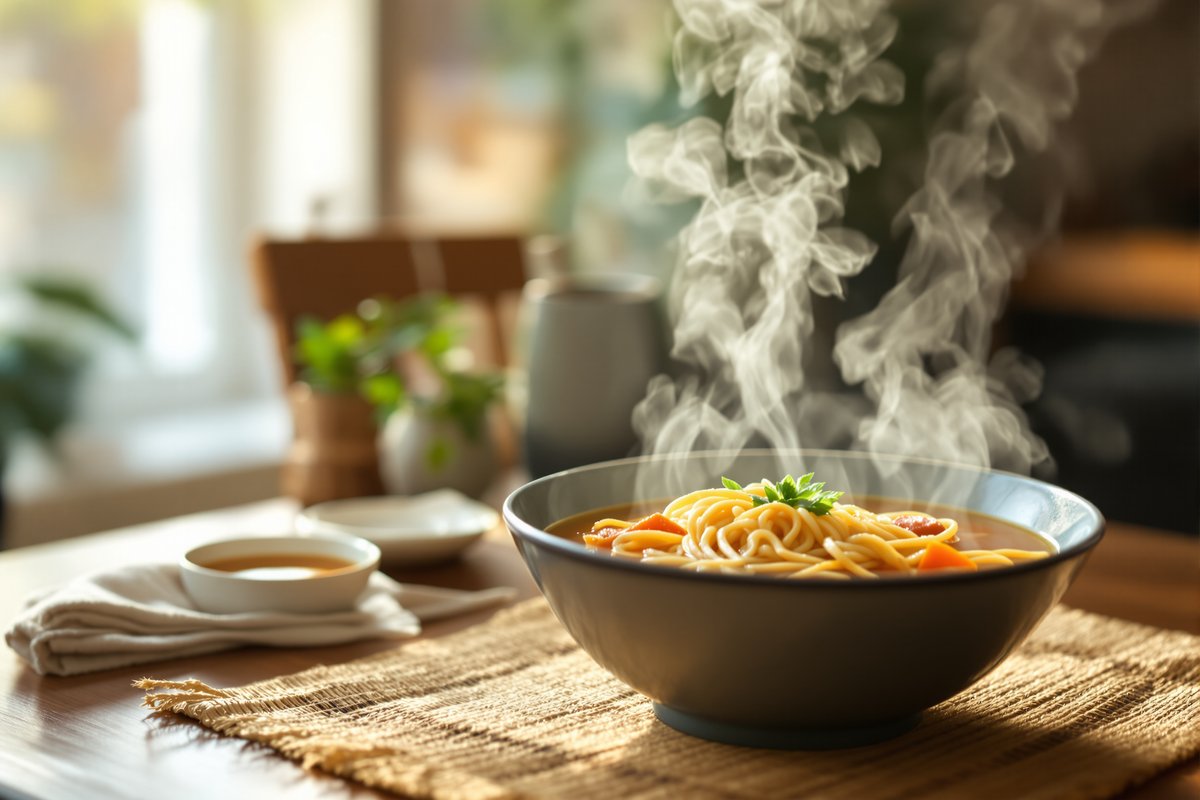
Is it safe to microwave melamine or use it for hot food?
No. Regulators including the US FDA and Germany's Federal Institute for Risk Assessment (BfR) specifically advise against microwaving melamine and against serving hot liquids like soup, coffee, or tea in it. Heat is the single biggest driver of melamine and formaldehyde migration, and a microwave pushes the dish far hotter than any table ever would.
The confusing part is labeling. A melamine plate stamped "microwave-safe" usually means only that the plate itself will physically survive brief reheating, not that it stays chemically inert — and some melamine actually warps or cracks in the microwave, which makes the migration worse. The simple rule: never microwave melamine, and move hot or acidic food to glass or ceramic before it touches the plate. It is the same heat-and-plastic logic behind our guides to microwaving Tupperware and whether styrofoam containers are safe for hot takeout.
Are "bamboo" and "wheat straw" dishes a safer alternative?
Usually not, because most of them are melamine. "Bamboo fiber" and "wheat straw" dishes are typically natural filler bound together with the same melamine-formaldehyde resin, and testing shows they can release as much melamine and formaldehyde as plain melamine-ware — sometimes more.
A 2023 study of melamine, bamboo, and wheat-straw tableware found that the "eco" bamboo and wheat-straw items were still melamine-formaldehyde resin at their core and migrated melamine at levels generally above what occurs naturally in food (full text). A Dutch retail survey of bamboo-melamine cups went further, finding that a meaningful share exceeded the EU formaldehyde migration limit, with some far above it, and argued the limit does not adequately protect small children (study). The marketing is the trap here: a plant-based name and an earthy color do not make the resin disappear. Treat any "bamboo" or "wheat straw" dish exactly as you would plain melamine — and be even more cautious, because these are often sold specifically for hot drinks.
What about the 2008 melamine scandal and kidney damage?
Those are two very different things. The 2008 crisis in China was deliberate fraud: melamine was added to infant formula and pet food to fake a high protein reading on lab tests, exposing babies and animals to enormous doses that caused kidney stones and kidney failure. The trace that migrates from a dinner plate is thousands of times smaller.
Melamine's real toxicity, seen in that scandal and in animal studies, is to the kidneys and urinary tract at high doses, and it is worse when melamine is combined with a related compound, cyanuric acid. But toxicology turns on dose, and the gap between "grams added to formula as fraud" and "micrograms migrating from a warm bowl" is vast. The honest framing is not "melamine is harmless" or "melamine is poison," but that the scandal was a deliberate-contamination story, while everyday dishware is a trace-migration story you manage with a few simple habits — the same mindset we bring to black plastic utensils and other kitchen plastics.
Who should be most careful with melamine?
Infants and toddlers, and anyone who routinely serves hot food in it. Children eat more food per pound of body weight, usually off melamine plates, and hot meals plus a worn, scratched surface are exactly the conditions that push migration up. Europe's BfR warns the safety margin is thinnest for small children using melamine with hot food.
If you have young kids, that does not mean throwing out every colorful plate today. It means using melamine for cold and dry food — cut fruit, sandwiches, crackers, snacks — and plating anything hot (soup, pasta, reheated leftovers) on glass, porcelain, or stainless instead. Replace any melamine piece a child uses once it is visibly scratched, cloudy, or chipped, hand-wash rather than running it through a scalding dishwasher cycle, and keep it out of the microwave entirely. Those few rules remove essentially all of the realistic risk, and they fit into the broader kitchen routine in our kitchen plastic detox guide.
The safest melamine alternatives: 6 real picks
If you would rather sidestep the heat question entirely, the safest everyday materials are tempered glass, high-fired porcelain, verified lead-free ceramic, and 18/8 stainless steel — none of them a polymer that can shed into food, and in plain undecorated form none of them carrying a leaded glaze or print either. Two of them (glass laminate and stainless steel) are also nearly as light and break-resistant as melamine, which makes them the practical swap for kids and outdoor use. The six picks below are drawn from our tested non-toxic dinnerware guide; every one is a real product with a real photo and verified buyer rating, and none is plastic.
 Best Overall
This is the pick most people reach for when they want to replace a kids' or everyday melamine set: it survives drops that shatter porcelain, weighs a fraction of a stoneware set, and is genuinely microwave-safe. Buy the undecorated Winter Frost White and, if you have an inherited pre-2005 decorated Corelle pattern, retire that one — older decorated patterns used leaded pigments; modern plain white does not.
The unbreakable, lightweight feel families buy melamine for — in a material that is safe to microwave and has nothing to migrate.
Why it's safe: Bonded tempered glass with no polymer and, in plain white, no glaze or printed decoration, so neither the melamine-resin route nor the leaded-glaze route applies.
Check Today’s Price on Amazon →Amazon prices change daily — tap to see today's price and any active discount.
- Free delivery & returns for Prime members
- Tens of thousands of verified reviews
- Service for six in one box
 Made in USA
Made in the same West Virginia plant for decades and sold as open stock, so you can replace a single broken piece instead of a whole set. It is heavier than melamine, which is the trade-off for a material that will not shed anything into a hot meal.
Restaurant-grade ceramic that handles hot food and the microwave without the resin-migration question melamine raises.
Why it's safe: Fully vitrified ceramic with a stated lead-free glaze and no polymer in the body, so there is nothing to abrade into food the way melamine does when it wears.
Check Today’s Price on Amazon →Amazon prices change daily — tap to see today's price and any active discount.
- Free delivery & returns for Prime members
- Made in Newell, West Virginia
- Open stock — replace a single broken piece
 Stoneware Look
A porcelain body with a scratch-resistant glaze, which matters more than it sounds — a scratch is where any glaze starts to fail. It gives you the trendy speckled-ceramic aesthetic without the resin-migration concern that comes with melamine's matte finishes.
The on-trend speckled-ceramic look in a material that is oven-, microwave- and hot-food-safe.
Why it's safe: A fired porcelain body with a stated lead-free glaze and no polymer, so neither melamine migration nor a leaded glaze is in play.
Check Today’s Price on Amazon →Amazon prices change daily — tap to see today's price and any active discount.
- Free delivery & returns for Prime members
- Maker states a lead-free glaze in writing
- Oven, microwave and dishwasher safe
 Bare Glass
Because it is a single material with no coating, there is literally nothing to leach — no melamine resin, no glaze, no transfer print. It handles hot and cold, and the tempered glass resists thermal shock across a wide range, though like any glass it can break if dropped hard enough.
A deep coupe plate that works for everything from salad to soup, with a material that has zero coatings to migrate.
Why it's safe: Solid tempered glass with no glaze and no applied decoration, so it cannot shed melamine, formaldehyde, lead, or cadmium.
Check Today’s Price on Amazon →Amazon prices change daily — tap to see today's price and any active discount.
- Free delivery & returns for Prime members
- Made in France
- Thousands of verified reviews
 Best Porcelain
Snow White is the plain restaurant-porcelain look, stackable enough to fit one cabinet shelf. It is the straightforward full-set upgrade from a melamine service: heavier, but nothing abrades off it into your food no matter how often you reheat on it.
A complete, stackable porcelain service for six that reheats and washes without the resin-migration question.
Why it's safe: High-fired porcelain with no applied decoration, an inert ceramic that does not shed the way a melamine surface does as it wears.
Check Today’s Price on Amazon →Amazon prices change daily — tap to see today's price and any active discount.
- Free delivery & returns for Prime members
- Complete service for six in one box
- Stackable — fits one cabinet shelf
 Unbreakable
Food-grade 18/8 stainless with no coating or glaze, which is why it survives being dropped on concrete and goes from freezer to oven. The one caveat is the obvious one — it is not for the microwave — but for lunchboxes, toddlers, and the backyard it is the most genuinely indestructible choice here.
Everything families buy melamine for — truly unbreakable, light, kid-proof — in inert metal with nothing to leach.
Why it's safe: Uncoated food-grade 18/8 stainless steel, an inert metal with no polymer surface, so there is no resin to shed and nothing to abrade into food.
Check Today’s Price on Amazon →Amazon prices change daily — tap to see today's price and any active discount.
- Free delivery & returns for Prime members
- Genuinely unbreakable — no chips, no shards
- Oven, freezer and dishwasher safe
The honest verdict
Is melamine safe? For cold and room-temperature food, yes — it is FDA-approved, tested against migration limits, and the amount that comes off in normal use is a small fraction of the tolerable daily intake. The scary headlines usually collapse two different stories: the trace migration from your dishes, and the deliberate, high-dose adulteration behind the 2008 scandal. They are not the same risk.
What is genuinely worth acting on is narrow and clear: heat is the problem. Never microwave melamine, never use it for hot soup, coffee, tea, or acidic food, retire scratched and cloudy pieces, and do not be fooled by "bamboo" or "wheat straw" dishes, which are melamine too. Do that, and melamine is a reasonable material for cold and casual use. If you would rather not think about it at all — especially for toddlers — move to plain glass, porcelain, lead-free ceramic, or stainless steel, and the heat question simply disappears.
See every non-toxic dinnerware pick, ranked
Glass, porcelain, lead-free ceramic and stainless steel — the sets we tested for what they are made of and what they can and cannot leach.
Frequently Asked Questions
For cold and room-temperature food, yes. Melamine-formaldehyde resin is FDA-approved for food-contact tableware, and under normal use the trace that migrates into food stays well below the tolerable daily intake. The real exception is heat: migration climbs steeply with hot or acidic food, so melamine is fine for a salad or a sandwich but not the right dish for hot soup, and it should never go in the microwave.
No. The US FDA and Germany's BfR both advise against microwaving melamine. Heat is the single biggest driver of melamine and formaldehyde migration out of the resin, and a microwave drives the dish far hotter than a table ever would. A "microwave-safe" label on melamine refers only to the plate physically surviving, not to it staying chemically inert — move food to glass or ceramic before microwaving.
Yes, in small amounts, and more when it is heated. A 2013 crossover study in JAMA Internal Medicine found people who ate hot noodle soup from melamine bowls excreted about 8.35 micrograms of melamine in their urine, versus about 1.31 micrograms after ceramic — roughly six times more. Migration also rises with acidity, long contact time, and surface wear. For cold, short-contact use the amount is tiny; the concern is hot, acidic, or damaged dishes.
Usually not, because most of them are melamine. "Bamboo fiber" and "wheat straw" dishes are typically natural filler bound with the same melamine-formaldehyde resin, and studies have found they can release as much melamine and formaldehyde as conventional melamine-ware, sometimes more. A natural-sounding name does not make the resin disappear, so treat these dishes exactly as you would plain melamine.
Retire any melamine piece that is scratched, pitted, cracked, cloudy, stained, or warped. A worn surface exposes more resin and releases more melamine and formaldehyde than a smooth new one, so a heavily used kids' plate is the one most worth replacing. Hand-wash melamine rather than running it through a hot dishwasher cycle, keep it off hot and acidic food, and never use it in the microwave or oven.
Tempered glass, high-fired porcelain, verified lead-free ceramic, and 18/8 stainless steel are the safest everyday choices, because none is a polymer that can shed into food, and plain undecorated versions carry no leaded glaze either. Glass laminate (like Corelle Vitrelle) and stainless steel are also nearly as light and break-resistant as melamine, which makes them the practical swap for kids and outdoor use. See our best non-toxic dinnerware guide for tested picks.
Sources
- Wu C-F, Hsieh T-J, Chen B-H, et al. "A crossover study of noodle soup consumption in melamine bowls and total melamine excretion in urine." JAMA Internal Medicine, 2013;173(4):317–319.
- Zhang Y, et al. "Migration of Melamine and Its Derivatives from Melamine/Bamboo/Wheat-Straw-Made Tableware" (2023), PMC10892781.
- Wijnhoven S, et al. "Migration of formaldehyde from 'biobased' bamboo/melamine cups: a Dutch retail survey." Science of the Total Environment, 2021.
- Melamine exposure among US children and adults, NHANES analysis, Nutrients 2020, doi:10.3390/nu12123844.
- US FDA. "Melamine in Tableware: Questions and Answers" (food fraud / economically motivated adulteration guidance).
- World Health Organization and European Food Safety Authority melamine tolerable-daily-intake assessments; German BfR opinion on melamine-formaldehyde tableware.