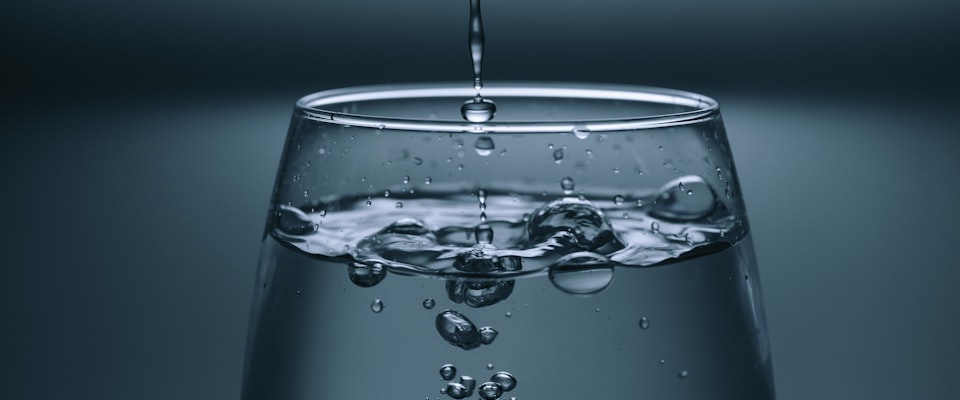
Microplastics are now everywhere — in your blood, your lungs, your placenta, and your drinking water. A follow-up analysis published in the New England Journal of Medicine in March 2026 confirmed what earlier research suggested: people with detectable microplastics in their carotid artery plaque had a 4.5x higher risk of heart attack, stroke, or cardiovascular death compared to those without. The particles came from everyday exposure — and drinking water is one of the primary pathways.
Both tap water and bottled water contain microplastics. A 2024 Columbia University study found approximately 240,000 nanoplastic particles per liter of bottled water. Municipal tap water isn't clean either — studies consistently detect microplastics in treated tap water across every continent tested. The difference is this: you can filter tap water. You can't filter a plastic bottle.
But not every filter works. This guide cuts through the marketing to show you exactly which water filters are certified to remove microplastics — and which popular ones fail the test entirely.
Do Water Filters Actually Remove Microplastics?
Short answer: yes — but only if they're certified for it. Most water filters on the market are designed to improve taste and remove chlorine. That's a completely different job than filtering out particles as small as 1 micron (microplastics) or even smaller (nanoplastics).
The certification to look for is NSF/ANSI 401, which specifically tests for "emerging contaminants" including microplastics. Some filters also carry IAPMO certification, another independent testing body. If a filter doesn't carry one of these certifications for microplastic reduction, the manufacturer is making a marketing claim — not a verified one.
No. Standard Brita filters use activated carbon that's designed for chlorine, taste, and odor reduction. They are not NSF 401 certified for microplastic removal. They may catch some larger particles incidentally, but they are not designed, tested, or certified to reliably remove microplastics from your water. The same applies to standard PUR pitchers and most refrigerator filters. If microplastics are your concern, these filters are not the answer.
The good news: several excellent filters are certified, and they range from $35 pitcher filters to $450 countertop reverse osmosis systems. Here are the five best options in 2026, ranked.
Quick Picks
| Best for | Pick | Why it made the list |
|---|---|---|
| Best overall | LifeStraw Home Glass Pitcher | 99.999% microplastic removal in a hand-blown borosilicate glass body — no plastic touches the filtered water. |
| Best countertop RO | AquaTru Carafe | 4-stage reverse osmosis removes nanoplastics at the molecular level with no plumbing required. |
| Best gravity-fed | British Berkefeld (Ultra Sterasyl) | Stainless steel housing with ceramic candle filters — no electricity, no plastic, and decades of proven performance. |
| Best budget | Epic Nano XP Pitcher | Certified microplastic filtration at the lowest entry price — the most accessible option for budget-conscious households. |
The 5 Best Water Filters for Microplastics in 2026
#1 — LifeStraw Home Glass Pitcher — Best Overall
The LifeStraw Home is our top pick because it solves two problems at once: it removes microplastics at the highest tested rate of any pitcher filter (99.999%), and it eliminates plastic contact with your filtered water entirely. Most pitcher filters store your clean water in a plastic reservoir — which means you're filtering out microplastics only to store the water in a container that may leach new ones. The LifeStraw Home's borosilicate glass body eliminates that irony completely.
The filtration technology uses a three-stage system: a membrane microfilter (which physically blocks microplastics and bacteria), activated carbon (which removes chemicals, chlorine, and PFAS), and an ion exchange resin (which targets heavy metals like lead and mercury). Replacement filters last approximately 2 months and cost around $30 each.
Best for: Health-conscious households, anyone who wants the highest-certified removal rate with zero plastic contact. Ideal first upgrade from Brita.
#2 — AquaTru Carafe — Best Countertop Reverse Osmosis
If you want the most thorough filtration possible without plumbing a whole-house system, the AquaTru Carafe is the gold standard. Reverse osmosis forces water through a membrane with pores so small (0.0001 microns) that virtually nothing gets through — not microplastics, not nanoplastics, not heavy metals, not dissolved pharmaceuticals.
The "Carafe" model specifically uses a glass collection vessel, which is why it makes this list over the standard AquaTru (which uses a plastic tank). The higher price is justified by the comprehensiveness of filtration: this removes contaminants that no pitcher filter can touch, including fluoride, arsenic, and chromium-6.
Annual filter replacement costs run approximately $100–$130 depending on usage. The system requires electricity but no plumbing — it sits on your countertop and draws from a top-fill reservoir.
Best for: Families who want maximum filtration, homes with concerning water quality, anyone willing to invest upfront for the most comprehensive protection.
#3 — British Berkefeld (Ultra Sterasyl) — Best Gravity-Fed
British Berkefeld has been making ceramic water filters since 1862 — they were originally developed to filter London's contaminated water supply during cholera epidemics. The Ultra Sterasyl filter elements use a micro-porous ceramic shell impregnated with silver (for bacteriostatic properties) and an activated carbon core.
What makes Berkefeld stand out is the combination of certified microplastic removal, zero plastic contact (full 304 stainless steel housing), no electricity requirement, and exceptional longevity. Each ceramic filter element can be scrubbed clean and reused for 6–12 months before replacement. This makes it the lowest ongoing cost of any filter on this list.
The gravity-fed design means you fill the top chamber and water slowly filters down over several hours. It's not instant — expect to wait 1–2 hours for a full filter cycle. But it works during power outages, off-grid, and in any situation where electricity isn't available.
Best for: Whole-household use, off-grid living, emergency preparedness, anyone who wants a buy-it-once stainless steel system with minimal ongoing costs.
#4 — Boroux Stainless Steel Countertop System — Best Budget Stainless
The Boroux system is essentially the same concept as the British Berkefeld — a gravity-fed stainless steel housing with certified filter elements — at a lower price point. It holds triple NSF certification (42 for taste/odor, 53 for health contaminants, and 401 for emerging contaminants including microplastics).
The construction is fully plastic-free: 100% stainless steel body, stainless steel spigot, and no plastic gaskets or seals in contact with filtered water. Filter elements last up to 6,000 gallons, which translates to roughly 2–3 years for a typical household — making the per-gallon cost exceptionally low.
The trade-off vs. Berkefeld is that Boroux is a newer brand with less track record. The filter elements are slightly different (carbon block vs. ceramic), and the capacity is typically smaller (1.5 gallons vs. 2.25 gallons). But for the price, it's the most accessible fully plastic-free, fully certified option available.
Best for: Budget-conscious buyers who want zero plastic contact and full NSF 401 certification without spending $300+.
#5 — Epic Nano XP Pitcher — Best Affordable Pitcher
The Epic Nano XP is on this list for one reason: accessibility. At $35–$45, it's the most affordable entry point to genuinely effective microplastic filtration. The solid carbon block filter provides sub-micron filtration that's been independently tested to NSF/ANSI standards for over 70 contaminants including microplastics, lead, PFAS, chlorine, and pharmaceuticals.
The trade-off is clear: the pitcher body is plastic (BPA/BPS-free polypropylene). If your goal is to eliminate all plastic contact with your drinking water, the LifeStraw Home glass pitcher (#1) or a stainless steel gravity system (#3 or #4) is the better choice. But if you're currently using a Brita, PUR, or no filter at all, the Epic Nano XP is a massive upgrade in actual contaminant removal at a comparable price point.
Epic also runs a filter recycling program — you send back used filter cores for recycling rather than landfilling them. It's a small but meaningful difference from competitors who treat filters as disposable plastic waste.
Best for: Renters, students, apartment dwellers, anyone on a tight budget who wants genuine microplastic removal without a large upfront investment.
Filters That Don't Work for Microplastics
It's just as important to know what doesn't work as what does. These popular filters are fine for taste and chlorine — but they are not certified or designed for microplastic removal:
- Brita Standard & Elite: No NSF 401 certification. Designed for chlorine, taste, and mercury reduction. Not tested for microplastics.
- PUR Standard Pitchers: Same limitations as Brita. Carbon filter catches large sediment but not microplastics.
- Basic Refrigerator Filters: Most are NSF 42 only (taste and odor). They do not filter at the micron level needed for microplastic removal.
- Faucet-mount filters (most brands): Better than nothing for taste, but most lack microplastic certification. Check for NSF 401 specifically.
The bottom line: if a filter doesn't carry NSF 401 or IAPMO certification for microplastic or "emerging contaminant" reduction, assume it doesn't remove microplastics — regardless of what the marketing says.
Comparison Table: At a Glance
| Filter | Material | Microplastic Cert | Plastic Contact | Price |
|---|---|---|---|---|
| LifeStraw Home Glass | Borosilicate glass | ✅ 99.999% removal | None | $70–$90 |
| AquaTru Carafe | Glass carafe | ✅ IAPMO certified | Minimal (housing) | $400–$450 |
| British Berkefeld | 304 stainless steel | ✅ NSF certified | None | $250–$350 |
| Boroux Stainless | Full stainless steel | ✅ NSF 401 | None | $150–$200 |
| Epic Nano XP | BPA-free plastic | ✅ Independently tested | Plastic pitcher | $35–$45 |
| Brita Standard | Plastic | ❌ Not certified | Plastic pitcher | $25–$35 |
Our Pick by Household Type
- Solo apartment, tight budget: Epic Nano XP ($35–$45) — genuine microplastic removal at a Brita-comparable price
- Solo apartment, best quality: LifeStraw Home Glass Pitcher ($70–$90) — glass body, highest certified removal rate
- Family of 4: AquaTru Carafe ($400–$450) or British Berkefeld ($250–$350) — higher capacity, comprehensive filtration
- Health-obsessed, plastic-free home: LifeStraw Home Glass Pitcher — the only pitcher with zero plastic contact + 99.999% removal
- Off-grid / no electricity: British Berkefeld or Boroux — gravity-fed, stainless steel, no power needed
- Gift for new parents: LifeStraw Home Glass Pitcher — baby formula safety angle, premium feel, impressive removal stats
"The best water filter is the one you actually use every day. A $35 Epic Nano pitcher used consistently beats a $400 RO system sitting in a box. Start where your budget allows and upgrade when you can."
How We Evaluated These Filters
Every filter on this list was evaluated against four criteria:
- Certification: Does it carry NSF/ANSI 401, IAPMO, or equivalent independent certification specifically for microplastic reduction? Marketing claims without certification were disqualified.
- Material safety: Does the filter housing or reservoir itself contribute to microplastic exposure? Glass and stainless steel rank highest. BPA/BPS-free plastic is acceptable but noted.
- Practical usability: Flow rate, capacity, filter replacement cost and frequency, installation requirements, and daily convenience.
- Value: Upfront cost relative to filtration effectiveness, ongoing filter costs per gallon, and expected lifespan of the system.
We specifically excluded under-sink and whole-house systems from this guide to focus on options that require no plumbing modifications — making them accessible to renters, apartment dwellers, and anyone who wants to start filtering immediately.
Want the Full Home Protection Guide?
Water filtration is one piece of the puzzle. The Complete Plasticproof Guide covers every room — kitchen, nursery, bathroom, bedroom — with 47+ peer-reviewed studies and 80+ product recommendations.
Frequently Asked Questions
Standard Brita filters are NOT NSF 401 certified for microplastics removal. They use activated carbon designed for chlorine, taste, and odor reduction and may catch some larger particles incidentally, but they are not designed or tested for reliable microplastic reduction. For certified removal, choose a filter with NSF/ANSI 401 certification like the LifeStraw Home Glass Pitcher (99.999% removal) or a reverse osmosis system like the AquaTru Carafe.
The LifeStraw Home Glass Pitcher is independently tested to remove 99.999% of microplastics — the highest certified removal rate of any pitcher filter. Reverse osmosis systems like the AquaTru Carafe are also highly effective, using a 4-stage process with membrane pore sizes of 0.0001 microns that physically block virtually all micro- and nanoplastic particles. Gravity-fed systems with NSF 401 certification (British Berkefeld, Boroux) also achieve very high removal rates.
Yes — significantly. A 2024 Columbia University study found approximately 240,000 nanoplastic particles per liter of bottled water, many leaching directly from the plastic bottle itself (especially when exposed to heat or sunlight). Properly filtered tap water using an NSF 401 certified filter contains dramatically fewer microplastics. Filtering your own water also eliminates the continuous plastic exposure from bottle storage and transport.
Reverse osmosis (RO) is the most comprehensive home water filtration method available. RO membranes have pore sizes of 0.0001 microns — small enough to block virtually all microplastic and nanoplastic particles along with heavy metals, bacteria, and dissolved solids. The AquaTru Carafe is the top-rated countertop RO system with a glass collection vessel. For those who don't need RO-level filtration, pitcher filters with NSF/ANSI 401 certification (like the LifeStraw Home) provide excellent microplastic removal at a lower cost.
Sources
- Marfella R, et al. "Microplastics and Nanoplastics in Atheromas and Cardiovascular Events." New England Journal of Medicine, 2024 (with March 2026 follow-up data).
- Qian N, et al. "Rapid single-particle chemical imaging of nanoplastics by SRS microscopy." Proceedings of the National Academy of Sciences, Columbia University, 2024.
- Kosuth M, et al. "Anthropogenic contamination of tap water, beer, and sea salt." PLoS ONE, 2018.
- NSF International. "NSF/ANSI 401: Drinking Water Treatment Units — Emerging Compounds/Incidental Contaminants." NSF Standards, 2022.
- Cox KD, et al. "Human Consumption of Microplastics." Environmental Science & Technology, 2019.
- Jenner LC, et al. "Detection of microplastics in human lung tissue using μFTIR spectroscopy." Environment International, 2022.
- WHO. "Microplastics in drinking-water." World Health Organization Technical Report, 2019.
- Ragusa A, et al. "Plasticenta: First evidence of microplastics in human placenta." Environment International, 2021.
Protect Every Room in Your Home
From the kitchen to the nursery to the bedroom — the Complete Plasticproof Guide covers every swap that matters, backed by 47+ studies.