Lip balm is one of the most frequently used personal care products in existence. Most people reach for it multiple times a day, often without thinking about it. And unlike a hand cream or body lotion, lip balm sits on a mucous membrane — the thin, permeable skin of the lips — and a significant portion of it is ingested through licking, eating, and drinking.
That makes the ingredient list of your lip balm more consequential than nearly any other product in your bathroom cabinet. Yet the majority of drugstore lip balms are built on a base of petroleum jelly (petrolatum) and mineral oil — both derived from crude oil refining. Many also contain synthetic fragrances, parabens, chemical UV filters, and come packaged in single-use plastic tubes.
This guide covers what to avoid, what to look for, and the six cleanest lip balms available in 2026 — all petroleum-free, with transparent ingredient lists and minimal packaging waste.
Why Petroleum-Based Lip Balms Are Problematic
Petrolatum — the base ingredient in Vaseline and most mass-market lip balms — is a byproduct of petroleum refining. In its fully refined form, it is generally considered safe. The problem is that not all petrolatum is fully refined, and poorly refined petrolatum can contain polycyclic aromatic hydrocarbons (PAHs), a class of compounds that the International Agency for Research on Cancer (IARC) classifies as probable human carcinogens.
The European Union recognized this risk and requires that any petrolatum used in cosmetics demonstrate its full refining history to prove PAH content is below safety thresholds. The U.S. FDA imposes no such requirement. This means that a lip balm sold in the United States may contain petrolatum of unknown purity — and you are applying it directly to your mouth.
Beyond petrolatum itself, conventional lip balms commonly contain:
- Mineral oil — another petroleum derivative with the same PAH contamination concerns
- Synthetic fragrances — often a blend of undisclosed chemicals that may include phthalates (endocrine disruptors) hidden under the single word "fragrance" on the label
- Parabens (methylparaben, propylparaben) — preservatives with documented estrogen-mimicking activity
- Oxybenzone — a chemical UV filter found in SPF lip balms, linked to hormonal disruption and coral reef damage
- BHT/BHA — synthetic antioxidants used to extend shelf life, classified by IARC as possible carcinogens
- Phenol and camphor — can irritate and dry the lip tissue, creating a cycle of dependency where lips feel more chapped after the balm wears off
Some conventional lip balms contain ingredients like phenol, menthol, and salicylic acid that create a mild irritation or drying effect. This triggers the urge to reapply — leading to more ingestion and more exposure. If lips feel worse after the balm wears off, the formula may be part of the problem, not the solution.
For a deeper look at how synthetic chemicals in cosmetics affect the body, see the Plasticproof guide on microplastics in cosmetics.
What to Look for in a Clean Lip Balm
A genuinely non-toxic lip balm should have a short, recognizable ingredient list. The best formulas are built on a base of:
- Beeswax or plant-based wax (candelilla, carnauba) — creates a protective moisture barrier without petroleum
- Plant oils (coconut oil, olive oil, jojoba oil, avocado oil) — nourish and moisturize with fatty acids the skin can actually absorb
- Shea butter or cocoa butter — rich emollients that soften and protect
- Natural vitamin E (tocopherol) — antioxidant protection and natural preservative
- Essential oils (in small amounts) — for subtle natural flavor, if desired
Look for third-party certifications: USDA Organic (95%+ certified organic ingredients), EWG Verified (screened against known harmful chemicals), or COSMOS Organic (European organic cosmetics standard). These offer more assurance than unregulated terms like "natural" or "clean."
Quick Picks: Best Non-Toxic Lip Balms at a Glance
Our Top Picks for 2026
| Pick | Product | Price | Key Feature |
|---|---|---|---|
| Best Overall | Dr. Bronner's Organic Lip Balm | $ | USDA organic, beeswax + avocado oil |
| Best Value | Burt's Bees 100% Natural Lip Balm | $ | Beeswax-based, widely available |
| Best Tinted | Ilia Balmy Tint Hydrating Lip Balm | $$$ | Clean beauty, organic, tinted options |
| Best Certified | Badger Classic Lip Balm | $ | USDA organic, olive oil + beeswax |
| Best Packaging | Ethique Juicy Nourishing Lip Balm | $$ | Plastic-free compostable tube, vegan |
| Best Eco | Eco Lips Bee Free Vegan Lip Balm | $ | Organic, vegan, plant-based plastic-free tube |
Price tier: $ under $10 · $$ $10–$20 · $$$ $20+. Tap any product for today's live price on Amazon.
The 6 Best Non-Toxic Lip Balms for 2026
1. Dr. Bronner's Organic Lip Balm — Best Overall
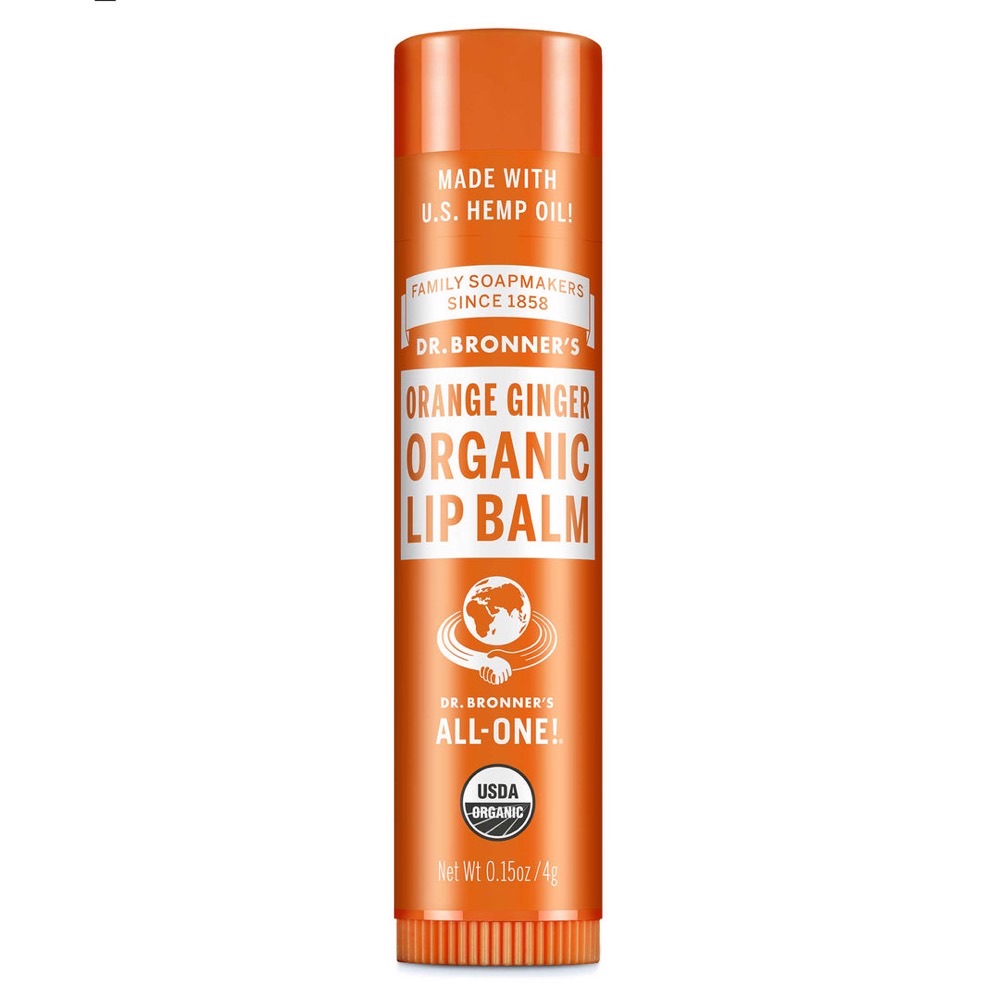 Best Overall
Buyers repeatedly say it "goes on smooth" and is "not waxy but hydrating," crediting the all-organic oils for lasting moisture at a low price, and most reviews are positive. The honest downsides are minor and come down to preference: at least one reviewer wanted a firmer, waxier feel and found this one has more slip than they like, and the naturally flavored versions are lighter than heavily scented drugstore balms.
A portion of every lip balm you wear gets swallowed. This is the swap that makes that portion 100% certified-organic plant oils instead of petroleum byproducts.
Why it's safe: No petrolatum or mineral oil and no synthetic fragrance — just organic beeswax and organic avocado, jojoba, and hemp seed oils, all USDA Organic certified.
Check Today's Price on Amazon →Amazon prices change daily — tap to see today's price and any active discount.
- Free delivery & returns for Prime members
- Amazon A-to-z purchase guarantee
Dr. Bronner's has built a reputation on ingredient transparency, and their lip balm reflects that ethos. The formula is simple: organic beeswax for the protective barrier, organic avocado and jojoba oils for deep moisture, and organic hemp seed oil for omega fatty acids. No filler ingredients, no synthetic preservatives. For a budget-tier price, the price-to-quality ratio is exceptional.
The texture is smooth without being waxy or greasy, and one application lasts 2–3 hours before needing reapplication — a sign that the formula is actually moisturizing rather than just sitting on the surface. Available at most natural grocery stores and widely online.
2. Burt's Bees 100% Natural Moisturizing Lip Balm — Best Value
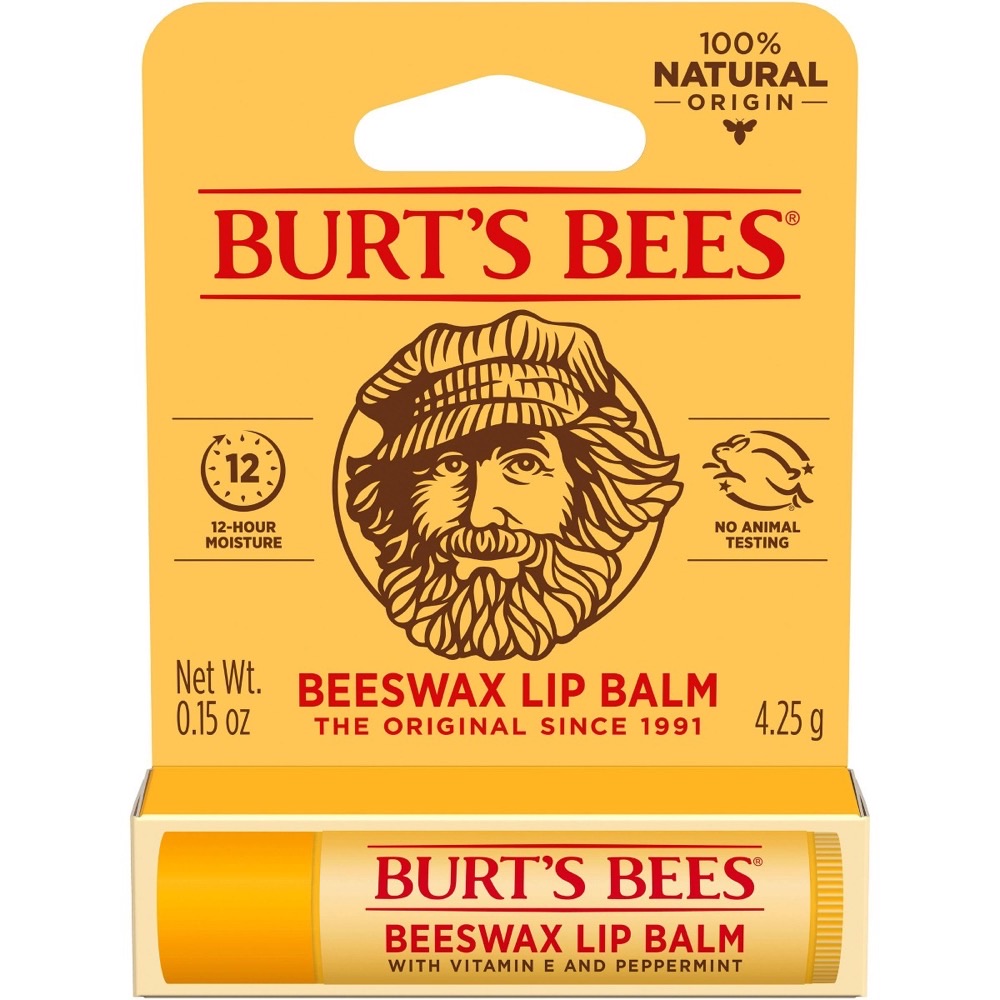 Best Value
The original beeswax-and-vitamin-E formula is a decades-long staple buyers can find almost anywhere at a drugstore price. The honest downsides: the peppermint oil gives a tingle that can burn already-chapped lips, longtime users say the formula "is nowhere near as good" since the Clorox buyout and doesn't last as long, and some report lips feeling dry an hour or two after applying.
The cheapest, most available way to get petroleum off your lips today — beeswax and vitamin E instead of mineral oil, for a few dollars.
Why it's safe: Beeswax-based with no petrolatum, no parabens, no phthalates and no SLS — a short, recognizable ingredient list rather than petroleum derivatives.
Check Today's Price on Amazon →Amazon prices change daily — tap to see today's price and any active discount.
- Free delivery & returns for Prime members
- Amazon A-to-z purchase guarantee
Burt's Bees is the most accessible entry point into non-toxic lip care. The original beeswax formula has been around for decades and remains one of the cleanest options at a drugstore price point. At just a few dollars per tube (less in multi-packs), it removes the cost barrier entirely.
One note: while Burt's Bees uses 100% natural ingredients in this formula, the brand is now owned by Clorox, and not all Burt's Bees products meet the same standard. Stick with the "100% Natural" line specifically, and always check the ingredient list — some of their flavored or specialty lip products contain additional ingredients that may not align with the same clean standard.
3. Ilia Balmy Tint Hydrating Lip Balm — Best Tinted Option
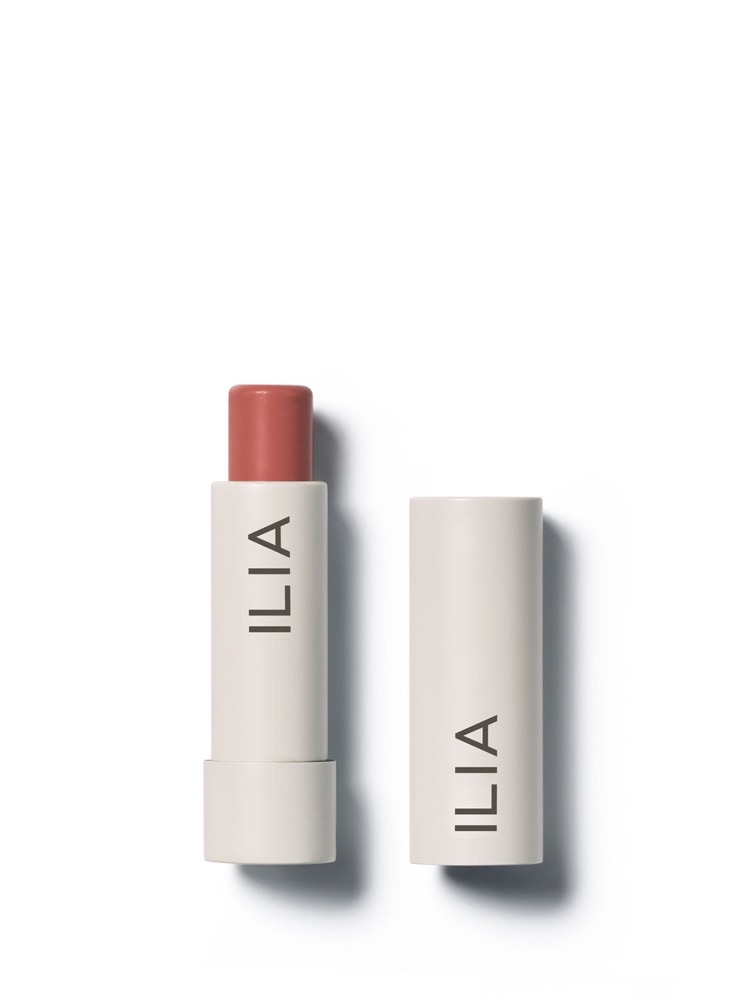 Best Tinted
Reviewers call these "so moisturizing" with buildable, flattering color thanks to shea butter and rosehip oil, and many buy multiple shades. The honest downsides: one user found the color "moves around the lips easily," the tint is subtle for anyone wanting a bold lip, and the hydration can fade faster than expected in harsh weather.
If you wear a tinted balm daily, this single swap takes synthetic dyes, petroleum waxes, and fragrance chemicals out of the product that sits on your lips all day.
Why it's safe: Organic shea butter and plant oils with color from mineral pigment, not coal-tar–derived synthetic dyes — and no petroleum, parabens, or synthetic fragrance.
Check Today's Price on Amazon →Amazon prices change daily — tap to see today's price and any active discount.
- Free delivery & returns for Prime members
- Amazon A-to-z purchase guarantee
For anyone who wants a touch of color along with lip care, Ilia's Balmy Tint is the cleanest option in the tinted lip balm category. The formula is built on organic plant oils and butters, with color from mineral pigments rather than the synthetic dyes found in most tinted lip products. The sheer tint is buildable — one swipe for a natural look, two for more visible color.
This is the premium pick of the list. The price reflects the organic ingredients, clean mineral pigments, and recyclable aluminum packaging. For those who currently use a conventional tinted lip product, this swap eliminates exposure to synthetic dyes, petroleum-based waxes, and fragrance chemicals in one step.
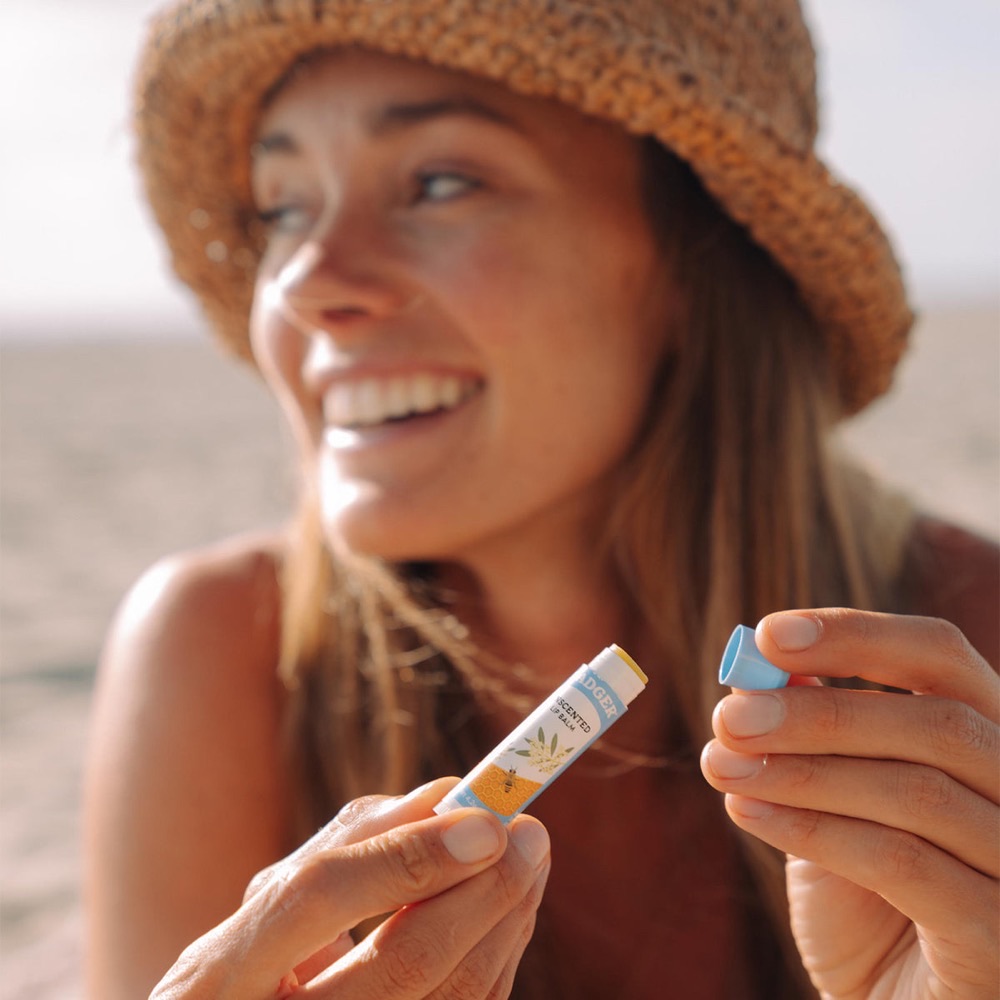
4. Badger Classic Lip Balm — Best Certified Organic
 Best Certified Organic
The organic olive-oil-and-beeswax base glides on with a silky shine, and one buyer who reacted to "$100+ worth of lip balms" says this is the only one their lips tolerate. The honest downsides: the unscented version smells like olive oil (though it fades), one reviewer found the feel slick and almost greasy, like needing to wipe your mouth after a funnel cake, and fans of a firm waxy balm may want more grip.
The shortest, most readable ingredient list here — if you want to know exactly what touches your lips, this is the swap with nothing hidden.
Why it's safe: Five organic ingredients and zero synthetics — organic olive oil, beeswax, castor oil, rosehip, and aloe, all certified to the USDA National Organic Program standard.
Check Today's Price on Amazon →Amazon prices change daily — tap to see today's price and any active discount.
- Free delivery & returns for Prime members
- Amazon A-to-z purchase guarantee
Badger takes minimalism seriously. The Classic Lip Balm contains five ingredients — that is it. Extra virgin olive oil provides deep moisture, beeswax creates the barrier, castor oil adds glide, and rosehip extract and aloe contribute antioxidants and soothing properties. There is nothing to decode on the ingredient list because every word is recognizable.
The USDA Organic certification means every ingredient meets federal organic standards, and the B Corporation certification confirms that the company meets rigorous social and environmental performance standards. At a budget-tier price, this is proof that clean ingredients do not require a premium.
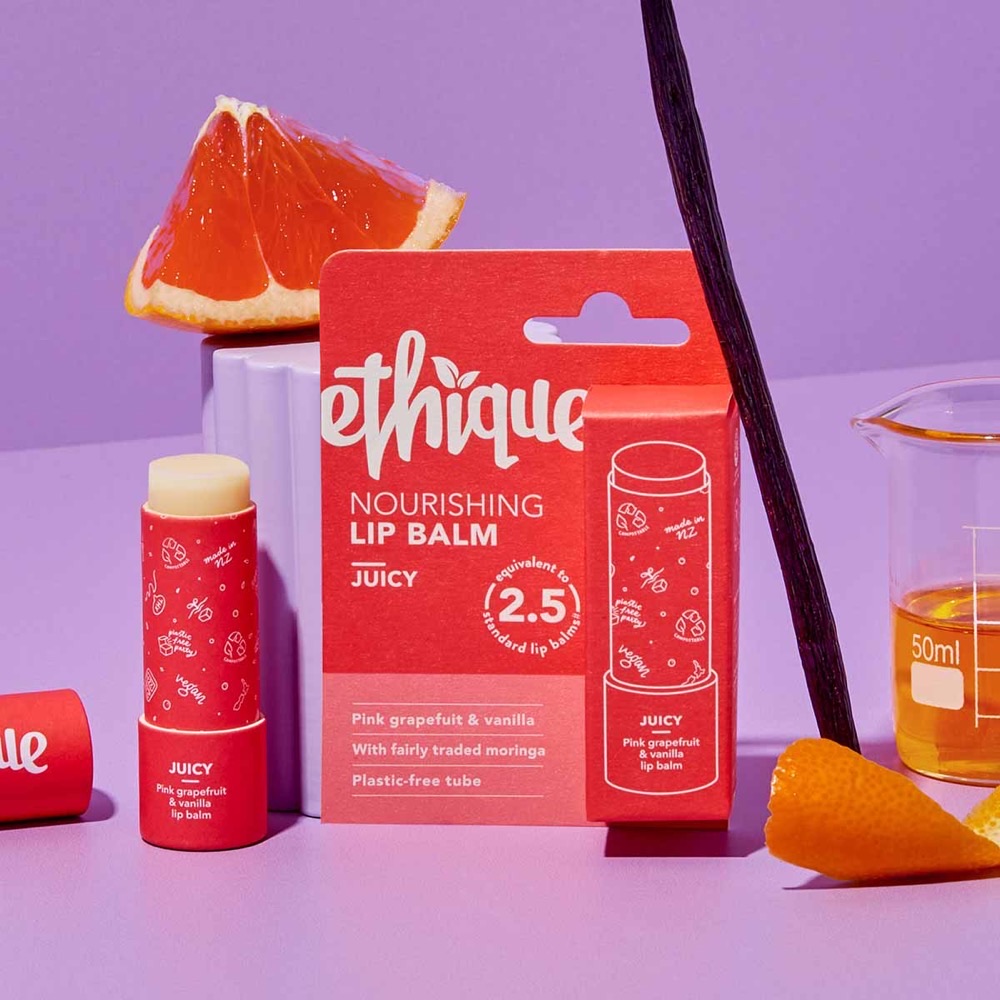
5. Ethique Juicy Nourishing Lip Balm — Best Plastic-Free Packaging
 Best Plastic-Free Packaging
The plastic-free cardboard tube and cocoa-butter-plus-oil formula draw buyers who want zero waste, and most say it soothes and softens dry lips. The honest downsides all trace to the packaging: reviewers say the cardboard tube "ends up going yukky and hard to push up," the balm softens and gets messy in summer heat, and one found the stick hard to apply and said it "tasted like cardboard."
Billions of plastic lip balm tubes hit landfills every year. This is the swap where even the empty tube can go in your compost.
Why it's safe: A vegan formula of candelilla wax, coconut oil, and cocoa butter — no petroleum, no synthetic fragrance, and no palm oil — in a home-compostable plastic-free tube.
Check Today's Price on Amazon →Amazon prices change daily — tap to see today's price and any active discount.
- Free delivery & returns for Prime members
- Amazon A-to-z purchase guarantee
Ethique addresses both the ingredient problem and the packaging problem simultaneously. The lip balm tube itself is compostable — not just recyclable, but home-compostable. For anyone concerned about the billions of plastic lip balm tubes that enter landfills each year, this is the most complete solution available.
The formula is entirely vegan, using candelilla wax (derived from a desert shrub) instead of beeswax, with coconut oil and cocoa butter for moisture. It is also palm oil free, which is increasingly important as palm oil production drives deforestation. It is priced a step above the beeswax options, but the compostable packaging and the vegan, palm-free formula justify the premium for many buyers.
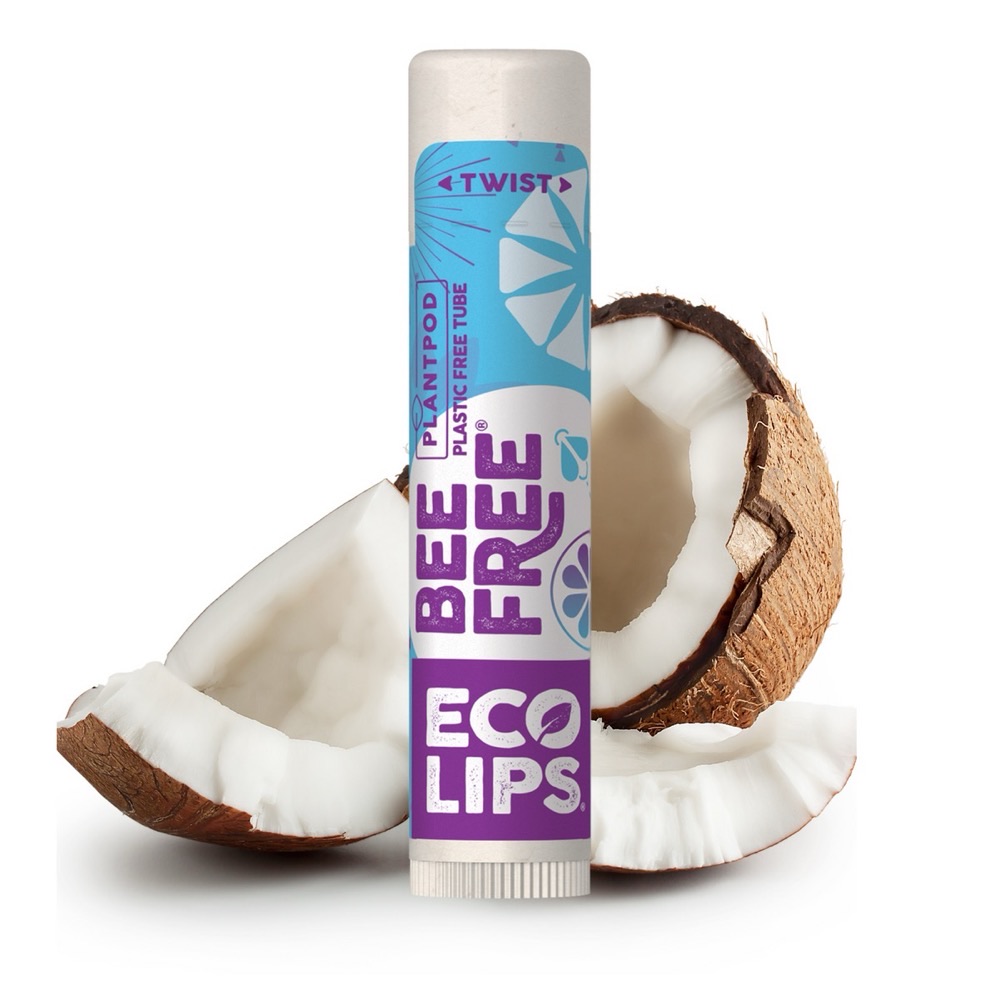
6. Eco Lips Bee Free Vegan Lip Balm — Best Eco-Friendly
 Best Eco-Friendly
This is a rare balm that is both bee-free and lanolin-free, which buyers with those sensitivities call "an answered prayer," and they describe it as soft, moisturizing and shiny with candelilla wax standing in for beeswax. Honest note: verified buyer reviews are sparse for this one, with several retailer listings showing few or no ratings, so there is not yet a large body of feedback on how it holds up day to day.
Organic plant oils on your lips and a plant-based tube in your compost — the swap that cleans up both the formula and the packaging on a budget.
Why it's safe: No petroleum and no synthetic fragrance — candelilla wax with Fair Trade organic cocoa butter and coconut oil, in a plant-based plastic-free tube.
Check Today's Price on Amazon →Amazon prices change daily — tap to see today's price and any active discount.
- Free delivery & returns for Prime members
- Amazon A-to-z purchase guarantee
Eco Lips' Bee Free combines organic ingredients with the Plant Pod — a fully plant-based, plastic-free tube that takes petroleum out of the packaging as well as the formula. For anyone concerned about the billions of plastic lip balm tubes that enter landfills each year, the plant-based tube is a meaningful improvement over conventional petroleum plastic.
The formula is vegan and straightforward: candelilla wax with Fair Trade organic cocoa butter and organic coconut oil, made in small batches in Cedar Rapids, Iowa. It sits in the budget tier alongside the beeswax options, so the eco packaging does not come at a premium. The plant-based tube does best with a little care (avoid leaving it in a hot car), but for everyday carry and use it performs well.
What About SPF Lip Balm?
Sun protection for lips is legitimate — the lips have less melanin than surrounding skin and are vulnerable to UV damage. But many SPF lip balms use chemical sunscreen agents like oxybenzone and octinoxate, which have documented endocrine-disrupting effects and are especially concerning in a product that is ingested.
For lip sun protection, look for mineral-only SPF using zinc oxide or titanium dioxide. These sit on the surface as a physical barrier rather than being absorbed. Badger offers a USDA Organic SPF lip balm that uses non-nano zinc oxide as the active ingredient — one of the cleanest options available.
Alternatively, wearing a wide-brimmed hat provides significant lip protection without any product needed. For more on clean sun protection, see the Plasticproof guide to the best non-toxic sunscreens for 2026.
The Packaging Problem
Beyond ingredients, conventional lip balms contribute to the plastic waste crisis. The average lip balm user goes through 4–8 tubes per year. Multiply that by hundreds of millions of users, and the result is billions of small plastic tubes that are too small and too contaminated with product residue to be recycled in most municipal systems.
The cleanest options from a packaging perspective:
- Plant-based or compostable tubes (Ethique compostable tube, Eco Lips Plant Pod) — plastic-free
- Metal tins (some Badger and Dr. Bronner's formats) — infinitely recyclable aluminum
- Refillable formats — emerging in 2026, several brands now offer refill pods for reusable lip balm cases
Even choosing a standard plastic tube with clean ingredients is a significant improvement over petroleum-based formulas. But if packaging waste is also a priority, the compostable and metal options now exist at every price point.
"Lip balm is one of the few cosmetic products where what you put on your skin goes directly into your body. The ingredient list matters more here than almost anywhere else in your personal care routine."
Ingredients to Avoid: The Complete List
When evaluating any lip balm not on this list, scan the ingredient label for these red flags:
- Petrolatum / petroleum jelly / mineral oil — petroleum derivatives with PAH contamination risk
- "Fragrance" or "parfum" — umbrella term that can hide dozens of undisclosed synthetic chemicals
- Methylparaben / propylparaben / butylparaben — endocrine-disrupting preservatives
- Oxybenzone / octinoxate / avobenzone — chemical UV filters with hormonal effects
- BHT / BHA — synthetic antioxidants classified as possible carcinogens
- Phenol — can cause lip irritation and dependency cycle
- Retinyl palmitate — form of vitamin A that may accelerate sun damage when applied to lips exposed to UV
- D&C Red dyes — synthetic colorants derived from coal tar, some with documented carcinogenic potential
A good rule of thumb: if the ingredient list contains more than 10 items and includes words that require a chemistry degree to pronounce, there are better options available.
For more on avoiding harmful chemicals in personal care, see the Plasticproof guides on the best non-toxic deodorants and the best non-toxic toothpaste for 2026.
Want the Full Personal Care Swap Guide?
The Complete Plasticproof Guide covers every personal care product — lip balm, deodorant, sunscreen, toothpaste, shampoo, and more — with the full research and complete swap list. 47+ peer-reviewed studies, 80+ product recommendations.
Frequently Asked Questions
Petroleum jelly (petrolatum) itself is not acutely toxic, but the concern lies in contamination. Poorly refined petrolatum can contain polycyclic aromatic hydrocarbons (PAHs), which are classified as probable carcinogens by the International Agency for Research on Cancer (IARC). The European Union requires petrolatum in cosmetics to show full refining history to prove PAH levels are safe. The U.S. FDA does not require this. Because lip balm is applied to the mouth and a portion is inevitably ingested, choosing petroleum-free formulas eliminates this exposure pathway entirely.
The main ingredients to avoid in lip balm are: (1) Petrolatum and mineral oil — petroleum derivatives that may contain PAH contaminants. (2) Synthetic fragrances — often contain phthalates and undisclosed chemicals that can disrupt hormones. (3) Parabens (methylparaben, propylparaben) — preservatives with endocrine-disrupting properties. (4) Oxybenzone and octinoxate — chemical sunscreen agents linked to hormonal effects. (5) BHT and BHA — synthetic antioxidants classified as possible carcinogens. (6) Phenol and menthol in high concentrations — can dry lips and create a cycle of dependency. Look for balms with simple ingredient lists: beeswax, plant oils (coconut, olive, jojoba), shea butter, and natural vitamin E.
No. The term "natural" is not regulated by the FDA for cosmetics. A lip balm can be labeled "natural" while still containing synthetic fragrances, preservatives, or petroleum-derived ingredients. The key is to read the full ingredient list rather than trusting front-of-package marketing claims. Look for third-party certifications like USDA Organic (which requires at least 95% certified organic ingredients) or EWG Verified (which screens for known harmful chemicals). Even among genuinely natural ingredients, some people may have sensitivities to essential oils or bee products — patch testing is always wise.
Studies estimate that the average lip product user inadvertently ingests between 24 mg and 87 mg of lip product per day, depending on application frequency. A 2016 study by researchers at UC Berkeley found that women who use lipstick or lip gloss regularly could ingest significant quantities of metals (lead, cadmium, chromium, aluminum) present in colored lip products over a lifetime. For lip balm specifically, with 2–3 applications per day, a meaningful portion enters the body through oral absorption — licking lips, eating, and drinking all transfer product directly into the digestive system. This makes lip balm one of the cosmetic products where ingredient safety matters most.
Yes, from both an ingredient safety and environmental perspective. Beeswax is a natural wax produced by honeybees that creates a protective barrier on lips without the PAH contamination risk associated with petroleum. Beeswax also contains natural vitamin A, which supports cell repair. Unlike petrolatum, which simply sits on the surface and can create a dependency cycle, beeswax allows lips to breathe while still locking in moisture. Organic beeswax is preferable, as conventionally sourced beeswax may carry pesticide residues from treated hives. For those who prefer vegan options, candelilla wax and carnauba wax offer similar barrier properties without animal-derived ingredients.
Sources
- IARC (International Agency for Research on Cancer). "Mineral Oils, Untreated and Mildly Treated." IARC Monographs on the Evaluation of Carcinogenic Risks to Humans, Vol. 33.
- European Commission Scientific Committee on Consumer Safety (SCCS). "Opinion on the safety of mineral hydrocarbons in cosmetic lip care products." SCCS/1497/12, 2018.
- Liu S, Hammond SK, Rojas-Cheatham A. "Concentrations and potential health risks of metals in lip products." Environmental Health Perspectives, 2013; 121(6):705-710.
- Darbre PD, Harvey PW. "Paraben esters: review of recent studies of endocrine toxicity, absorption, esterase and human exposure." Journal of Applied Toxicology, 2008; 28(5):561-578.
- Krause M, et al. "Sunscreen use and endocrine disruption: A systematic review." International Journal of Andrology, 2012; 35(3):424-436.
- Pop CE, et al. "Polycyclic aromatic hydrocarbons in petroleum jelly-based cosmetic products." Environmental Science and Pollution Research, 2020; 27:18421-18430.
- Greenpeace Research Laboratories. "Fragrance and Health: What You Need to Know." Technical Report, 2021.
- Cosmetic Ingredient Review (CIR) Expert Panel. "Safety Assessment of BHT as Used in Cosmetics." International Journal of Toxicology, 2022; 41(2S):15S-42S.
Protect Your Family From Hidden Chemicals
From personal care to kitchen to nursery — the Complete Plasticproof Guide covers every swap that matters, backed by 47+ peer-reviewed studies.