
Composting is one of the most effective ways to reduce household waste — but there is an irony baked into how most people do it. The bags lining kitchen compost bins are overwhelmingly made from low-density polyethylene (LDPE), the same petroleum-derived plastic used in grocery bags and cling wrap. When these bags enter a composting stream, they do not break down. They persist for centuries, fragmenting into microplastics that contaminate the finished compost and ultimately the soil it is spread on.
The problem extends beyond composting facilities. Even in the kitchen, handling conventional plastic bags generates airborne microplastic dust. Every time a bag is torn from the roll, shaken open, or tied off, microscopic plastic particles shed into the surrounding air. For households trying to reduce plastic exposure, replacing compost bin liners with genuinely compostable alternatives is one of the simplest and most impactful changes available.
The good news: plant-based compost bags that actually work now exist. They hold wet food scraps, resist tearing under normal use, and — when composted properly — break down into water, CO2, and organic biomass within weeks to months, leaving zero microplastic residue behind.
Compare all 6 picks
Every pick side by side — tap a name to jump to the full review, or check today's price.
| Pick | Why it wins | |
|---|---|---|
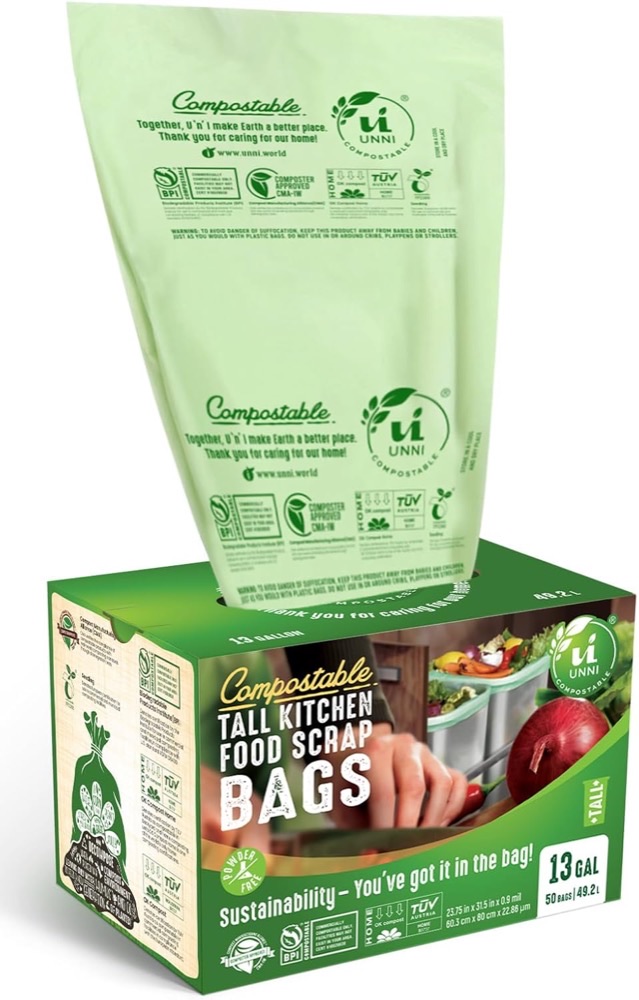 Best OverallUNNI 100% Compostable Bags, 2.6 Gallon |
BPI CertifiedASTM D6400 |
Check price → |
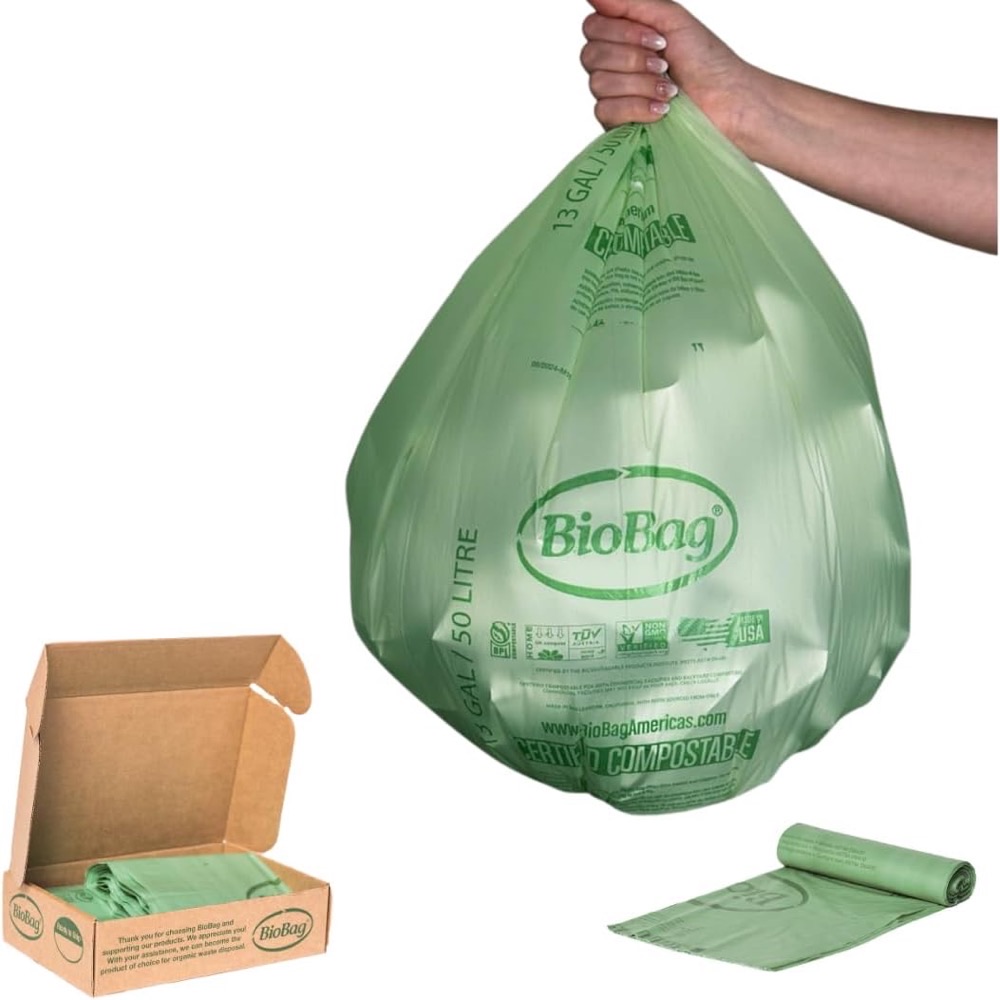 Most TrustedBioBag Compostable Kitchen Bags, 3 Gallon |
BPI CertifiedASTM D6400 |
Check price → |
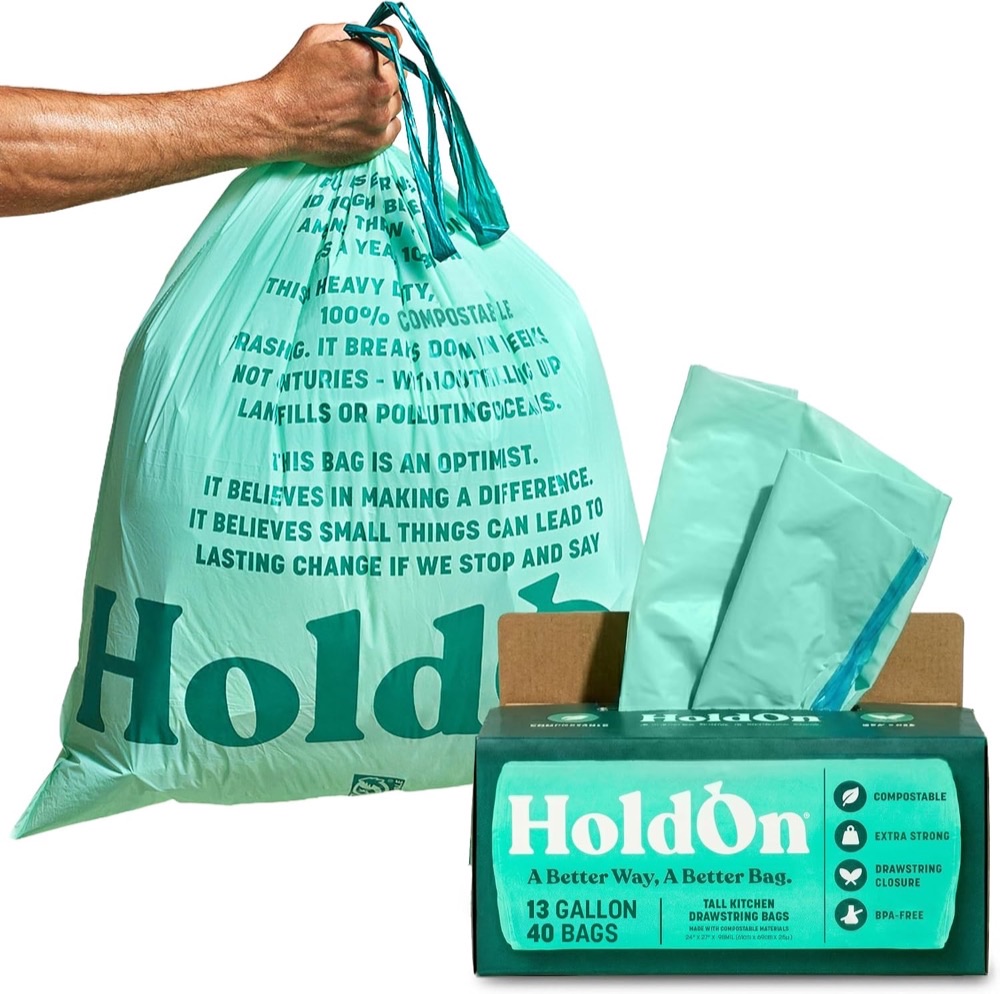 Best PremiumHoldOn Compostable Tall Kitchen Bags, 13 Gallon |
TUV CertifiedHome Compostable |
Check price → |
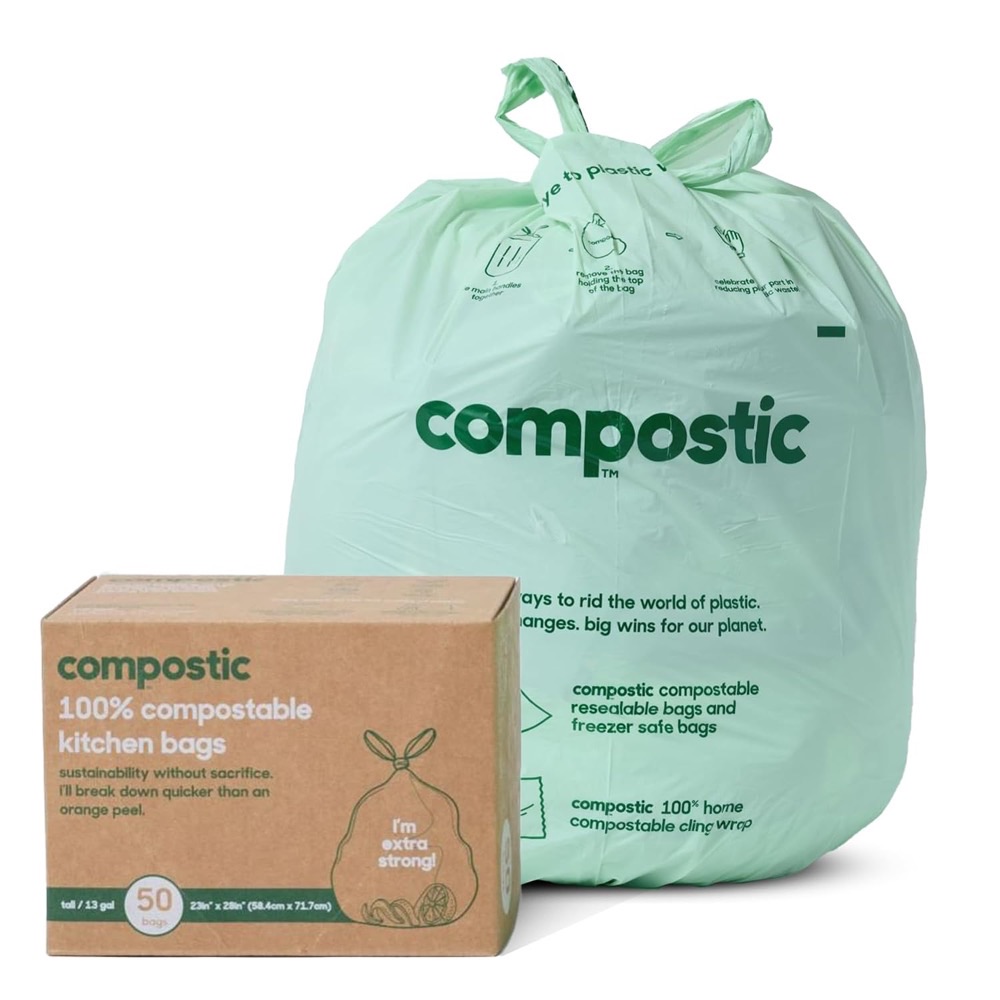 Best Home CompostCompostic Home Compostable Kitchen Bags |
OK Compost HOMEHome Compostable |
Check price → |
 Best Eco BrandIf You Care Certified Compostable Food Waste Bags |
EN 13432ASTM D6400 |
Check price → |
 Best MunicipalEcoSafe-6400 Compostable Bags, 2.6 Gallon |
BPI CertifiedASTM D6400 |
Check price → |
Why Plastic Compost Bags Are a Problem
Standard compost bin liners sold at grocery stores are made from low-density polyethylene (LDPE) — the same flexible plastic used in sandwich bags and plastic wrap. LDPE is chemically stable, which makes it effective as a bag, but that same stability means it never fully decomposes in any composting environment. In a compost pile, LDPE fragments into progressively smaller pieces, eventually becoming microplastics that contaminate the finished compost.
When this contaminated compost is spread on garden beds, agricultural land, or landscaping, the microplastics enter the soil ecosystem. Research has documented microplastic uptake by earthworms, absorption by plant root systems, and leaching into groundwater. The chemical additives blended into LDPE during manufacturing — plasticizers, UV stabilizers, colorants — migrate out of the fragments and into the soil over time, introducing endocrine-disrupting compounds into the food chain.
Municipal composting facilities face this problem at scale. Plastic bag contamination is one of the leading causes of compost batch rejection at commercial facilities. When sorting equipment cannot separate conventional plastic bags from certified compostable ones, entire loads are diverted to landfill rather than risk contaminating the finished product. This is why many municipal programs now require BPI-certified compostable bags specifically.
The term “biodegradable” is unregulated and frequently used as greenwashing. Many bags labeled “biodegradable” are actually conventional polyethylene plastic with oxo-degradable additives (metal salts) that cause the plastic to fragment into smaller pieces faster. These fragments are microplastics, not compost. Only bags with a BPI certification, ASTM D6400 compliance, or TUV Austria OK Compost rating are verified to break down fully into non-toxic biomass. Always check for the certification logo — not just marketing language.
What to Look For in a Plastic-Free Compost Bag
Not all compostable bags are equal. Here is what separates genuinely effective products from greenwashed marketing:
- BPI Certification (North America): The Biodegradable Products Institute certifies that a product meets ASTM D6400 standards for industrial composting — full biodegradation within 180 days in a commercial composting facility. This is the minimum standard to look for in any compost bag.
- ASTM D6400 Compliance: This is the specific testing standard behind BPI certification. It requires the bag to biodegrade at least 90% within 180 days under controlled industrial composting conditions, leaving no toxic residue. Products that cite ASTM D6400 without BPI certification may still be legitimate, but BPI verification provides third-party accountability.
- TUV Austria OK Compost HOME: The gold standard for home composting. This European certification verifies that the bag breaks down at lower temperatures (20–30°C) in a home compost bin — not just in high-heat industrial facilities. Essential if home composting is the intended disposal method.
- Material composition: Look for bags made from PBAT (a biodegradable co-polyester), PLA (polylactic acid, derived from corn starch), or starch-based blends. These materials genuinely biodegrade under composting conditions. Avoid any product listing polyethylene or “oxo-biodegradable” in the ingredients.
- Beware “biodegradable” without certification: This is the single biggest greenwashing trap in the compost bag market. If a bag says “biodegradable” but does not carry BPI, ASTM D6400, or TUV Austria certification, it is very likely conventional plastic with oxo-degradable additives that simply fragment into microplastics faster.
- Size and thickness: For countertop compost bins, 2–3 gallon bags are standard. For under-sink bins, 3–6 gallon. Thicker bags (0.9+ mil) handle wet food waste better without leaking through the bottom.
Quick Picks: Best Plastic-Free Compost Bags at a Glance
Our Top 6 Picks for 2026
| Pick | Product | Price | Best For |
|---|---|---|---|
| Best Overall | UNNI 100% Compostable Bags, 2.6 Gal | $ | Best value, BPI certified, corn starch |
| Most Trusted | BioBag Compostable Kitchen Bags, 3 Gal | $$ | BPI certified, made in USA, #1 brand |
| Best Premium | HoldOn Compostable Tall Kitchen Bags, 13 Gal | $$$ | Zero plastic packaging, premium quality |
| Best Home Compost | Compostic Home Compostable Kitchen Bags | $$ | OK Compost HOME certified, 12–24 weeks |
| Best Eco Brand | If You Care Compostable Food Waste Bags | $ | Unbleached, no plastic coatings |
| Best Municipal | EcoSafe-6400 Compostable Bags, 2.6 Gal | $$$ | BPI certified, municipal compost approved |
Price guide: $ budget · $$ mid-range · $$$ premium. Tap any product to see today's live Amazon price.
The 6 Best Plastic-Free Compost Bags for 2026
1. UNNI 100% Compostable Bags, 2.6 Gallon — Best Overall
Best Overall
Owners repeatedly describe these as "strong and don't leak," crediting the extra-thick plant-based material, and they hold up in countertop food-scrap pails and backyard composters for a few days at a time. Reviewers with heavy or wet scraps still get good mileage as long as they empty often. The honest downside: several note that "sometimes compostable items pierce the thin outline of the bag," letting food juice seep into the outer can, that a bag "can be torn easily with something sharp like a fish bone," and that because the plastic gathers at the bottom rather than sitting flat they "hold much less than other compost bags.
Line a countertop compost bin for pennies a bag — the star-sealed bottom holds wet coffee grounds and fruit rinds without the corner leaks that plague flat-sealed liners.
Why it's safe: BPI certified and ASTM D6400 compliant, made from plant-based corn-starch resin with no polyethylene, BPA, or phthalates — so it breaks down into biomass instead of shedding microplastics into your compost.
Check Today’s Price on Amazon →Amazon prices change daily — tap to see today's price and any active discount.
- Free delivery & returns for Prime members
- Sold & shipped by Amazon
- Thousands of verified reviews
UNNI consistently delivers the best combination of price, certification, and real-world performance in the compostable bag market. At roughly $0.10 per bag for a 100-count box, these are affordable enough to replace conventional plastic liners without a meaningful impact on the grocery budget. The corn starch-based resin meets both ASTM D6400 (US) and EN 13432 (European) composting standards — dual certification that speaks to legitimate formulation quality rather than marketing claims.
The star-sealed bottom is a practical construction detail that matters for compost bags specifically. Food scraps generate liquid — coffee grounds, fruit rinds, vegetable peels all release moisture as they sit in the bin. A flat-sealed bag creates weak points at the corners where leaks start. The star seal distributes weight and moisture more evenly across the bottom, significantly reducing the chance of a wet mess in the compost bin. For countertop compost bins that get emptied every 2–3 days, UNNI bags hold up reliably without leaking or tearing.
2. BioBag Compostable Kitchen Bags, 3 Gallon — Most Trusted Brand
Most Trusted
The most-repeated praise is that BioBags "breathe" without leaking, since the porous film lets moisture evaporate so odor stays down in a ventilated countertop caddy. Buyers like that they fit most small compost pails and actually break down in real composting rather than just sitting there. The honest warnings: durability feedback is mixed, the bags have to be used within a year of purchase and kept cool and dry because they start degrading on the shelf, they need swapping every three to five days or condensation builds up inside, and reviewers flag that they are "more expensive than conventional bags.
Use the brand municipal green-bin programs already trust — the breathable Mater-Bi material cuts the condensation and odor that build up inside sealed plastic liners.
Why it's safe: BPI certified and ASTM D6400 compliant, built from a GMO-free starch-based Mater-Bi blend with no polyethylene and no oxo-degradable additives — it composts cleanly instead of fragmenting into microplastics.
Check Today’s Price on Amazon →Amazon prices change daily — tap to see today's price and any active discount.
- Free delivery & returns for Prime members
- Sold & shipped by Amazon
- Thousands of verified reviews
BioBag is the most established name in compostable bags — the company has been refining plant-based bag formulations for over two decades, and that experience shows in the product. The proprietary Mater-Bi resin is a starch-based polymer blend that is GMO-free and BPI certified for industrial composting. BioBag is also the brand most commonly specified by municipal composting programs, which means these bags are the least likely to be rejected at a commercial facility.
The breathable design is a meaningful advantage for compost bags specifically. Unlike sealed polyethylene, BioBag’s material allows slight moisture vapor transmission. This reduces the condensation buildup inside the bag that accelerates anaerobic decomposition and causes the rapid odor development that makes kitchen composting unpleasant. The trade-off is that extremely wet waste (soup, smoothie remnants) can seep through over extended periods — empty the bag into the compost bin every 2–3 days for best results. At $0.12 per bag, the cost is only marginally higher than UNNI, with the added assurance of the most recognized brand in the category.
3. HoldOn Compostable Tall Kitchen Bags, 13 Gallon — Best Premium
Best Premium
Buyers say these "hold up surprisingly well," with many reporting a full week of trash without ripping or leaking thanks to the multi-way flex material that resists tears when the bag is stuffed. Lived with, they handle medium-to-heavy household loads better than most compostable bags people had tried. The honest gripes: heavy loads "can cause rips and leaks," some reviewers "had one drawstring rip," the bags "smell a bit funky in the box" from the plant-based ingredients, and reviewers point out the bags will not actually break down once they reach a landfill.
Get a full-size 13-gallon drawstring kitchen bag that still composts at home — and arrives in compostable wrapping inside a cardboard box, with no plastic shrink wrap anywhere.
Why it's safe: TUV Austria certified for home composting, made from a PBAT, PLA, and cornstarch blend with no polyethylene, BPA, or synthetic fragrances — verified to break down in a backyard pile, not just an industrial facility.
Check Today’s Price on Amazon →Amazon prices change daily — tap to see today's price and any active discount.
- Free delivery & returns for Prime members
- Sold & shipped by Amazon
- Thousands of verified reviews
HoldOn represents the premium end of the compostable bag market, and the higher price point buys two things that matter. First, TUV Austria certification means these bags are verified to break down in home compost conditions — not just the high-temperature industrial facilities that BPI certification requires. For households that maintain a backyard compost bin, this is the critical difference between a bag that actually decomposes and one that persists for months or years.
Second, HoldOn is one of the only brands that has eliminated plastic from the entire product chain, not just the bag itself. The bags ship in a compostable wrapper inside a recycled cardboard box — no plastic shrink wrap, no poly bag liner, no plastic tape. This matters for households that are trying to reduce total plastic throughput, not just swap one plastic item for a slightly better one. The PBAT, PLA, and cornstarch blend feels remarkably similar to conventional plastic in terms of stretch and tear resistance. The drawstring closure works well for the 13-gallon kitchen size. At $1.25 per bag, HoldOn is the most expensive option on this list — but for home composters who want a genuinely plastic-free product from box to bin, the premium is justified.
4. Compostic Home Compostable Kitchen Bags — Best for Home Composting
Best Home Compost
Compostic leans on being extra strong and tear-resistant, and some buyers back that up, reporting the bags "never broken" over a couple of days of light kitchen trash and appreciating that they carry to the compost pile without drips; the bags are certified home-compostable and break down in roughly 12 to 24 weeks. Verified Compostic-only negative reviews are genuinely scarce, so read this as a lighter-evidence pick. The documented honest downsides are the premium price, a slight odor some users notice, and the inherent trade-off that a home-compostable bag begins breaking down with moisture, so trash left sitting can start to leak within about 48 hours.
Drop a full bag straight into a backyard tumbler and watch it actually disappear — Compostic is certified to break down in 12–24 weeks at the low temperatures a home pile reaches.
Why it's safe: OK Compost HOME certified by TUV Austria, made from plant-based resins with no microplastics, polyethylene, or oxo-degradable additives — verified for true home composting, not just high-heat industrial facilities.
Check Today’s Price on Amazon →Amazon prices change daily — tap to see today's price and any active discount.
- Free delivery & returns for Prime members
- Sold & shipped by Amazon
- Thousands of verified reviews
Compostic is built specifically for the home composting use case, and the OK Compost HOME certification is the key differentiator. While most compostable bags on the market are certified only for industrial composting (55–70°C), Compostic is independently verified to break down at home composting temperatures of 20–30°C within 12–24 weeks. For the growing number of households that maintain backyard compost bins or tumblers, this certification removes the uncertainty about whether the bag will actually decompose or just sit in the pile for months.
The 12–24 week breakdown window is realistic and honestly stated — some brands make vague claims about “rapid decomposition” without specifying conditions or timelines. Compostic’s transparency about the composting timeline builds trust. In practice, the bags begin visibly breaking down within the first few weeks in an active home compost pile, and are fully decomposed by the 12–24 week mark depending on pile temperature, moisture, and aeration. At $0.65 per bag for a 20-count box, the cost is moderate — between the budget options and HoldOn’s premium pricing.
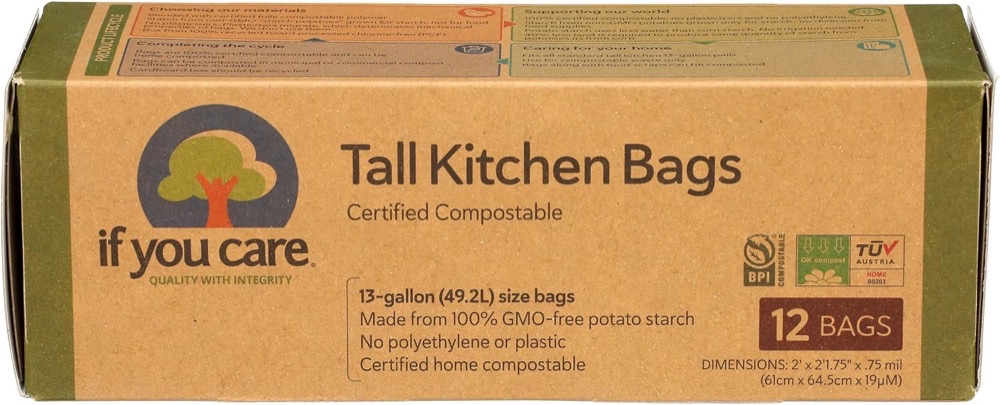
5. If You Care Certified Compostable Food Waste Bags — Best Eco Brand
Best Eco Brand
Buyers say these "don't split or leak before it's bin collection day" and that they "fit my food waste caddy just right," then "degrade in my compost bin within months," and the potato-starch bags carry a home-compostable certification that matters to people with council food-waste programs. Reviews skew heavily positive with few complaints. The honest downside: testers rate them "less strong than BioBag for heavy wet waste," so a heavy or long-sitting wet load is the weak point, and, like the whole compostable category, one reviewer's blunt comment was "Why do they all smell so bad?
Collect kitchen scraps in a bag with no bleach, coatings, or fragrances added for looks — the natural unbleached finish is the visual proof nothing extra went in.
Why it's safe: Certified compostable to EN 13432 and ASTM D6400, made from GMO-free potato starch with no plastic coatings, chlorine bleach, or synthetic fragrances — clean enough for any countertop compost bin.
Check Today’s Price on Amazon →Amazon prices change daily — tap to see today's price and any active discount.
- Free delivery & returns for Prime members
- Sold & shipped by Amazon
- Thousands of verified reviews
If You Care has built one of the most transparent and sustainability-focused household product lines on the market, and their compostable food waste bags reflect that ethos. Made from unbleached, GMO-free potato starch, these bags are free of the chemical coatings and bleaching agents that many competing products use for aesthetic purposes. The natural, unbleached appearance is a visual indicator that no unnecessary processing chemicals were added.
The brand’s FSC certification for their paper products and commitment to sustainable sourcing across the entire product line speaks to environmental accountability that goes beyond a single product. For households that prioritize buying from companies with genuine sustainability credentials — not just green marketing on one SKU — If You Care is the most trustworthy option on this list. At $0.27 per bag, the pricing is competitive. The bags hold up well for 2–4 days of food scrap collection in a countertop compost bin, which is the typical use pattern for most kitchen composting setups.
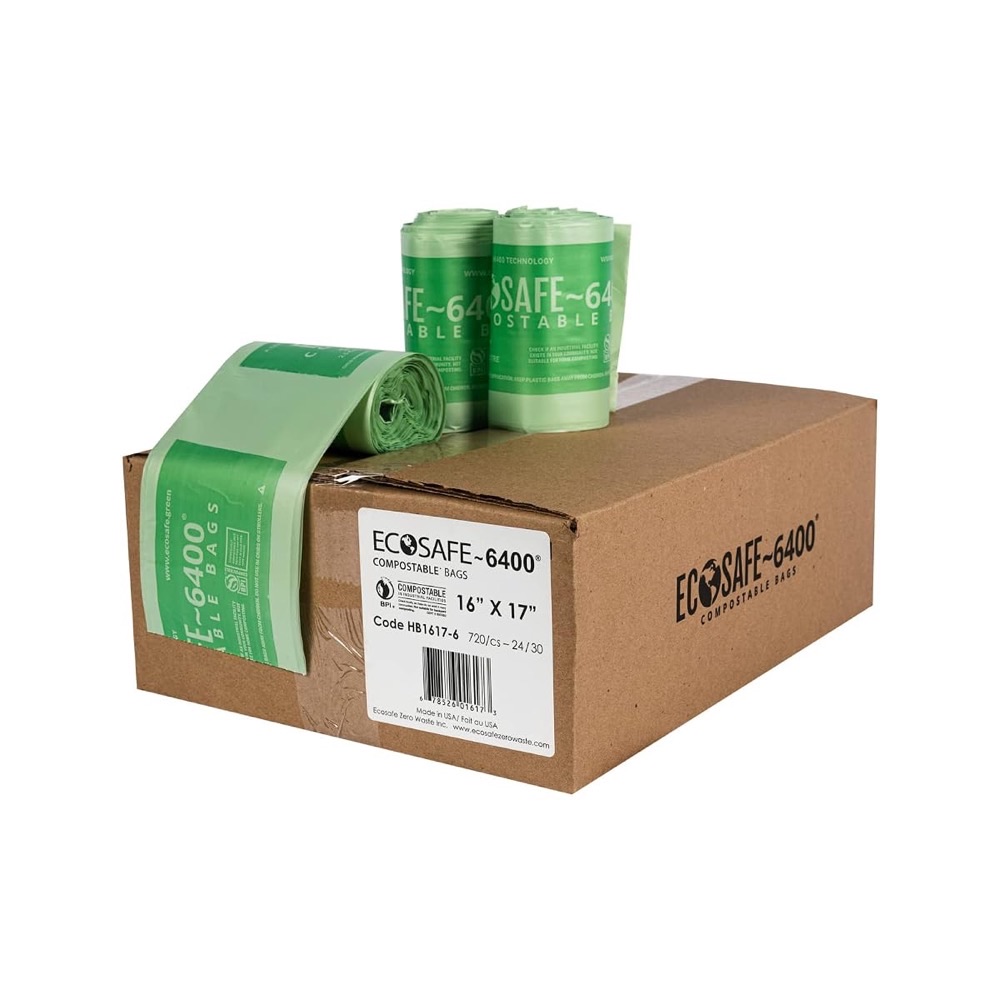
6. EcoSafe-6400 Compostable Bags, 2.6 Gallon — Best for Municipal Composting
Best Municipal
Reviewers describe these as leak-, puncture- and tear-resistant with sturdy star-seal bottoms, and one recounts having "suffered through other brands getting soft and tearing" before finding EcoSafe bags that held; they are BPI-certified and popular with people whose towns run curbside organics pickup. The honest warning: the loudest complaint is that they are labeled "Commercially Compostable Only," with one one-star reviewer feeling "stuck with expensive bags" they had no way to compost, since these will not break down in a home compost pile or a landfill, and they cost more than conventional bags.
Drop your green-bin liner into a curbside compost program without worrying it gets pulled as plastic — EcoSafe's green tint is what facility sorters look for.
Why it's safe: BPI certified and ASTM D6400 compliant for industrial composting, made from plant-based resins with no polyethylene or oxo-degradable additives — accepted by municipal programs across the US and Canada.
Check Today’s Price on Amazon →Amazon prices change daily — tap to see today's price and any active discount.
- Free delivery & returns for Prime members
- Sold & shipped by Amazon
- Thousands of verified reviews
EcoSafe-6400 is the compost bag most likely to be recognized and accepted at municipal composting facilities. The brand has long-standing relationships with commercial composting operations across North America, and the distinctive green tint serves a practical purpose: sorting staff at composting facilities can visually distinguish EcoSafe bags from conventional plastic bags during the intake process, reducing the risk of batch contamination and rejection.
For households that participate in municipal green bin or curbside composting programs, this visual identification factor matters more than it might seem. Composting facilities increasingly reject loads that appear to contain conventional plastic, even if the bags are actually compostable. EcoSafe’s recognizable green color and BPI certification logo reduce friction at the facility level. The 2.6-gallon size fits standard countertop compost bins perfectly, and at $0.15 per bag for a 100-count box, the per-unit cost is reasonable for a brand with this level of institutional credibility and acceptance.
Want the Full Room-by-Room Protection Guide?
The Complete Plasticproof Guide covers every room in your home — kitchen, nursery, bathroom, bedroom — with the full research and complete swap list. 47+ peer-reviewed studies, 80+ product recommendations.
Frequently Asked Questions
Yes, when properly certified and disposed of. Certified compostable bags (BPI or TUV Austria certified) are made from plant-based materials like corn starch, PBAT, and PLA that break down into water, CO2, and biomass under composting conditions. Conventional polyethylene bags never decompose in compost — they persist for centuries, contaminate the finished compost with microplastics, and can cause entire batches to be rejected at municipal composting facilities. The key is choosing bags with genuine certifications (BPI, ASTM D6400, or OK Compost HOME) rather than bags labeled simply “biodegradable,” which is an unregulated term that often means the bag is still conventional plastic with additives.
“Compostable” is a regulated term backed by specific certifications (BPI, TUV Austria) that require the product to fully break down into non-toxic biomass within a defined timeframe — typically 90 to 180 days under composting conditions. “Biodegradable” is an unregulated marketing term that technically applies to any material that breaks down eventually, including conventional plastic over hundreds of years. Many bags marketed as “biodegradable” are standard polyethylene with oxo-degradable additives that cause the plastic to fragment into microplastics faster. Always look for BPI certification, ASTM D6400 compliance, or TUV Austria OK Compost certification — not just the word “biodegradable” on the packaging.
It depends on the certification. Bags certified only for industrial composting (BPI / ASTM D6400) are designed to break down at 55–70°C in commercial facilities. Home compost bins rarely exceed 35°C, so industrially certified bags may take much longer or may not fully break down in a backyard pile. For home composting, look for bags with TUV Austria OK Compost HOME certification. On this list, Compostic and HoldOn are specifically certified for home composting conditions. UNNI, BioBag, and EcoSafe-6400 are certified for industrial composting and should be used with municipal green bin programs.
Modern compostable bags from reputable brands hold up well for typical food waste. Brands like UNNI, BioBag, and EcoSafe-6400 have refined their formulations to resist moisture and tearing during normal kitchen use. Compostable bags do have a shorter shelf life than conventional plastic — they are designed to break down, after all. Store unused bags in a cool, dry place away from direct sunlight and use them within 12 months of purchase. For countertop compost bins, empty the bag every 2–4 days to prevent moisture buildup. Star-sealed bags (like UNNI) offer the best leak resistance for wet food scraps.
Most municipal composting programs that accept food waste will accept BPI-certified compostable bags, but policies vary by region. Some programs require BPI certification specifically, while others accept any certified compostable liner. A few programs still require unlined bins or paper bags only. Check your local composting program’s website or contact them directly to confirm their bag policy. All six bags on this list carry certifications accepted by the majority of US municipal composting programs. EcoSafe-6400 has the widest municipal acceptance due to its long-standing relationships with commercial composting facilities.
Conventional polyethylene bags do not biodegrade under any composting conditions. When they enter a composting stream, they fragment into progressively smaller pieces — becoming microplastics that contaminate the finished compost. This contaminated compost is then spread on agricultural land, gardens, and parks, introducing microplastics directly into the soil. A 2023 study found that compost contaminated with plastic fragments contained an average of 20+ microplastic particles per gram of finished product. These particles leach chemical additives into the soil and are taken up by earthworms and plant roots, entering the food chain. Using certified compostable bags eliminates this contamination pathway.
Sources
- Weithmann N, et al. “Organic fertilizer as a vehicle for the entry of microplastic into the environment.” Science Advances, 2018.
- Napper IE, Thompson RC. “Environmental Deterioration of Biodegradable, Oxo-biodegradable, Compostable, and Conventional Plastic Carrier Bags in the Sea, Soil, and Open-Air Over a 3-Year Period.” Environmental Science & Technology, 2019.
- Blašković A, et al. “Microplastics in compost: Occurrence, characteristics, and potential environmental impacts.” Environmental Pollution, 2023.
- Biodegradable Products Institute (BPI). “ASTM D6400 Standard Specification for Labeling of Plastics Designed to be Aerobically Composted in Municipal or Industrial Facilities.” 2023.
- TUV Austria. “OK Compost HOME Certification Scheme — Technical Documentation.” 2024.
- Zimmermann L, et al. “Are bioplastics and plant-based materials safer than conventional plastics? In vitro toxicity and chemical composition.” Environment International, 2020.
- Geyer R, Jambeck JR, Law KL. “Production, use, and fate of all plastics ever made.” Science Advances, 2017.
Protect Every Room in Your Home
From the kitchen to the bathroom to the nursery — the Complete Plasticproof Guide covers every swap that matters, backed by 47+ studies.