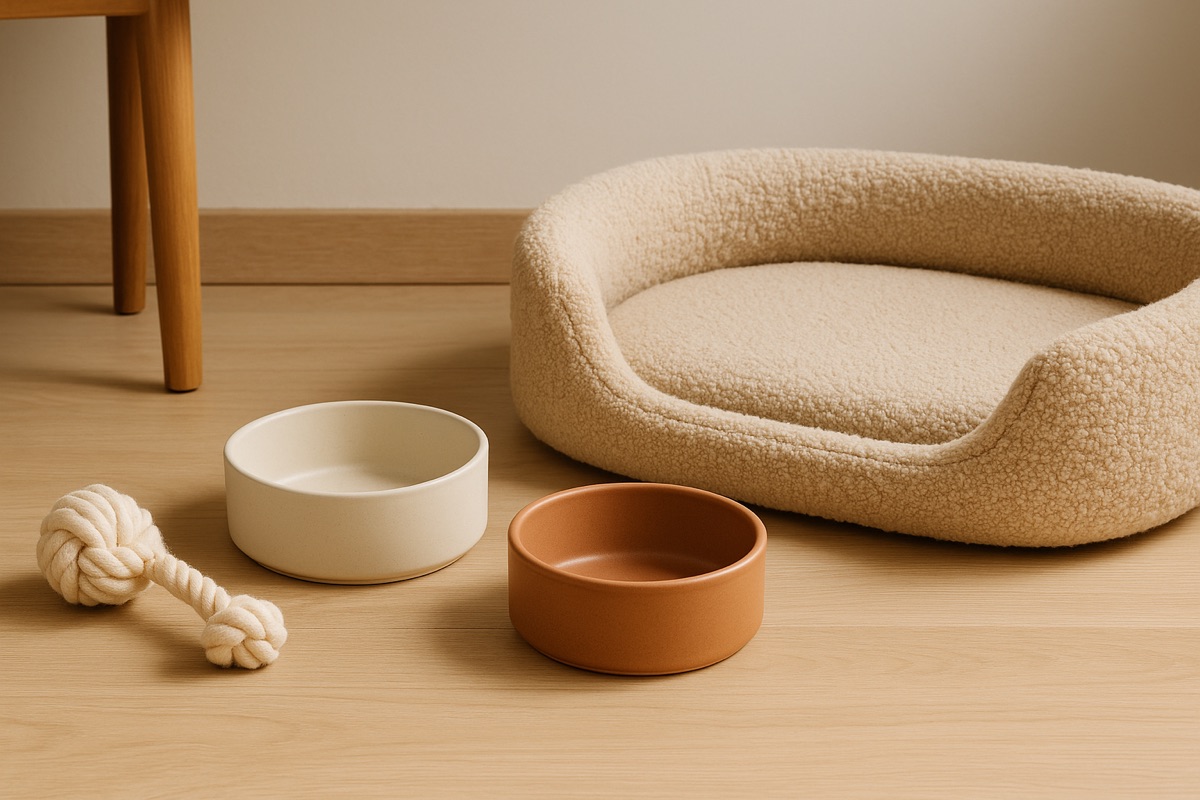
We love our pets like family — but most of us are unknowingly surrounding them with plastic products that leach harmful chemicals directly into their food, water, and sleeping environment. Plastic pet bowls, vinyl chew toys, and synthetic fleece beds are the norm in pet stores. And because pets are smaller, have faster metabolisms, and chew or lick nearly everything they touch, their chemical dose per kilogram of body weight is significantly higher than ours.
A 2024 study detected microplastic particles in water and food stored in plastic pet bowls at concentrations far exceeding those found in human dishware. Scratched plastic bowls — the kind most pets use for years — were the worst offenders, releasing BPA, phthalates, and micro-fragments with every meal. When heated by sunlight or warm food, the leaching accelerates dramatically.
The short answer: switching your pet's bowls, toys, and bed to non-toxic alternatives is one of the most impactful things you can do for their health — and the swaps are surprisingly affordable. This guide covers every category with specific product recommendations, what to avoid, and why it matters.
Why Pets Are More Vulnerable Than We Are
Pets face a triple exposure problem that most pet owners never consider. First, body weight matters enormously. A 15-pound dog drinking from a BPA-leaching plastic bowl receives a chemical dose per kilogram that would be roughly 5 to 10 times what a 150-pound adult would get from the same bowl. For cats, which average 8 to 10 pounds, the ratio is even more extreme.
Second, pets interact with materials differently than humans. Dogs chew toys for hours, grinding down plastic surfaces and ingesting fragments directly. Cats knead and lick synthetic bed fabrics, inhaling and swallowing microfibers. Both species eat and drink with their faces pressed directly into their bowls — no utensils creating distance from the material.
Third, pets have shorter lifespans, which means the window for chronic chemical exposure to manifest as disease is compressed. What might take decades to affect a human can affect a dog within years. Endocrine disruption, liver stress, and reproductive effects from plasticizers have been documented in companion animals at exposure levels common in household environments.
"Companion animals serve as sentinels for human environmental health risks. Their shorter lifespans and higher relative exposures mean they often show effects of chemical exposure before we see them in human populations."
Water & Food Bowls: The First Swap to Make
The bowl your pet eats and drinks from multiple times a day is the single highest-impact swap. Plastic bowls — especially when scratched, heated, or sun-faded — continuously leach BPA, phthalates, and microplastic fragments into food and water. Stainless steel and lead-free ceramic bowls eliminate this exposure pathway entirely.
Stop Plastic pet bowls (especially scratched or faded ones)
Even "BPA-free" plastic bowls often contain BPS or other bisphenol analogues that carry similar endocrine-disrupting properties. Scratches create microscopic grooves that harbor bacteria and accelerate chemical leaching. If your pet's plastic bowl is scratched, cloudy, or discolored, it is actively shedding plastic into every meal.
Switch Stainless steel or lead-free stoneware bowls
| Product | Material | Dishwasher Safe | Price |
|---|---|---|---|
| Basis Pet Stainless Steel | 304 Stainless Steel | Yes | ~$25 |
| Yeti Boomer Dog Bowl | 18/8 Stainless Steel | Yes | ~$40 |
| Le Creuset Stoneware | Enameled Stoneware | Yes | ~$30 |
Toys: What Your Pet Chews Matters
Dogs spend hours chewing toys — grinding surfaces, ingesting fragments, and absorbing chemicals through their mouth's mucous membranes. A 2018 study by the Ecology Center found that 45% of pet toys tested contained at least one hazardous chemical above safe thresholds, including lead, cadmium, chromium, and phthalates. Brightly colored imported vinyl toys were the worst offenders.
The safest toys are made from certified BPA-free, phthalate-free materials or natural fibers. Avoid anything that smells strongly of plastic or chemicals — that smell is off-gassing, and your pet is breathing and chewing it.
Stop Vinyl toys, cheap imported chew toys, and anything with a strong plastic smell
PVC (vinyl) toys are among the most chemically concerning pet products available. PVC requires plasticizer additives (typically phthalates) to make it flexible — and those additives leach out continuously, especially when chewed. Tennis balls are another hidden concern: the outer felt traps abrasive particles, and the rubber core often contains undisclosed chemical blends.
Switch BPA-free certified toys and natural fiber options
Beds: Where Your Pet Sleeps 12+ Hours a Day
Dogs sleep an average of 12 to 14 hours per day. Cats sleep 15 to 20 hours. That is an enormous amount of time spent in direct, full-body contact with whatever material their bed is made from. Most conventional pet beds use polyester fill, polyurethane foam cores, and synthetic fleece or microfiber covers — all of which shed microplastic fibers and off-gas VOCs.
Memory foam pet beds carry the same concerns as human memory foam mattresses: polyurethane off-gassing, potential formaldehyde content, and gradual degradation into microparticles. Synthetic fleece covers shed thousands of microfibers that pets inhale and ingest while sleeping.
Stop Synthetic fleece beds and memory foam pet beds
If your pet's bed has a strong chemical smell when new, that is VOC off-gassing from polyurethane foam or synthetic fabric treatments. Even after the smell fades, the materials continue to break down and shed at lower concentrations over the life of the product.
Switch Organic cotton and natural fill pet beds
Quick Picks — Our Top Recommendations
- Best Bowl: Basis Pet Stainless Steel Bowl (~$25) — third-party tested, food-grade 304 steel
- Best Toy: West Paw Zogoflex Hurley (~$15) — BPA-free, recyclable, made in the USA
- Best Budget Toy: Hemp Rope Toy (~$10) — natural fiber, no synthetic dyes
- Best Bed: Molly Mutt Organic Cotton Duvet (~$45) — organic cotton, zero synthetic fill
- Best Premium Bed: Pendleton National Parks Pet Bed (~$80) — wool blend, built to last
What to Avoid: A Quick Reference
Not every product requires a full deep-dive. Here is a concise list of pet products we recommend avoiding or replacing as soon as practical:
Plastic bowls — especially scratched, cloudy, or sun-faded ones. Even "BPA-free" plastic bowls often contain BPS or other bisphenol substitutes with similar endocrine-disrupting effects. Replace with stainless steel or lead-free ceramic.
- Vinyl (PVC) toys: Vinyl requires phthalate plasticizers that leach continuously during chewing. If a toy is soft, flexible, and smells strongly of plastic, it is almost certainly PVC. Replace with BPA-free TPE toys (West Paw, Planet Dog) or natural materials.
- Synthetic fleece pet beds: Polyester fleece sheds thousands of microfibers that your pet inhales and ingests during the 12+ hours per day they spend sleeping. Replace with organic cotton or wool-blend options.
- Memory foam pet beds: Polyurethane foam off-gases VOCs and degrades into microparticles over time. The "new bed smell" is chemical off-gassing. Replace with natural fill alternatives.
- Chemically processed rawhide: Conventional rawhide chews are processed with bleach, hydrogen peroxide, and artificial flavoring chemicals. They also pose choking and intestinal blockage risks. Replace with naturally dried bully sticks, dehydrated sweet potato chews, or Himalayan yak chews.
- Plastic food storage containers: If you store pet food in a plastic bin, chemicals leach into the food — especially with kibble that contains fats. Use the original bag inside the bin, or switch to stainless steel or glass food storage.
The Priority Order: Where to Start
If you are working with a limited budget, here is the order that delivers the most protection per dollar spent:
- Bowls first. The highest frequency of contact (multiple times daily), the most direct chemical pathway (leaching into food and water), and the most affordable swap ($25 for a Basis Pet bowl that lasts a lifetime).
- Toys second. Especially for heavy chewers. The West Paw Hurley at $15 eliminates the chemical exposure from a product your dog has in their mouth for hours. Hemp rope toys at $10 are an even cheaper starting point.
- Bed third. The Molly Mutt at $45 is accessible for most budgets and eliminates 12+ hours of daily synthetic material contact. Stuff it with old towels — zero additional cost for the fill.
- Food storage. Keep kibble in its original bag rather than transferring to a plastic bin. If you must use a container, choose stainless steel.
The total cost to swap all three core categories — bowl, toy, and bed — is approximately $85 to $100. That is a one-time investment for products that last years, dramatically reducing your pet's daily chemical exposure.
Want the Full Room-by-Room Protection Guide?
The Complete Plasticproof Guide covers every room in your home — kitchen, nursery, bathroom, bedroom, and pet care — with the full research and complete swap list. 47+ peer-reviewed studies, 80+ product recommendations.
Frequently Asked Questions
Plastic pet bowls are not the safest option. Over time, scratches and heat exposure cause plastic bowls to leach BPA, phthalates, and other endocrine-disrupting chemicals into food and water. A 2024 study detected microplastic particles in water stored in plastic pet bowls at significantly higher concentrations than in stainless steel or ceramic alternatives. Scratched plastic bowls also harbor bacteria in surface grooves that are nearly impossible to fully clean. Stainless steel or lead-free ceramic bowls are safer, more durable, and fully dishwasher safe.
Emerging research suggests yes. Pets face higher microplastic exposure per kilogram of body weight than humans, because they eat and drink from plastic containers, chew on plastic toys, and sleep on synthetic materials — all at a fraction of human body weight. A study found BPA and phthalates in the blood of domestic dogs at concentrations 2 to 5 times higher than their owners. These chemicals are known endocrine disruptors linked to hormonal imbalance, reproductive issues, and increased cancer risk in animal models. While direct causation studies in companion animals are still limited, the precautionary principle strongly favors reducing exposure.
Stainless steel (food-grade 304 or 18/8) is widely considered the safest material for dog bowls. It does not leach chemicals, resists scratching and bacterial buildup, and is fully dishwasher safe. Lead-free stoneware and ceramic (such as Le Creuset Stoneware) are also excellent options, though they can chip over time. Avoid plastic bowls entirely, especially scratched or sun-faded ones, as well as any ceramic bowls with decorative glazes that may contain lead — stick with solid-color food-safe glazes from reputable brands.
It depends on the rubber. Natural rubber and certified BPA-free, phthalate-free thermoplastic elastomers (like West Paw's Zogoflex material) are considered safe for chewing. However, many cheap rubber and vinyl dog toys — especially brightly colored imported ones — contain PVC, phthalate plasticizers, and lead-containing dyes. A 2018 study by the Ecology Center found that 45% of pet toys tested contained at least one hazardous chemical above safe thresholds. Look for toys that are specifically certified free of BPA, phthalates, and PVC, or choose natural materials like hemp rope and untreated natural rubber.
Yes. Most conventional pet beds use polyester fill, polyurethane foam, and synthetic fabric covers — all of which can off-gas volatile organic compounds (VOCs) and shed microplastic fibers. Memory foam pet beds carry the same polyurethane concerns as human mattresses, including toluene and formaldehyde off-gassing. Synthetic fleece covers shed microfibers that pets inhale and ingest during sleep. Safer alternatives include beds with organic cotton covers and natural fill materials. Molly Mutt makes organic cotton duvet-style dog beds that you stuff with your own old clothing or blankets, avoiding synthetic fill entirely.
Sources
- Koelmans AA, et al. "Microplastics in freshwaters and drinking water: Critical review and assessment of data quality." Water Research, 2019.
- Ecology Center. "Toxins in Pet Products: A Consumer Guide to Safer Choices." HealthyStuff.org, 2018.
- Prata JC, et al. "Environmental exposure to microplastics: An overview on possible human health effects." Science of the Total Environment, 2020.
- Jenner LC, et al. "Detection of microplastics in human lung tissue using μFTIR spectroscopy." Environment International, 2022.
- Ragusa A, et al. "Plasticenta: First evidence of microplastics in human placenta." Environment International, 2021.
Protect Your Whole Home — Including Your Pets
From the kitchen to the nursery to pet care — the Complete Plasticproof Guide covers every swap that matters, backed by 47+ studies.