ZeroWater

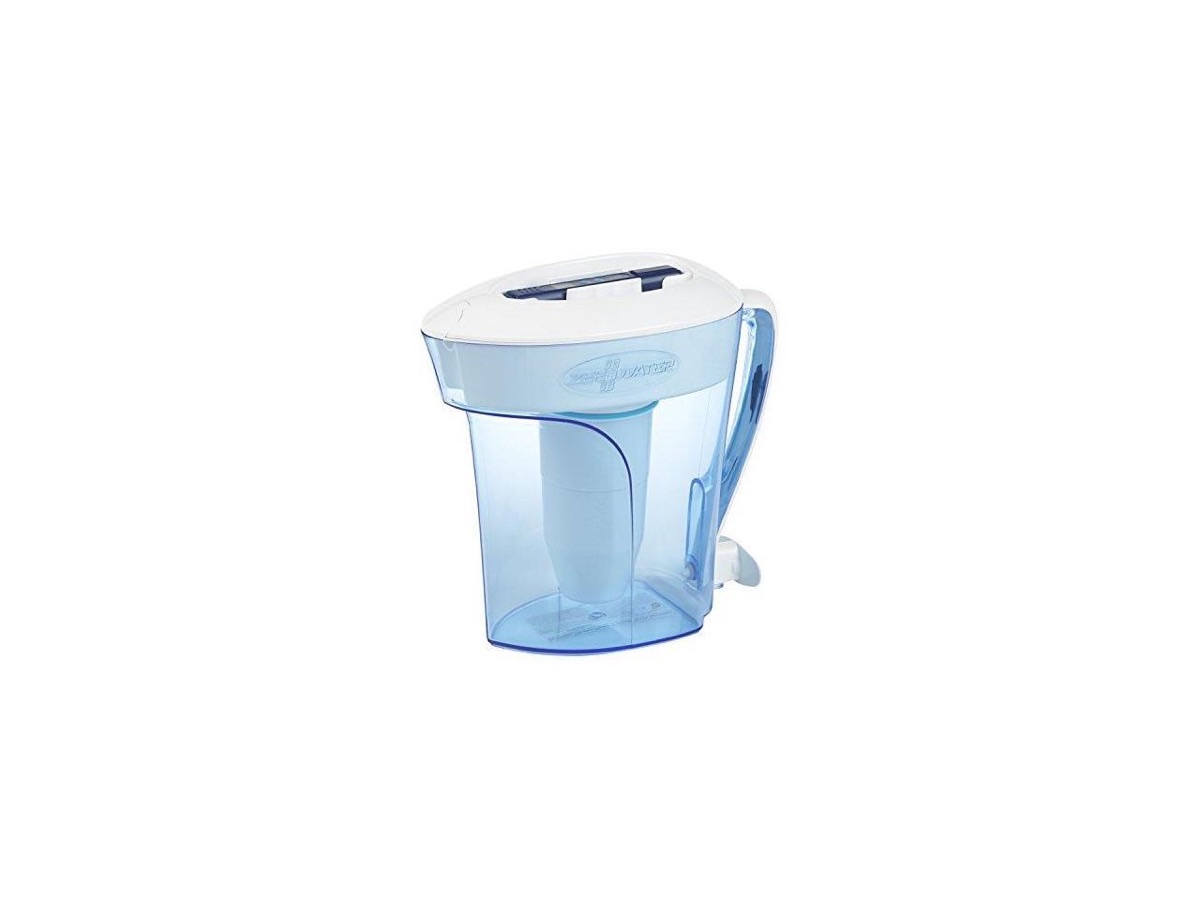
ZeroWater 10-Cup 5-Stage Water Filter Pitcher (ZD-010RP)

Plasticproof Great $$$Our price tier

Five-stage ion-exchange pitcher that ZeroWater states is IAPMO certified to reduce lead, chromium and PFOA/PFOS. Every pitcher ships with a meter so you can see when the filter is spent instead of guessing.

Check price on Amazon
Certified for lead and PFOA/PFOSIAPMO listing, per ZeroWater.
Ion exchange, not just carbonRemoves dissolved solids.
Meter includedYou can see when it is spent.
See exactly how we verify this

As an Amazon Associate I earn from qualifying purchases — at no extra cost to you. We show a "Check price on Amazon" link rather than a number because Amazon prices change often.

Why it's safe for your family

  • Ion exchange is a different mechanism from the carbon in an ordinary pitcher: the resin swaps dissolved ions out of the water rather than adsorbing them onto a surface. That is why the meter can read zero dissolved solids, and why a carbon-only pitcher cannot do the same thing.
  • ZeroWater states the five-stage filter is certified by IAPMO to reduce lead, chromium and PFOA/PFOS — a third-party certification listing, not a maker-run bench test.
  • The included meter reads total dissolved solids, which is a plain measure of everything dissolved in your water. It turns "is my filter still working?" from a guess into a number you can read on the counter.
  • The stages are stacked so coarse material is caught before the resin: a screen, a foam distributor, a carbon and oxidation-reduction alloy layer, the dual-bed resin, and a final non-woven layer.

Quick specs

Method
Five-stage: sediment, carbon and redox alloy, dual-bed ion exchange
Certified by
IAPMO — lead, chromium, PFOA/PFOS (ZeroWater’s stated certification)
Capacity
10 cups
Included
Total-dissolved-solids meter
Installation
None — fill and pour

What to avoid instead

The thing to avoid is a carbon-only pitcher bought in the belief that it is doing this job. Standard carbon improves taste and reduces chlorine; it does not exchange dissolved ions, so a meter reading barely moves. If your goal is the lowest dissolved-solids reading you can get without plumbing, this is the pitcher for it — and if your goal is microplastics specifically, see the honest answer in the questions below.

How we verify — and what we don't

Straight answer: we're a research team, not a testing lab. Here's exactly what our rating is based on — and what it isn't — so you can weigh it honestly.

What we check

  • What the product is made of, from the maker's own specs and product listing.
  • Whether any part that touches you or your food uses PTFE, PFAS, plastic, or a coating that can degrade.
  • Peer-reviewed research on how that material behaves when heated, scratched, washed, or worn.
  • Known failure modes — how the product actually breaks down in a real home.

What we don't do

  • We have not chemically tested this specific unit in a lab.
  • We don't take payment to rate a product higher — there is no sponsored placement.
  • We don't show star ratings or "trusted by thousands" counts we can't stand behind.
What gets a product rejected

Anything that adds a known microplastic, PFAS, or off-gassing source — a non-stick coating, a plastic surface against food or skin, vinyl/PVC — is downgraded or cut. We only list what clears that bar.

Don't take our word for it — check the sources yourself ZeroWater's product details

Common questions

Is it certified to remove microplastics?
No, and we would rather say so than sell you on it. The certifications ZeroWater points to name lead, chromium and PFOA/PFOS. Microplastics are particles, not dissolved solids, so the meter reading that this pitcher is built around says nothing about them either way. If microplastics are your reason for filtering, a pitcher certified against NSF/ANSI 401 for microplastic particles, or a reverse osmosis system, is the honest pick.
How long does one filter last?
It depends entirely on how loaded your water is to begin with, which is unusual among pitchers and is the main thing owners are surprised by. Hard, high-dissolved-solids water exhausts the resin quickly; soft water lasts far longer. Replace the filter when the meter stops reading zero — that reading is the whole point of owning the meter, and running a spent filter is what causes the sour taste people complain about.
Does it take the good minerals out too?
Yes. Ion exchange does not distinguish between calcium and magnesium and the things you want gone, which is exactly why the reading can reach zero. Drinking water is a minor mineral source next to food, so this is a taste and cost question more than a health one — but if you like mineral-tasting water, you will notice, and a carbon-block or membrane filter leaves minerals in.
Related reading
Best Water Filter for Microplastics

More safe picks

Affiliate disclosure: some links on this page are affiliate links. As an Amazon Associate I earn from qualifying purchases. We earn a small commission from qualifying purchases at no extra cost to you. This does not influence our recommendations — every product is selected based on peer-reviewed research.