Glasslock

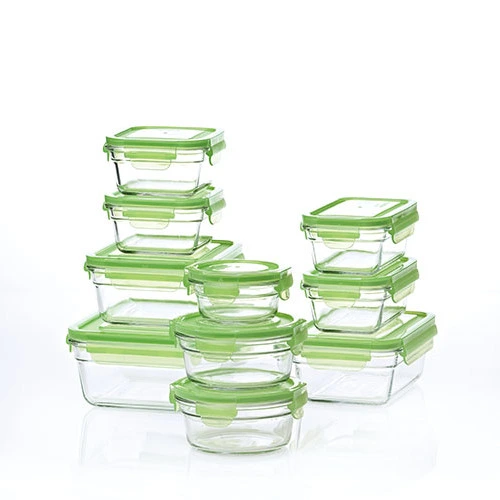
Tempered Glass Food Storage Container Set

Plasticproof Excellent $$$Our price tier

Tempered glass containers that take leftovers from oven to freezer with no plastic against the food. The lid is polypropylene, which Glasslock states is BPA-free — the honest detail most listings skip.

Check price on Amazon
Food sits on glassNothing coated, nothing porous.
Oven to freezerReheat without changing dish.
Latching BPA-free lidsPlastic is on the lid only.
See exactly how we verify this

As an Amazon Associate I earn from qualifying purchases — at no extra cost to you. We show a "Check price on Amazon" link rather than a number because Amazon prices change often.

Why it's safe for your family

  • The container itself is tempered glass, so nothing porous, nothing coated and nothing that absorbs the color or smell of last night’s curry. Glass does not leach into hot or acidic food, which is the whole reason to move leftovers out of plastic.
  • Tempering is what makes glass usable for this job: the glass is heat-treated so it resists thermal shock and, if it does break, crumbles rather than forming shards.
  • The oven-safe rating is the practical advantage over a plastic set — reheat in the same dish the food was stored in, so a meal never touches a plastic surface at temperature.
  • The lids are polypropylene with a four-latch seal, and Glasslock states the lids are BPA-free. The plastic is on the lid, not under the food, and the lid comes off before anything goes in the oven.

Is this really plastic-free? Mostly — and here’s exactly where it isn’t

The part that holds your food is tempered glass, with no coating and no liner. The lid is polypropylene with a silicone seal, and Glasslock states it is BPA-free. We would rather show you the split than call the set "plastic-free" and let you find the lid yourself.

Tempered glass body80%
Polypropylene lid and silicone seal20%

Where the plastic is: the lid, which comes off before the oven and does not sit under the food.

Quick specs

Body
Tempered glass
Lid
Polypropylene with silicone seal (Glasslock states BPA-free)
Oven
Glass body is oven safe — lids are not
Made in
South Korea
Also
Freezer, microwave and dishwasher safe

What to avoid instead

What to avoid is storing hot or oily food in plastic containers, which is where the everyday exposure actually happens — heat and fat are what move plasticizers out of a container and into food. Also avoid putting these lids in the oven: the glass is oven safe, the plastic lid is not, and that is the one mistake that ruins a set.

How we verify — and what we don't

Straight answer: we're a research team, not a testing lab. Here's exactly what our rating is based on — and what it isn't — so you can weigh it honestly.

What we check

  • What the product is made of, from the maker's own specs and product listing.
  • Whether any part that touches you or your food uses PTFE, PFAS, plastic, or a coating that can degrade.
  • Peer-reviewed research on how that material behaves when heated, scratched, washed, or worn.
  • Known failure modes — how the product actually breaks down in a real home.

What we don't do

  • We have not chemically tested this specific unit in a lab.
  • We don't take payment to rate a product higher — there is no sponsored placement.
  • We don't show star ratings or "trusted by thousands" counts we can't stand behind.
What gets a product rejected

Anything that adds a known microplastic, PFAS, or off-gassing source — a non-stick coating, a plastic surface against food or skin, vinyl/PVC — is downgraded or cut. We only list what clears that bar.

Don't take our word for it — check the sources yourself Glasslock's product details

Common questions

The lids are plastic. Does that defeat the point?
No, but you should know exactly where the plastic is. Food sits against glass; the lid touches the food only if you fill the container to the brim or turn it over. Glasslock states the lids are BPA-free. If you want a set with no plastic at all, a glass container with a glass lid and a silicone gasket exists — it costs more and seals less reliably.
Can it really go from freezer to oven?
Tempered glass handles thermal shock far better than ordinary glass, but no glass is immune. Take the lid off, let a frozen container stand while the oven preheats rather than putting it into an already-hot oven, and never set a hot dish on a wet or cold surface. Those three habits are what makes a set last years.
How is it different from a cheap glass set?
Two things you can check: whether the glass is tempered, and whether the lid actually latches. Untempered glass is more prone to cracking under temperature change, and a friction-fit lid leaks in a bag. The latching lid is the reason this set is worth its price over a supermarket one.
Related reading
Kitchen Plastic Detox Guide
Related reading
Are Plastic Food Containers Safe?

More safe picks

Affiliate disclosure: some links on this page are affiliate links. As an Amazon Associate I earn from qualifying purchases. We earn a small commission from qualifying purchases at no extra cost to you. This does not influence our recommendations — every product is selected based on peer-reviewed research.