
Most thermal paper receipts are coated with BPA, or its substitute BPS, as the color developer that makes the print appear. It is present as free, unbound chemical at roughly 1–2% of the paper’s weight — a 2018 survey found BPA or BPS in 93% of receipts tested — and because it is not locked into a polymer, it transfers to your fingers on contact. Skin absorption is small for an occasional shopper but rises sharply if your hands are oily or freshly treated with hand sanitizer or lotion, and it is highest for cashiers. BPA and BPS are endocrine disruptors, so the sensible move is to decline or go paperless on receipts, skip sanitizer right before handling one, and wash your hands afterward.
“Do receipts have BPA?” sounds like a small question, but a receipt is one of the few plastics-related exposures you touch by hand almost every day — at the grocery store, the gas pump, the ATM, the restaurant. The short answer is that the slick, shiny paper most receipts are printed on is coated with bisphenol A (BPA) or a near-identical stand-in, and unlike the BPA bound inside a hard polycarbonate bottle, this is loose chemical sitting on the surface, ready to rub off.
This guide walks through what BPA is doing on the paper in the first place, whether it really gets into your body, why a “BPA-free” receipt may be no better, who carries the most exposure, how worried the science says you should actually be, and the handful of easy habits that cut it. It takes the same evidence-first approach as how dangerous are microplastics — a real exposure, honestly bounded by what the data can support.
The short version: yes, nearly all paper receipts carry BPA or BPS, and it transfers to skin. The dose from the occasional receipt is low, so there is no need to panic — but because it is easy to avoid, a paperless receipt and a quick hand-wash are worth the almost-zero effort.
What is BPA doing on a paper receipt in the first place?
Most receipts are printed on thermal paper, not ordinary paper. There is no ink cartridge; instead the paper is coated with a heat-sensitive layer, and a tiny heating element in the printer darkens the spots that form the letters. BPA is the “color developer” in that coating — the chemical that turns black when heated — which is the whole reason it is there.
The important detail is that this BPA is not bound into a plastic. In a hard polycarbonate bottle, BPA is polymerized into the material and only leaches slowly. On a receipt it is loose, free powder dispersed in a surface film, typically making up 1 to 2 percent of the paper’s weight. A 2014 analysis measured the free BPA on thermal receipts at roughly 20 milligrams per gram of paper — so a single receipt can carry more BPA than the lining of many canned foods, and it is sitting right on the surface you touch.
You can usually tell thermal paper by feel: it is smooth, slightly glossy, and a fingernail dragged across it leaves a faint dark mark. That is the same reactive coating that holds the bisphenol. It is a close relative of the plastic chemistry behind microplastics in food packaging — different material, same family of additives.
Can BPA from a receipt actually get into your body?
Yes — the route is through the skin, not the mouth. Several studies have shown BPA moving from thermal paper onto the hands and then appearing in blood and urine within hours. Holding a receipt for just a few seconds transfers a measurable amount, and the longer and tighter the contact, the more comes off.
How much actually crosses the skin depends heavily on what is already on your hands. In a 2014 study published in PLOS ONE, volunteers who used an alcohol-based hand sanitizer and then held a receipt absorbed dramatically more BPA, because the penetration-enhancing solvents in sanitizers and lotions open the skin to it. Dry-handed volunteers picked up only about one percent as much as those with freshly sanitized hands — the same effect that makes skin-care ingredients a hidden multiplier for other exposures.
That last sequence is the one to avoid: sanitize at the register, take the receipt, then eat fries or a sandwich with the same hand. It combines maximum skin absorption with a second, oral route, and it is exactly how a trivial contact becomes a real dose. The fix, as we will see, is almost effortless.
Is a “BPA-free” receipt any safer?
Often not. When public pressure pushed retailers away from BPA, most did not drop bisphenols altogether — they swapped in bisphenol S (BPS), a close chemical cousin that does the same job in the coating. By 2022, surveys found roughly 80 percent of receipts from large U.S. retailers contained BPS rather than BPA.
BPS is absorbed through skin the same way BPA is, and in laboratory studies it shows comparable hormone-disrupting activity — and it breaks down more slowly in the environment. Replacing BPA with BPS is a textbook regrettable substitution: the label changes, the concern does not. Treat a “BPA-free” receipt with the same care you would any other.
This is the single most important thing to understand about receipts and BPA: the problem is not one specific molecule but the class of bisphenol developers the paper relies on. That is why the practical advice below is about reducing contact, not about hunting for a magically safe receipt — the same logic that runs through why “BPA-free” does not mean safe.
Who is most exposed to BPA from receipts?
Cashiers, by a wide margin. Someone working a grocery or retail register handles hundreds of thermal receipts a shift, often for hours, and the exposure shows up in their bodies. A 2016 study in Environment International found that cashiers who handled BPS-coated receipts had significantly higher BPS in their urine after a shift than before it — direct evidence that occupational receipt handling raises the internal dose.

For the average shopper, the per-receipt dose is far smaller — one of many reasons not to panic over a single grocery run. But two groups get special caution from public-health researchers: pregnant people, because bisphenols can cross the placenta and the developing endocrine system is more sensitive, and young children, who have thinner skin, put hands in their mouths, and sometimes get handed a receipt to hold like a toy. For those groups, minimizing any avoidable bisphenol source — receipts included — is the standard advice, consistent with how we treat exposure during everyday routines.
Are the health effects of receipt BPA proven, or is this overblown?
Honesty cuts both ways here. The exposure is real and has been measured in blood and urine; the health consequences at the doses a normal shopper gets are genuinely debated. BPA and BPS are not acutely toxic — nobody is poisoned by a receipt. The concern is that they are endocrine disruptors, chemicals that can mimic or interfere with hormones at low doses, with research linking higher BPA levels to effects on reproduction, metabolism and development.
Regulators and researchers read the same evidence differently. The U.S. FDA maintains that BPA is safe at the levels people are typically exposed to from all sources combined. Many independent scientists, and the European Food Safety Authority in its recent reassessment, argue that safe thresholds are far lower than once thought and that real-world low-dose effects are underestimated. That disagreement is unresolved — which is precisely why a cautious, low-effort response makes sense.
So the reasonable stance is the one Plasticproof takes across the site, from how dangerous are microplastics onward: do not treat a receipt as a medical emergency, but do not pretend an avoidable, hand-delivered dose of a hormone-active chemical is nothing either. When reducing an exposure costs almost no effort, you reduce it.
How do you reduce BPA exposure from receipts?
This is the easy part, because every meaningful step is nearly free. You are not trying to eliminate receipts from your life — just to cut needless skin contact and keep the chemical off anything that reaches your mouth. Here are the steps that actually matter, in rough order of impact.
- Say no to the paper receipt, or go digital. Choose an emailed or no receipt when the register offers it. Skipping the slip entirely is the only option that removes the exposure instead of managing it.
- Never sanitize or apply lotion right before handling one. The solvents in hand sanitizer and hand cream open your skin and can multiply BPA absorption. Handle receipts with dry hands, and sanitize afterward if you need to — not before.
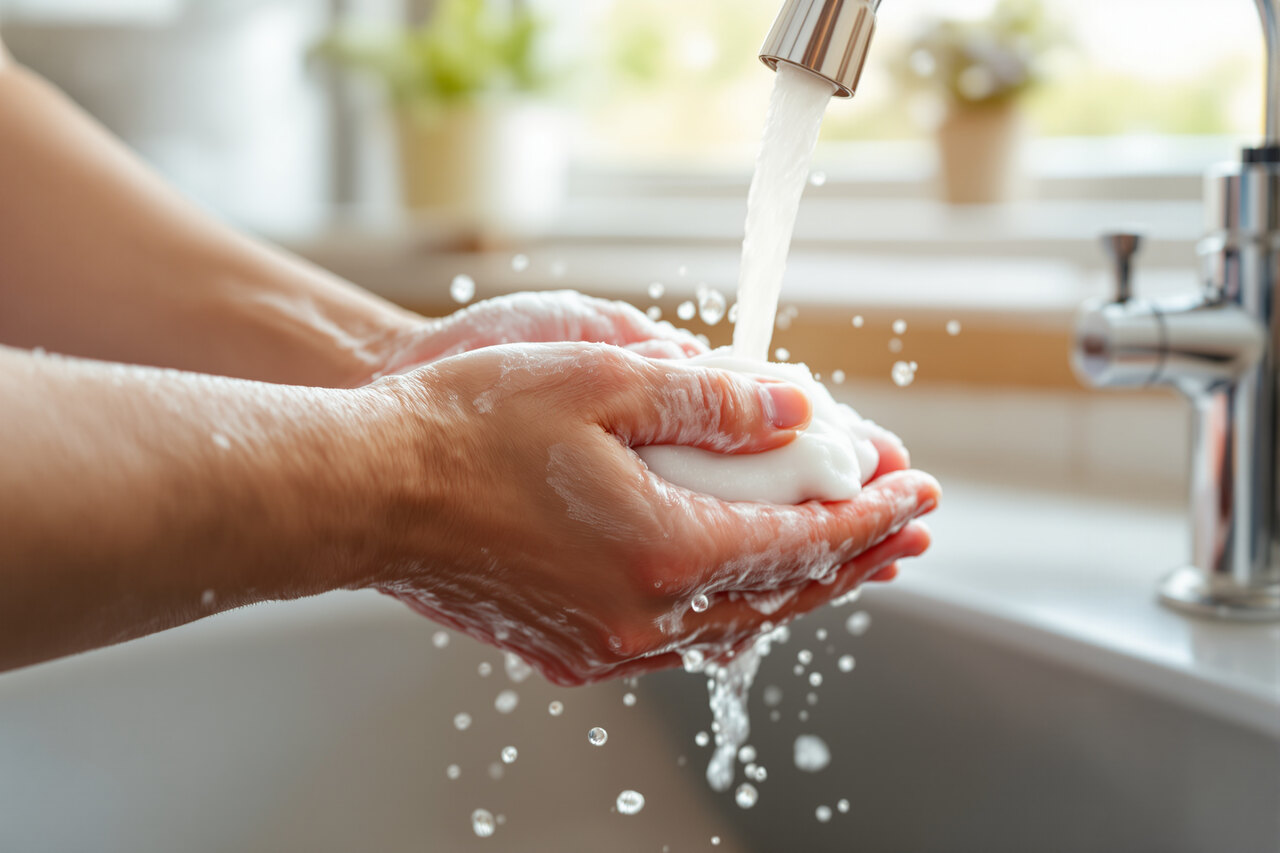
- Wash with plain soap and water after handling receipts. Soap removes most of the surface bisphenol; this matters most before you eat with your hands.
- Keep receipts off your food and away from kids. Do not tuck a receipt into a bag of fresh bakery items, and do not hand one to a toddler to keep them busy — thin skin plus hand-to-mouth is the worst combination.
- Take it by the edge, and keep it in a separate pocket. Minimizing contact area and not shuffling it around your wallet all day both cut the dose a little, for no effort.
- Don’t recycle thermal receipts with your paper. Their bisphenol coating contaminates recycled paper — and it keeps you from storing a loose fistful of them. When in doubt, the trash is better than the recycling bin.
The bottom line on receipts and BPA
Do receipts have BPA? Yes — the glossy thermal paper most receipts are printed on is coated with free BPA, or its near-twin BPS, as the developer that forms the print, and it transfers to skin on contact. A “BPA-free” receipt has usually just swapped in BPS, which behaves much the same. Cashiers carry the heaviest exposure; for shoppers the dose is small, and the health significance at that level is still debated.
That combination — a real, hand-delivered exposure of a hormone-active chemical, but a low dose and an easy fix — points to a simple answer. Go paperless when you can, keep sanitizer and lotion off your hands until after you have let go of the receipt, wash before you eat, and keep receipts away from kids and food. For the bigger picture on these plasticizer chemicals, start with why BPA-free doesn’t mean safe and how to reduce microplastics in your body.
Cut the hidden plastic chemicals out of your daily routine
Receipts are one small, hand-delivered source of bisphenols — and one of the easiest to control. The same few habits cut your exposure across the whole house, not just the checkout line.
Frequently Asked Questions
Most thermal paper receipts do. BPA is used as the color developer that makes the ink appear when the paper is heated by the printer, and it sits on the surface as free, unbound chemical at roughly 1 to 2 percent of the paper’s weight. A 2018 Ecology Center survey found BPA or its substitute BPS in 93 percent of the receipts it tested. Because the chemical is not polymerized, it rubs off onto your fingers on contact.
Yes, through the skin. Studies have measured BPA transferring from thermal paper to skin and then into blood and urine. A 2014 PLOS ONE study found that using an alcohol hand sanitizer or lotion before handling receipts, which leaves penetration-enhancing chemicals on the skin, dramatically increased how much BPA was absorbed — dry-handed volunteers picked up only about one percent as much as those with freshly sanitized hands.
Not necessarily. Most receipts that dropped BPA now use bisphenol S (BPS) instead, and by 2022 roughly 80 percent of major-retailer receipts contained BPS. BPS is a close chemical cousin with similar hormone-disrupting activity in laboratory studies, and it is absorbed through skin in the same way. Swapping BPA for BPS is a regrettable substitution rather than a fix, so treat a BPA-free receipt with the same caution.
Retail and grocery cashiers, who handle hundreds of receipts a shift. A 2016 study in Environment International found that cashiers who handled BPS-coated receipts had significantly higher BPS in their urine after a shift than before it. Shoppers get far less, but pregnant people and young children are the groups public-health researchers most often advise to minimize any avoidable bisphenol exposure.
The exposure is real and measurable; the health consequences at these doses are still debated. BPA and BPS are documented endocrine disruptors, and the concern is their effect on the hormone system rather than acute toxicity. Regulators such as the FDA consider typical exposure safe, while many researchers argue low-dose hormonal effects are underestimated. Reducing an easy, avoidable source is a sensible middle path.
Decline the printed receipt or choose an emailed one when offered, keep loose receipts out of your wallet and away from food, and never let a child hold one as a toy. Do not use hand sanitizer or lotion right before handling receipts, since that increases absorption, and wash your hands with plain soap and water afterward. Cashiers can ask about glove use and wash hands at breaks.
Sources
- Hormann AM, vom Saal FS, Nagel SC, et al. "Holding Thermal Receipt Paper and Eating Food after Using Hand Sanitizer Results in High Serum Bioactive and Urine Total Levels of Bisphenol A (BPA)." PLOS ONE, 2014;9(10):e110509, doi.org/10.1371/journal.pone.0110509 (full text: PMC4206219). Reported free BPA on thermal receipts at roughly 20 mg per gram of paper, and found that using hand sanitizer before holding receipts greatly increased dermal BPA absorption.
- Thayer KA, Taylor KW, Garantziotis S, et al. "Bisphenol A, Bisphenol S, and 4-Hydroxyphenyl-4-Isopropoxyphenylsulfone (BPSIP) in Urine and Blood of Cashiers." Environmental Health Perspectives / Environment International, 2016, PMC4824622. Found cashiers who handled BPS-containing thermal receipts had significantly higher post-shift urinary BPS than before their shift.
- Ecology Center. "Receipt Study 2018: Bisphenols in Thermal Paper," 2018, ecocenter.org (PDF). Surveyed thermal receipts from major U.S. retailers and detected a bisphenol developer (BPA or BPS) in about 93% of samples, with BPS the most common by 2018 and its share rising further by 2022.
- Liao C, Kannan K. "A survey of bisphenol A and other bisphenol analogues in foodstuffs and thermal paper." reviewed in PMC4206219. Documented that thermal receipt paper contains bisphenol color developers as free chemical at roughly 1–2% of paper weight, far higher concentrations than most food-contact sources.
- U.S. Food & Drug Administration. "Questions & Answers on Bisphenol A (BPA) Use in Food Contact Applications," fda.gov. States the FDA’s position that BPA is safe at the levels currently occurring in the food supply — the regulatory view many independent researchers dispute for low-dose endocrine effects.