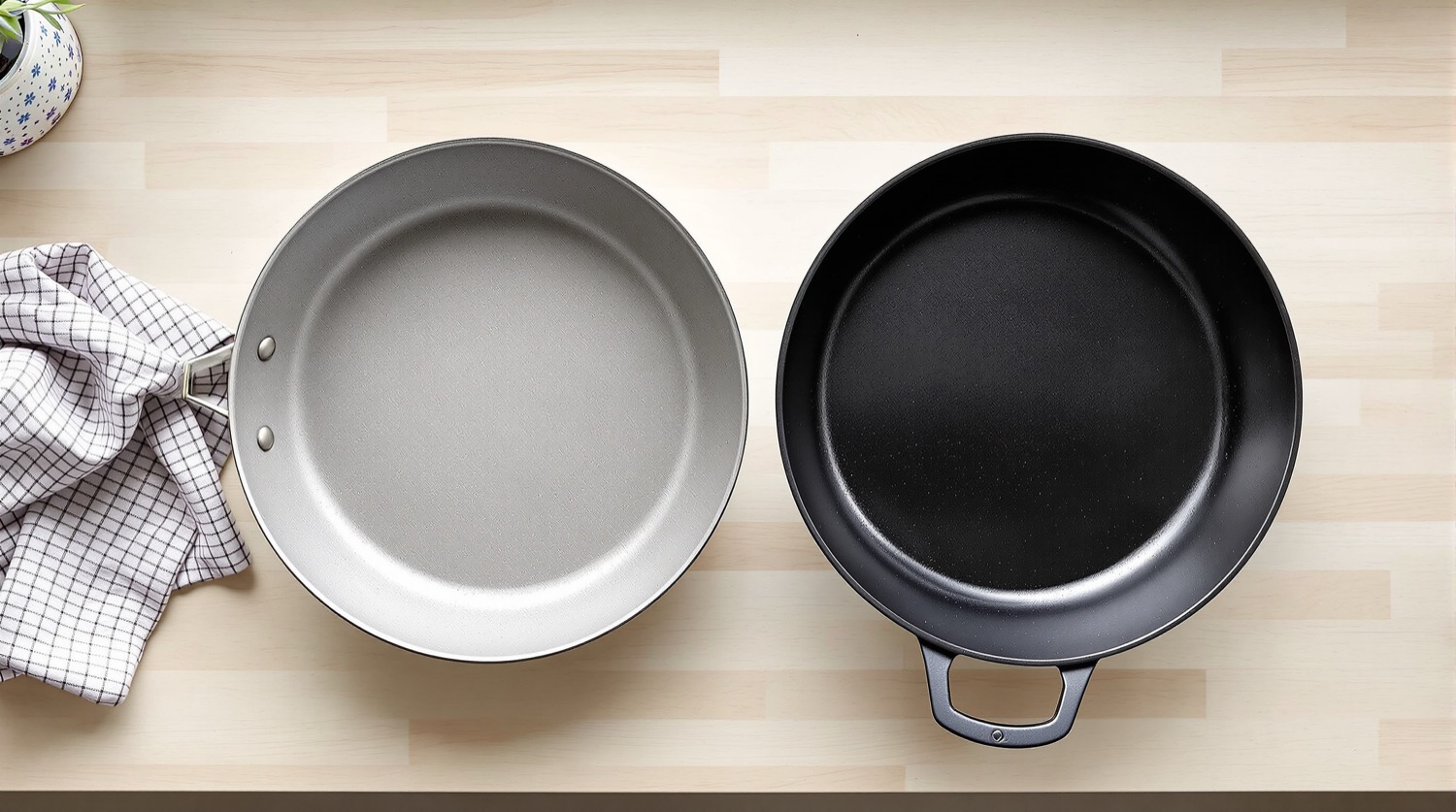
Most cookware comparisons are really arguments about coatings — which film is on the pan, how long it lasts, and what it does when it fails. Carbon steel and cast iron sit outside that argument entirely. Both are a single piece of iron alloy with nothing sprayed, cured or bonded onto the cooking surface. Whatever slickness they develop comes from seasoning: cooking oil polymerized by heat into a hard layer chemically bonded to the metal, which you repair with more oil rather than replace with a new pan.
That shared property is why both show up on every microplastic-free kitchen list, and it is also why most people get stuck choosing between them. The marketing is no help, because the two pans are sold on nearly identical promises. The useful differences are measurable, and they come down to how much carbon is in the metal, how heavy the finished pan is, and how fast it reacts to the burner.
Bottom line: Buy carbon steel if you cook eggs, vegetables and quick sautés and want a pan you can lift one-handed and flip — it is roughly a pound lighter in the same size and reacts faster to heat changes. Buy cast iron if you sear meat, bake cornbread or want one indestructible pan for the lowest price — its extra mass is exactly what holds temperature when cold food hits it. On plastic exposure there is nothing to choose between them: both have zero coating, and that is the comparison that matters most.
Is Carbon Steel Safer Than Cast Iron?
For the thing people actually mean when they ask — what ends up in the food — they are a tie, and both beat anything coated. Neither pan has a fluoropolymer layer, which means neither can produce the failure mode documented in nonstick cookware. In 2022, researchers Luo, Gibson, Chuah, Tang, Naidu and Fang used Raman imaging, a technique that identifies particles by their chemical fingerprint, to measure what damaged PTFE cookware sheds during simulated cooking. A single surface crack released on the order of 9,100 Teflon micro- and nanoplastic particles; a broken coating released up to 2.3 million. Neither carbon steel nor cast iron has a surface that can fail that way.
What both pans do release is iron, and that is a real difference from stainless steel or glass rather than a hidden drawback. For most households it is a mild nutritional bonus. For one specific group it is a reason to choose a different metal, and we cover exactly who further down.
Head-to-Head: Carbon Steel vs Cast Iron
The measurable differences, with manufacturer-listed figures where a number exists.
| Feature | Carbon Steel | Cast Iron |
|---|---|---|
| Carbon content | Up to ~2.1% by definition; cookware sits near 1% | Above 2.1% — typically 2–4% |
| How the pan is made | Rolled and stamped from sheet steel | Poured molten into a sand mold |
| Listed weight, 10.25″ pan | 1.9 kg / ~4.2 lb (de Buyer MINERAL B) | 5.4 lb (Lodge 10.25″ skillet) |
| Synthetic nonstick coating | None | None |
| Release surface | Seasoning — polymerized cooking oil | Seasoning — polymerized cooking oil |
| Can shed plastic when scratched | No — nothing to shed | No — nothing to shed |
| Adds dietary iron to food | Yes | Yes |
| Heat response | Fast to heat, fast to cool — less metal | Slow to heat, holds temperature longest |
| Starting surface texture | Smooth — rolled from sheet | Pebbled — sand-cast texture |
| Pan shape | Sloped sides, long handle — built to flip | Straight sides, short loop handle — built to lift with two hands |
| Oven, grill, campfire | Yes | Yes |
| Acidic foods (tomato, wine, citrus) | Limit until the seasoning is mature | Limit until the seasoning is mature |
| Best at | Eggs, fish, stir-fry, fast sautés | Searing steak, cornbread, oven-to-table |
| Typical price position | Mid — see current price | Lowest entry price of any real pan — see current price |
What Is the Actual Difference Between Carbon Steel and Cast Iron?
One element, in different amounts. Both pans are iron alloyed with carbon; the line between them is drawn at roughly 2.1 percent carbon by weight, which is the standard metallurgical boundary between steel and cast iron. Cookware-grade carbon steel sits near the bottom of the steel range, around one percent. Cast iron sits above the line, usually somewhere between two and four percent.
That gap is small on paper and enormous in the kitchen, because carbon is what makes iron hard and brittle. Cast iron has too much of it to be bent or rolled, so it has to be poured molten into a sand mold — which is also why a cast iron pan comes out thick, heavy, and textured with the grain of the mold it was made in. Carbon steel keeps enough ductility to be rolled into sheet and stamped into shape, so the same diameter of pan arrives thinner, lighter and smoother. Amazon’s listings put real numbers on it: the 10.25-inch de Buyer MINERAL B is listed at 1.9 kg, about 4.2 pounds, while Lodge’s 10.25-inch cast iron skillet is listed at 5.4 pounds. Step up to Lodge’s 12-inch and the listed weight is 7.5 pounds with its handle holder.
Everything else follows from the mass. Less metal means a carbon steel pan climbs to temperature faster and drops back faster when you pull it off the burner, which is what you want when you are flipping vegetables or pulling fish off the heat at the right second. More metal means cast iron takes longer to get hot and then refuses to give that heat up, which is what you want when a cold steak hits the pan and you need the surface to stay hot enough to brown rather than steam.
Do Carbon Steel or Cast Iron Pans Put Plastic in Your Food?
No, and the reason is structural rather than a matter of careful use. There is no plastic anywhere in either pan to migrate out of it. The slickness both develop is seasoning — a thin layer of cooking oil that heat has polymerized into a hard, bonded film. It is a different thing from a coating in the way that matters: when a coated pan’s surface wears, the wearing is the shedding, and the particles go into the food. When seasoning wears, the pan simply stops releasing eggs cleanly, and you rebuild it with a thin wipe of oil and twenty minutes of heat.
This is also why the usual coated-pan rulebook does not apply. Metal spatulas are fine on both. High heat is fine on both — in fact both are happiest there, which is the opposite of the medium-heat-only rule that protects a PTFE surface. If you want the full picture on what the coated alternatives do when they fail, our ceramic vs nonstick cookware comparison and our deep dive on whether nonstick cookware is safe cover that side.
How Much Iron Does Cooking in Bare Iron Actually Add?
Enough that researchers can measure it consistently, in both directions — as a nutritional benefit and as the one caution worth knowing. The foundational work is Brittin and Nossaman’s 1986 study in the Journal of the American Dietetic Association, which cooked 20 different foods in iron and non-iron utensils and analyzed each by atomic absorption spectrophotometry. Ninety percent of the foods held significantly more iron after being cooked in iron. Three factors drove how much transferred: acidity, moisture content, and cooking time — so a tomato sauce simmered for an hour picks up far more than a steak seared for four minutes. The authors also noted that two different iron skillets gave different results, which they attributed to differing amounts of previous use. In plain terms, a well-seasoned old pan transfers less iron than a raw new one.
A 2013 trial in the Indian Journal of Pediatrics put that effect to work. Researchers cooked four iron-rich snacks in iron pots and measured 16.2 percent more iron in them than in the same snacks cooked in Teflon-coated nonstick pots. Twenty-seven preschool children, average age 2.9 years, ate the iron-pot versions for four months; their hemoglobin rose a significant 7.9 percent. It is a small pilot study and the authors present it as one, but it is a real measured outcome from a real pan, not a marketing claim.
Carbon steel and cast iron both do this, because both are bare iron at the cooking surface. The practical nudge is the same for each: acidic, wet, long-cooked dishes pull the most iron, so simmer the tomato sauce in stainless or enamel if you would rather not add any, and sear in the iron pan.
Who Should Not Cook in Bare Iron?
People whose bodies already hold too much iron. In hereditary hemochromatosis, the body absorbs more iron from food than it should, and the surplus accumulates in the liver, heart, pancreas, endocrine glands and joints. The National Institute of Diabetes and Digestive and Kidney Diseases reports that about 1 in 15 people of Northern European ancestry carry at least one copy of the C282Y mutation in the HFE gene, and about 1 in 225 carry two copies — the group most likely to develop iron overload. It is far less common in people of Asian or African ancestry.
If that applies to you, or you are managing iron levels under a doctor’s direction, raise bare iron cookware with your clinician before making it your daily pan. Stainless steel and glass add no iron at all and are equally free of synthetic coatings. For everyone else, the amounts involved are a modest dietary contribution, and the same study authors who measured the transfer treated it as a benefit.
Which One Should You Buy?
Match the pan to the food you cook most often and to what you are willing to lift. Neither answer is wrong on safety.
Choose carbon steel if:
- Eggs, fish, vegetables and quick sautés are your daily cooking
- You want to flip food in the pan rather than turn it with tongs
- A pound of difference in a one-handed lift matters to you
- You want a surface that starts smooth, not pebbled
Choose cast iron if:
- You sear steaks, burgers or chops and want deep browning
- You bake in the pan — cornbread, skillet cookies, roasts
- You want the lowest price of any genuinely good pan
- You would rather the pan be indestructible than light
If you are building the whole kitchen rather than buying one pan, our ranked guide to the best non-toxic cookware covers every material side by side, and the three-way cast iron vs stainless steel vs ceramic comparison is the next one to read. The habits that matter as much as the pan are in 7 kitchen mistakes that put microplastics in your food, and if your utensils are still plastic, are black plastic utensils safe is worth five minutes.
The Four Worth Buying
Two carbon steel pans and two cast iron skillets — the ones that actually represent each side of this comparison.
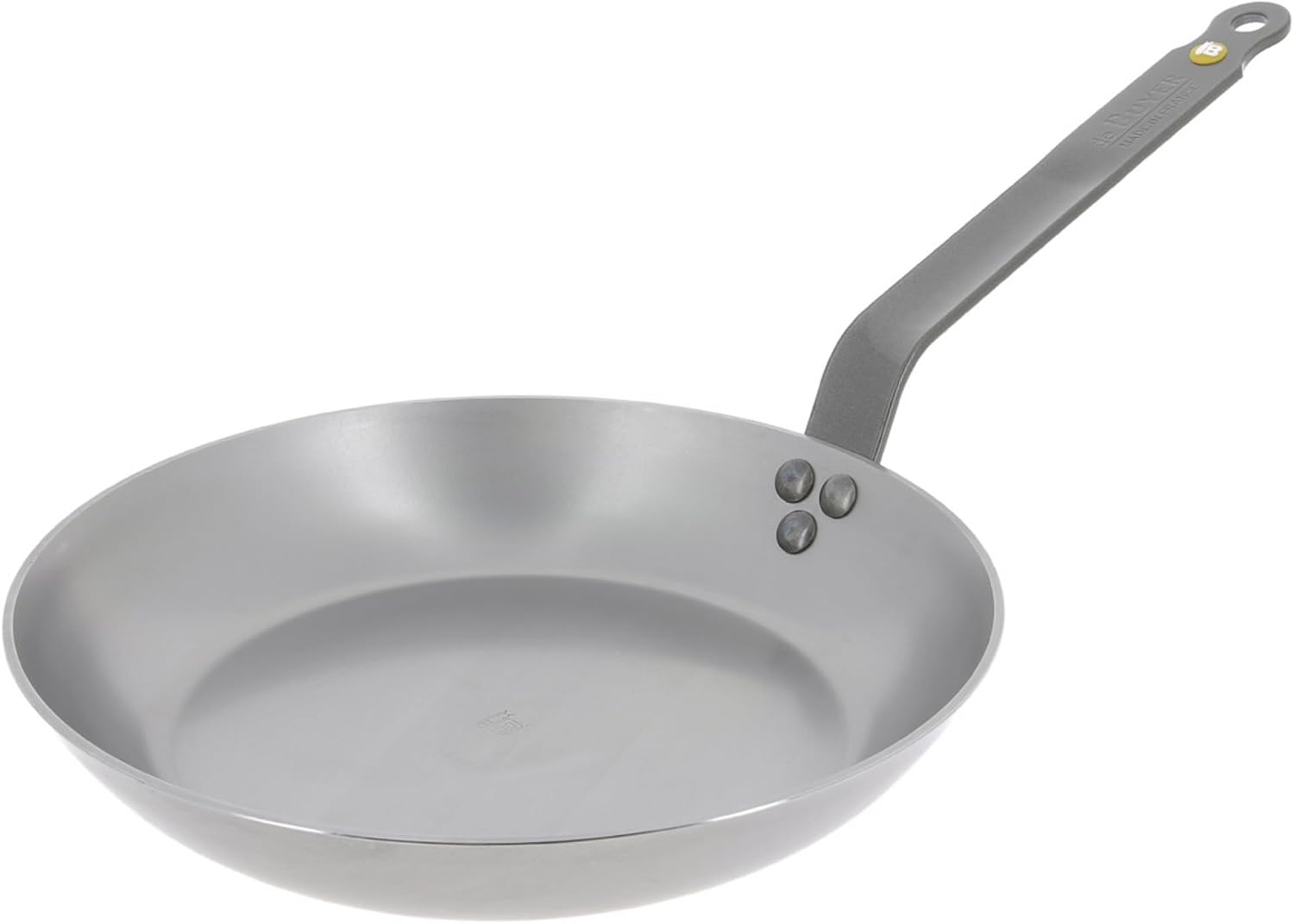 Best Carbon Steel
This is the pan that most people mean by “carbon steel.” Amazon lists it at 1.9 kg for the 10.25-inch size, roughly 4.2 pounds, against 5.4 pounds for the cast iron skillet of the same diameter — and the long riveted handle puts the balance where a one-handed lift works. The finish is beeswax, applied to stop rust in shipping; you wash it off and build your own seasoning from there. Nothing synthetic is ever on the cooking surface.
Pros
- No coating — nothing to scratch or shed
- Noticeably lighter than cast iron at the same size
- Smooth rolled surface seasons slick quickly
Cons
- Arrives with a wax coat you have to scrub off first
- Costs more than entry-level cast iron
- Holds less heat than cast iron for big sears
A daily-driver skillet with zero coating — and about a pound less to lift.
Why it is the safer chemistry: There is nothing on the cooking surface but steel and the seasoning you build from oil. No fluoropolymer, so nothing can shed the way a cracked nonstick coating does.
Check Today's Price on Amazon →Amazon prices change daily — tap to see today's price and any current discount.
- Free delivery for Prime members
- Thousands of verified reviews
- Easy 30-day returns
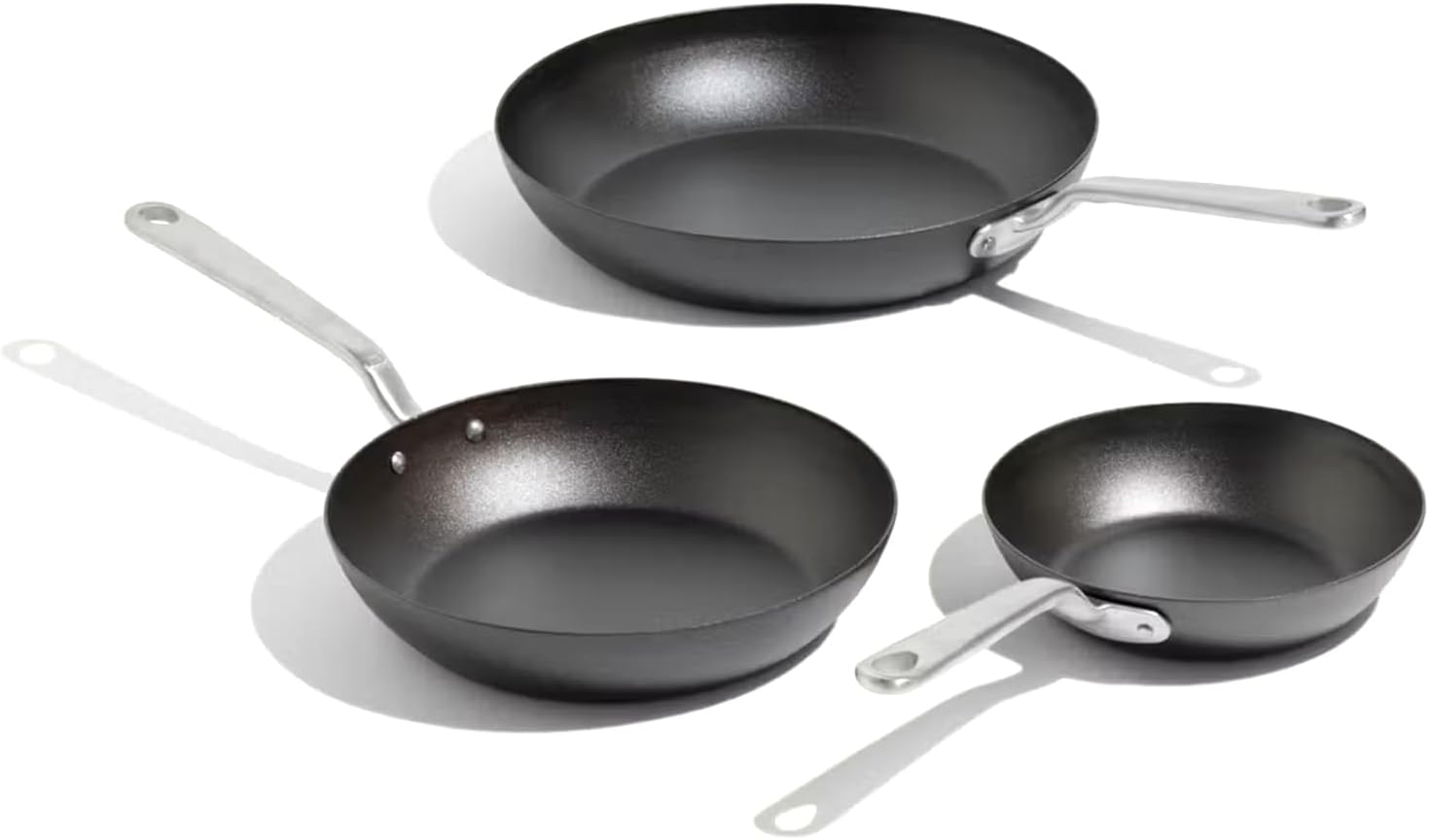 Best Carbon Steel Set
Three sizes covers nearly every stovetop job: the 8-inch for eggs, the 10-inch as the daily pan, the 12-inch for anything that needs room. Amazon lists the set at 4.83 kg for all three pans together. They arrive pre-seasoned, which skips the first-day ritual the de Buyer requires, and the stainless handles stay cooler than a solid iron one. Same core property as every pan on this page: no synthetic layer anywhere.
Pros
- Replaces a full nonstick set in one purchase
- Pre-seasoned — usable the day it arrives
- Stainless handles run cooler than cast iron ones
Cons
- Highest upfront cost of the four picks here
- Factory seasoning still needs building up with use
- More pans than a small kitchen may need
Retire every coated pan in the kitchen in a single order.
Why it is the safer chemistry: Carbon steel plus polymerized-oil seasoning. There is no fluoropolymer film in the stack, so the scratch-and-shed failure documented in PTFE cookware cannot happen.
Check Today's Price on Amazon →Amazon prices change daily — tap to see today's price and any current discount.
- Free delivery for Prime members
- Three sizes in one box
- Easy 30-day returns
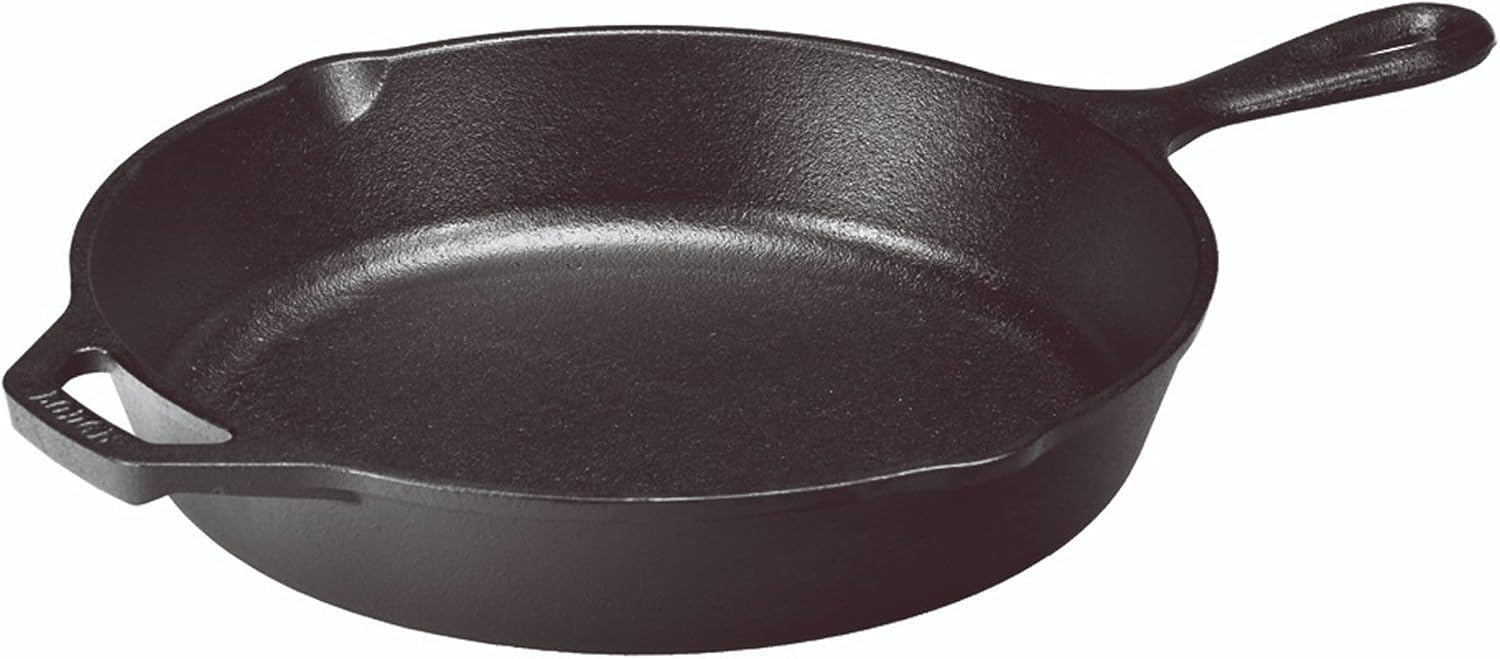 Best Cast Iron
The 10.25-inch Lodge is the direct counterweight to the de Buyer above: same diameter, 5.4 listed pounds against 1.9 kg, and that extra mass is the whole point. It is what keeps the surface hot when a cold steak lands on it, and what lets the pan go from stovetop to oven to campfire without a thought. It arrives pre-seasoned, and the seasoning genuinely improves with every use rather than counting down to a replacement date.
Pros
- No coating — nothing to scratch, flake or outgas
- Holds heat better than any pan here for searing
- Lowest price of the four, and lasts decades
Cons
- Over a pound heavier than carbon steel at the same size
- Pebbled cast surface takes longer to season slick
- Short loop handle makes flipping awkward
The lowest-cost route out of coated cookware entirely.
Why it is the safer chemistry: Iron and polymerized oil, and nothing else. Lodge labels it PFAS-free; structurally there is no coating present to carry PFAS in the first place.
Check Today's Price on Amazon →Amazon prices change daily — tap to see today's price and any current discount.
- Free delivery for Prime members
- Made in the USA since 1896
- Hundreds of thousands of reviews
 Best for Family Searing
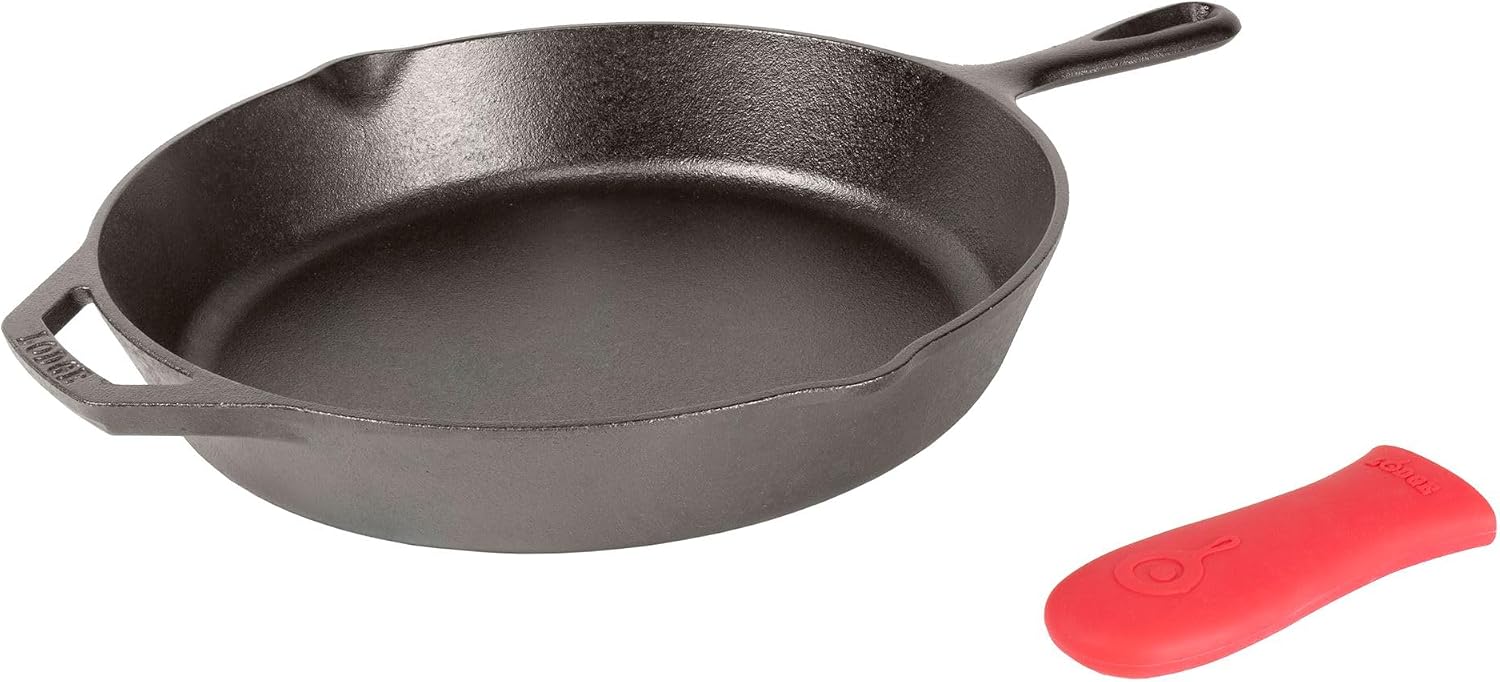
Crowding a pan is how searing turns into steaming, and a 10-inch skillet crowds fast once you are cooking for a family. The 12-inch gives the extra surface area, at the cost of 7.5 listed pounds — genuinely heavy, which is the honest trade. The included silicone holder matters more than it sounds: a bare cast iron handle reaches the same temperature as the pan. Amazon’s listing for this skillet notes it is made without PFOA or PTFE.
Pros
- Enough surface to brown four portions without crowding
- Same zero-coating construction as the smaller Lodge
- Silicone handle holder included in the box
Cons
- 7.5 pounds — heavy to move when full
- Too big for a single serving of eggs
- Needs a large burner to heat evenly
Room to brown a family’s worth of food without a coated pan in sight.
Why it is the safer chemistry: Bare cast iron with polymerized-oil seasoning; the listing states it is made without PFOA or PTFE, and there is no coating layer to carry either.
Check Today's Price on Amazon →Amazon prices change daily — tap to see today's price and any current discount.
- Free delivery for Prime members
- Made in the USA since 1896
- Hundreds of thousands of reviews
Frequently Asked Questions
Is carbon steel safer than cast iron?
On what the pan puts into food, they are a tie, and both beat coated cookware. Neither carries a synthetic nonstick layer, so neither has anything to shed when scratched — unlike the PTFE surfaces where a 2022 Science of the Total Environment study counted roughly 9,100 plastic particles from a single crack and up to 2.3 million from a broken coating. Both release dietary iron instead. The choice between carbon steel and cast iron is about weight, heat and cooking style, not safety.
What is the actual difference between carbon steel and cast iron?
Carbon content and how the pan is formed. Steel holds up to about 2.1 percent carbon and cookware carbon steel sits near one percent; cast iron is above that line, typically two to four percent. The extra carbon makes cast iron hard and brittle, so it must be poured into a mold and left thick, while carbon steel can be rolled and stamped from sheet and comes out thinner. Amazon lists the 10.25-inch de Buyer MINERAL B at 1.9 kg against 5.4 pounds for Lodge’s 10.25-inch cast iron skillet.
Do carbon steel or cast iron pans leach microplastics?
No — there is no plastic in either pan to leach. The nonstick quality of both comes from seasoning, which is cooking oil that heat has polymerized into a hard bonded layer, not a fluoropolymer film. A worn seasoning just stops releasing food cleanly and is repaired with oil and heat, which is the structural difference from a coated pan where wear and shedding are the same event.
How much iron does cooking in bare iron add to food?
Enough to measure. Brittin and Nossaman cooked 20 foods in iron and non-iron utensils for the Journal of the American Dietetic Association in 1986 and found 90 percent held significantly more iron after cooking in iron, with acidity, moisture and cooking time driving the transfer. A 2013 trial in the Indian Journal of Pediatrics measured 16.2 percent more iron in snacks cooked in iron pots than in Teflon-coated ones, and 27 preschool children eating them showed a 7.9 percent rise in hemoglobin over four months.
Who should not cook in carbon steel or cast iron?
People who already carry too much iron. In hereditary hemochromatosis the body absorbs more iron from food than it should and the excess builds up in the liver, heart, pancreas and joints. The NIDDK reports that about 1 in 15 people of Northern European ancestry carry at least one copy of the C282Y mutation and about 1 in 225 carry two copies, the group most likely to develop iron overload. Anyone diagnosed with it, or managing iron on a doctor’s instruction, should raise bare iron cookware with their clinician — stainless steel and glass add no iron at all.
Which is better for eggs, carbon steel or cast iron?
Carbon steel, in most kitchens. It is rolled from sheet metal, so the cooking surface starts smoother than the pebbled texture of sand-cast iron, and it heats and cools faster because there is less metal to warm. Both get genuinely slick once the seasoning is established. Cast iron wins the opposite job — its mass holds temperature when cold food hits the pan, which is why it sears better than a thin pan can.
Sources
- Brittin HC, Nossaman CE. Iron content of food cooked in iron utensils. Journal of the American Dietetic Association. 1986;86(7):897–901. PubMed PMID 3722654
- Kulkarni SA, Ekbote VH, Sonawane A, Jeyakumar A, Chiplonkar SA, Khadilkar AV. Beneficial effect of iron pot cooking on iron status. Indian Journal of Pediatrics. 2013;80(12):985–989. doi:10.1007/s12098-013-1066-z
- Luo Y, Gibson CT, Chuah C, Tang Y, Naidu R, Fang C. Raman imaging for the identification of Teflon microplastics and nanoplastics released from non-stick cookware. Science of the Total Environment. 2022;851:158293. doi:10.1016/j.scitotenv.2022.158293
- National Institute of Diabetes and Digestive and Kidney Diseases. Hemochromatosis — Definition & Facts. niddk.nih.gov