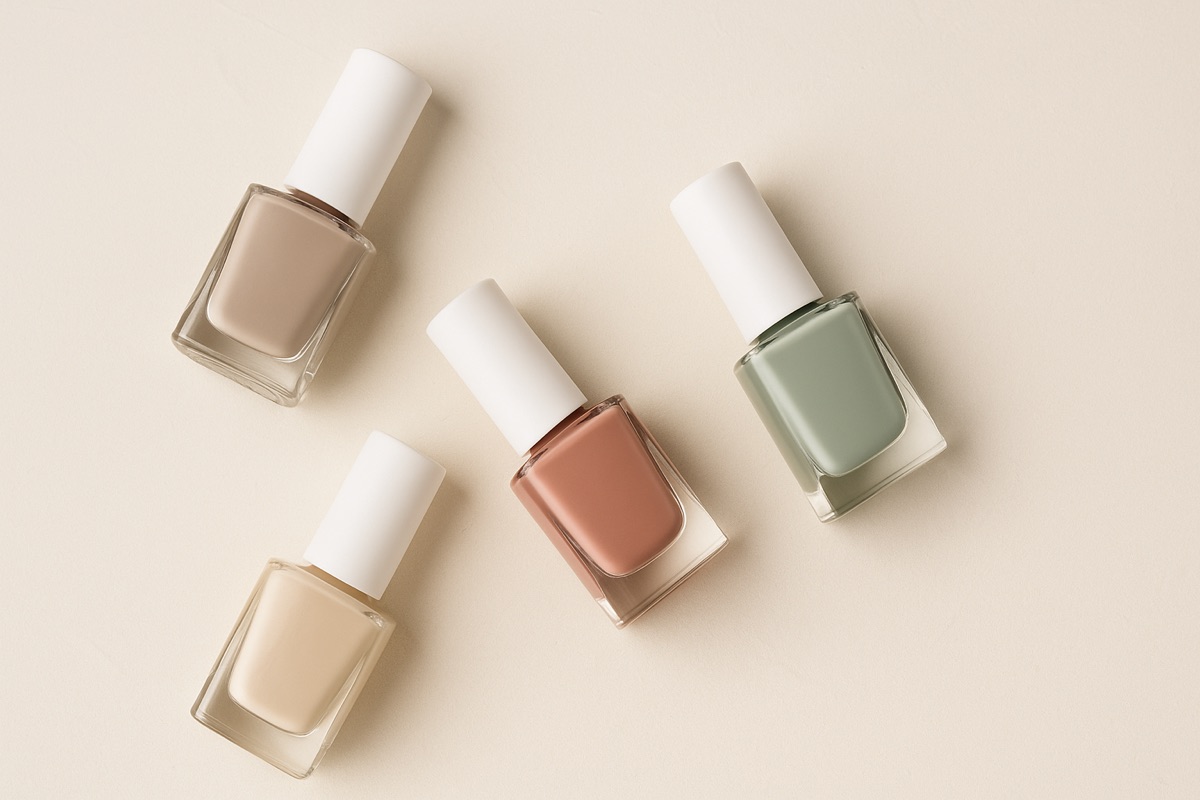
Nail polish sits on your nails for days or weeks at a time, in direct contact with your nail bed — a semi-permeable surface with a blood supply underneath. Unlike a product you rinse off, polish is designed to stay put. That makes the formula matter significantly.
Conventional nail polish typically contains what the industry calls the "toxic trio": formaldehyde (a known carcinogen used as a hardener), toluene (a neurotoxic solvent that keeps polish smooth), and DBP or dibutyl phthalate (a plasticizer linked to reproductive harm). But the chemical concerns go well beyond those three. Camphor, a common nail polish ingredient, can cause nausea and dizziness in enclosed spaces like nail salons. And then there is TPHP.
The TPHP problem
Triphenyl phosphate (TPHP) is a plasticizer added to nail polish to improve flexibility and chip resistance. It replaced some older toxic ingredients — but it carries its own serious concerns. TPHP is a suspected endocrine disruptor, meaning it can interfere with hormone signaling in your body. And unlike many chemicals that stay on the surface, TPHP absorbs through the nail.
This is not a hypothetical exposure pathway. The chemical moves through the nail bed and into the bloodstream within hours. For people who wear polish regularly — or for nail technicians who apply it all day — the cumulative burden is a legitimate health concern.
Understanding "X-free" labels
The nail polish industry uses "X-free" labeling to indicate how many common toxic ingredients a formula excludes. Here is what the numbers typically mean:
- 3-free: No formaldehyde, toluene, or DBP. The bare minimum — most mainstream brands have reached this level.
- 5-free: Adds formaldehyde resin and camphor to the exclusion list.
- 7-free: Adds ethyl tosylamide and xylene.
- 10-free: Adds TPHP, parabens, and fragrances. This is our minimum threshold.
- 12-free and above: Excludes additional sensitizers, animal-derived ingredients, and petrochemical solvents.
A word of caution: "X-free" labels are self-reported by brands with no independent verification standard. We always check the actual ingredient list rather than taking the number at face value.
What We Screened For
We evaluated over 20 nail polish brands against the following criteria before narrowing to our six recommendations:
- Minimum 10-free formula — we will not recommend anything below this threshold in 2026.
- No TPHP — given the Duke/EWG absorption data, this is a non-negotiable.
- Vegan and cruelty-free — no animal-derived ingredients, no animal testing.
- Full ingredient disclosure — brands that hide behind proprietary blend language were excluded.
- Chip resistance and real-world performance — because a polish nobody wants to wear is not a real alternative, no matter how clean the formula.
Our 6 Best Non-Toxic Nail Polish Picks for 2026
Quick Picks
- Best overall: Ella+Mila — 17-free, excellent color range, ~$10.50
- Best chip resistance: Zoya — 10-free, salon-grade performance, ~$12
- Best drugstore option: Pacifica — 12-free, vegan, widely available, ~$10
- Best for minimalists: Tenoverten — 10-free, curated neutral shades, ~$12
- Best luxury/natural: Kure Bazaar — 10-free, up to 90% natural origin, ~$18
- Best truly plastic-free: Suncoat — water-based formula, ~$10
Comparison Table
| Brand | X-Free Level | Vegan | TPHP-Free | Price |
|---|---|---|---|---|
| Ella+Mila | 17-free | Yes | Yes | ~$10.50 |
| Zoya | 10-free | Yes | Yes | ~$12 |
| Pacifica | 12-free | Yes | Yes | ~$10 |
| Tenoverten | 10-free | Yes | Yes | ~$12 |
| Kure Bazaar | 10-free | Yes | Yes | ~$18 |
| Suncoat | Water-based | Yes | Yes | ~$10 |
What to Avoid
When shopping for nail polish — whether for yourself, your family, or a salon — watch for these red flags:
The toxic trio: Formaldehyde, toluene, and DBP. These are the most well-documented harmful ingredients in nail polish. Formaldehyde is a known human carcinogen. Toluene is a neurotoxin linked to headaches, dizziness, and reproductive harm. DBP is an endocrine-disrupting phthalate. Any polish still containing these three in 2026 is not worth your money.
- TPHP (triphenyl phosphate) — absorbs through the nail bed within hours. Detected in urine of 100% of study participants. Suspected endocrine disruptor. Many polishes labeled "5-free" still contain TPHP because it was not part of the original toxic trio.
- Synthetic fragrance in polish — "fragrance" or "parfum" on a nail polish label can hide dozens of undisclosed chemicals, including phthalates and synthetic musks. Clean polishes should not need added fragrance.
- Non-3-free base coats and top coats — this is a common oversight. You choose a clean polish but pair it with a conventional base or top coat that contains the very chemicals you are trying to avoid. Always match your base and top coat to the same safety standard as your color coat.
Also be cautious with gel and shellac systems. Most gel polishes contain acrylates and photoinitiators not found in traditional lacquer, and the UV/LED curing lamps add a separate skin exposure concern. If long wear is the goal, a quality 10-free traditional polish with a good top coat is a safer path to 5–7 day manicures.
Non-Toxic Nail Polish Removers
Switching to a cleaner polish only to remove it with harsh acetone is a half-measure. Conventional nail polish removers are dominated by acetone — a powerful solvent that strips natural oils from nails and cuticles, causes brittleness with repeated use, and releases fumes that irritate the respiratory tract. Ethyl acetate, the other common solvent, is gentler but still far from ideal.
Safer alternatives use plant-derived solvents — typically soy-based esters — that dissolve polish effectively without the chemical intensity. They take slightly longer to work (30–60 seconds of hold time versus instant wipe with acetone), but the trade-off is worth it for regular users.
For Suncoat water-based polish: it peels off naturally or can be removed with warm water and gentle rubbing — no solvent needed at all.
Want the Complete Personal Care Swap Guide?
The Complete Plasticproof Guide covers cosmetics, skincare, hair care, oral care, and more — with the full research and complete product swap list. 47+ peer-reviewed studies, 80+ product recommendations.
Frequently Asked Questions
10-free nail polish is formulated without the 10 most common toxic chemicals found in conventional polish: formaldehyde, toluene, DBP (dibutyl phthalate), formaldehyde resin, camphor, TPHP (triphenyl phosphate), xylene, ethyl tosylamide, parabens, and fragrances. Some brands go further — 12-free, 15-free, or even 17-free — excluding additional sensitizers and petrochemicals. However, the specific chemicals excluded vary by brand, so always check the full ingredient list rather than relying solely on the number.
Modern non-toxic formulas have closed the performance gap significantly. Brands like Zoya and Ella+Mila routinely deliver 5–7 days of chip-free wear with a proper base and top coat. That said, some early-generation "clean" polishes did chip faster because they lacked the plasticizers (like TPHP) that make conventional polish flexible. The key is using a non-toxic base coat, allowing adequate dry time between coats, and finishing with a non-toxic top coat from the same brand line.
TPHP (triphenyl phosphate) is a plasticizer used in conventional nail polish to improve flexibility and durability. A 2015 Duke University and Environmental Working Group study found that TPHP metabolites appeared in the urine of every participant within 10–14 hours of applying nail polish containing TPHP. TPHP is classified as a suspected endocrine disruptor — it can interfere with hormone signaling, particularly estrogen pathways. While a single manicure likely poses low acute risk, regular polish users and nail salon workers face cumulative exposure that researchers consider concerning.
Most gel and shellac systems are not considered non-toxic. They typically contain acrylates, photoinitiators, and other chemicals not found in traditional polish. The UV or LED curing process itself is an additional concern — repeated UV exposure to the hands has been linked to skin damage. If you prefer long-lasting manicures, a high-quality 10-free traditional polish with a good top coat (like Zoya Armor or Ella+Mila's top coat) is a safer alternative that can still last 5–7 days.
The safest nail polish removers avoid acetone and ethyl acetate, which are harsh solvents that dry out nails and cuticles and release strong fumes. Look for soy-based or bio-solvent removers — Ella+Mila's soy-based remover and Zoya Remove Plus are both effective, gentler options. These plant-derived solvents dissolve polish without the chemical intensity of acetone. For any remover, use it in a well-ventilated area to minimize inhalation of vapors.
Sources
- Mendelsohn E, Hagopian A, Hoffman K, et al. "Nail polish as a source of exposure to triphenyl phosphate." Environment International, 2016. (Duke University / EWG study — TPHP absorption through nail bed detected in 100% of participants within 10–14 hours.)
- Environmental Working Group (EWG). "Nail Polish." Skin Deep Cosmetics Database, 2024. Comprehensive safety ratings and ingredient analysis for nail polish brands.
- Dishaw LV, Powers CM, Ryde IT, et al. "Is the PentaBDE replacement, tris(1,3-dichloro-2-propyl) phosphate (TDCPP), a developmental neurotoxicant? Studies in PC12 cells." Toxicology and Applied Pharmacology, 2011.
- Hoffman K, Butt CM, Chen A, et al. "High exposure to organophosphate flame retardants in infants: associations with baby products." Environmental Science & Technology, 2015.
- Campaign for Safe Cosmetics. "Nail Salon Workers & Chemical Exposure." SafeCosmetics.org, 2023. Overview of occupational health research on nail salon chemical exposure.
Protect Your Health, Room by Room
From cosmetics to kitchen to nursery — the Complete Plasticproof Guide covers every swap that matters, backed by 47+ studies.