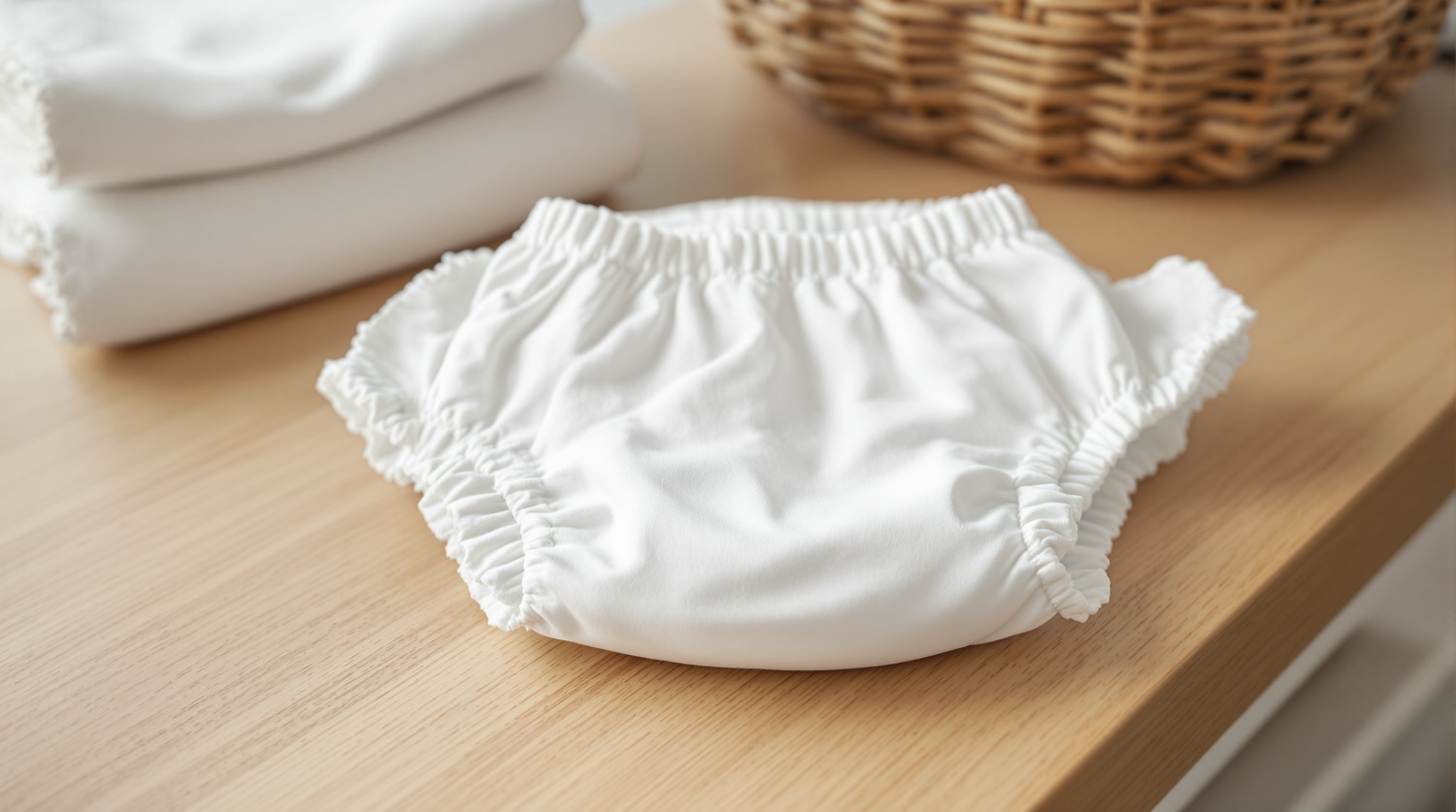
The best non-toxic diaper in 2026 is Kudos — the only mainstream disposable whose skin-contact liner is 100% cotton instead of polypropylene, with totally chlorine free pulp and OEKO-TEX Standard 100 certification. Coterie The Diaper is the runner-up for publishing its complete ingredient list, and HealthyBaby is the only diaper carrying EWG VERIFIED certification. Below we compare seven diapers on the four things that can actually be checked: skin-contact material, bleaching method, added fragrance or lotion, and the named third-party certification behind each claim.
A baby wears roughly 4,000 diapers between birth and age three — the figure France's health agency used when it ran the world's first official safety assessment of them — and wears each one around the clock, against the thinnest skin that child will ever have. In the United States a diaper is a consumer product, not a medical device. No agency requires the maker to list what is in it, and most do not.
That silence is why "non-toxic diaper" has become a marketing category rather than a measurable one. So this guide ignores the adjectives on the box and ranks seven diapers on four claims that can be independently checked: what the liner is made of, how the wood pulp was whitened, whether a fragrance or lotion was deliberately added, and which named certification — not slogan — the brand actually holds.
What the research on diapers actually found
In January 2019, the French Agency for Food, Environmental and Occupational Health & Safety (ANSES) published the first government safety assessment of baby diapers ever conducted. It identified close to 200 chemical substances in the diapers it tested and reported that health reference values were exceeded for polycyclic aromatic hydrocarbons (PAHs), dioxins and furans, dioxin-like PCBs, and formaldehyde — plus two fragrance ingredients, Lyral and Lilial, that had been deliberately added. ANSES recommended that manufacturers stop using fragrances altogether and later submitted an EU-wide restriction proposal under REACH.
That report is where almost every "toxic diaper" headline on the internet comes from. It is also where most of them stop — which is the dishonest part, because the science did not stop there.
In 2022, toxicologist Alfred Bernard published a re-evaluation of the ANSES risk calculation in the International Journal of Environmental Research and Public Health (DOI 10.3390/ijerph19074159). His finding: ANSES had stacked worst-case assumptions on top of each other. It modeled a 100% rewet factor — every contaminant in the diaper migrating back onto skin — where roughly 1% is realistic, and it used limits-of-quantification as stand-ins for actual measured concentrations, with detection limits two orders of magnitude coarser than food-testing standards. Recalculated with realistic inputs, the hazard quotients fall below 1. Bernard also noted the uncomfortable comparison that a breastfed infant takes in more than 400 times more dioxin from breast milk than from diapers, with no documented harm.
A companion paper by Bernard and Dudler the same year (DOI 10.3390/ijerph192214760) went and measured it. They analyzed the 16 EPA priority PAHs in the cores of four diaper brands and the top sheets of six, bought off Swiss shelves. The numbers are below.
| What was measured | Diaper core | Diaper top sheet |
|---|---|---|
| Total PAHs, average | 26.5 µg/kg | 66.6 µg/kg |
| Total PAHs, range across brands | 17.8 – 34.9 µg/kg | 49.4 – 72.3 µg/kg |
| Benzo[a]pyrene & dibenzo[a,h]anthracene | Detected in only 1–3 brands, at 1.4 µg/kg or below | |
| Dominant compound | Naphthalene — about 52% of core PAHs | |
| Excess skin-cancer risk (core + top sheet) | 1.44 × 10⁻⁷ — about 1.4 in 10 million | |
| Hazard quotient, neurobehavioral effects | 1.19 × 10⁻² — about 1/84th of the threshold | |
| Compared with breast milk | Breast milk delivered roughly 171× more total PAHs | |
Their conclusion was that PAH exposure from diapers is "unlikely to pose health risks." We are reporting that honestly because a guide that only tells you the frightening half is not a guide, it is an advertisement.
So here is the honest position this guide is built on. The catastrophic numbers were overstated. What survives scrutiny is narrower and more actionable: the fragrances and dyes ANSES flagged were put in on purpose, the phthalate spread between brands is 63-fold, and the layer sitting against your baby's skin for three years is, in a conventional diaper, a plastic nonwoven. Those three things you can actually choose. Everything below is sorted by them.
If you are working through the rest of the room, our plastic-free nursery guide covers the whole setup, and the companion guides to the safest baby mattresses, safest baby bottles and non-toxic pacifiers pair directly with this one. The same 2019 study behind the phthalate figure above also measured menstrual pads, and we have covered what the research says about microplastics in breast milk and microplastics in baby food.
Compare all 7 picks
Every pick side by side — tap a name to jump to the full write-up, or check today's price.
| Pick | What makes it different | |
|---|---|---|
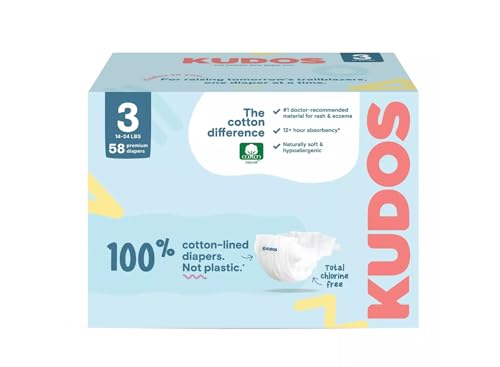 Best OverallKudos Cotton-Lined Diapers |
100% Cotton LinerTotally Chlorine Free |
Check price → |
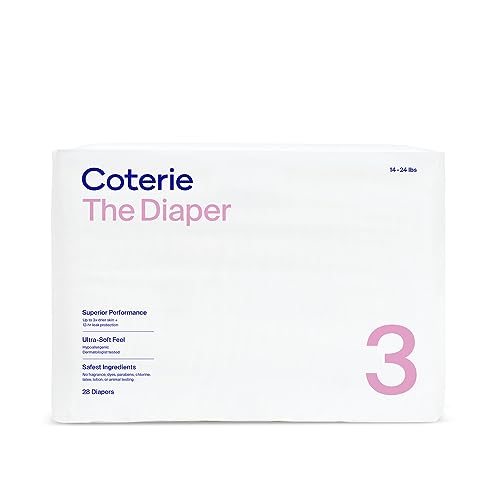 Clearest Ingredient ListCoterie The Diaper |
Full Ingredient DisclosureOEKO-TEX Standard 100 |
Check price → |
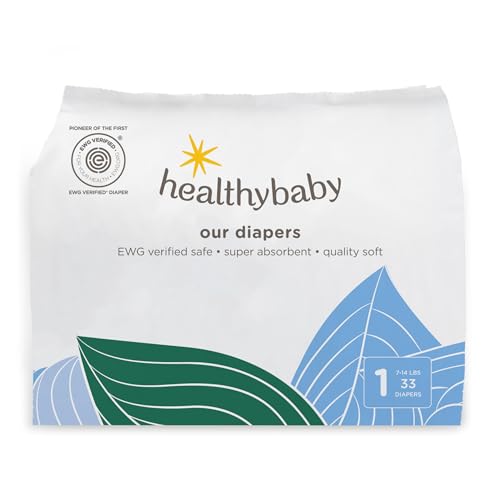 Best Third-Party VerifiedHealthyBaby Non-Toxic Diapers |
EWG VERIFIEDOrganic Cotton |
Check price → |
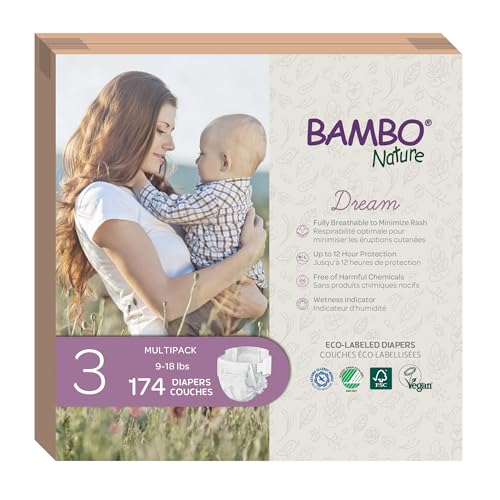 Most CertifiedBambo Nature Baby Diapers |
Nordic Swan EcolabelAsthma Allergy Nordic |
Check price → |
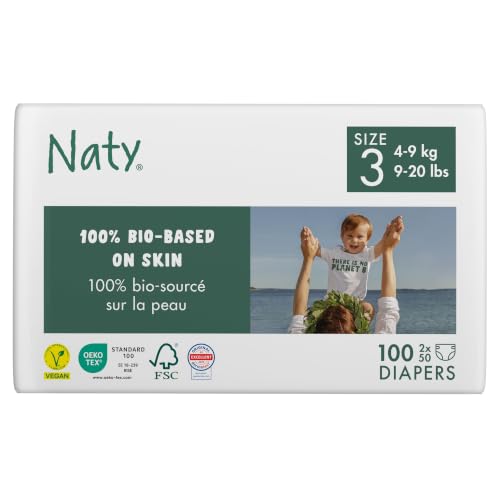 Best Plant-Based Top SheetEco by Naty Baby Diapers |
Plant-Based Skin LayerNordic Swan Ecolabel |
Check price → |
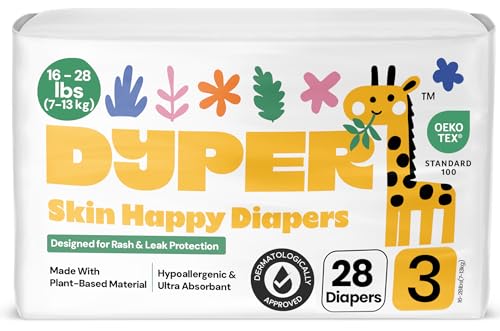 Best BambooDYPER Bamboo Viscose Diapers |
Bamboo Viscose Top SheetOEKO-TEX Standard 100 |
Check price → |
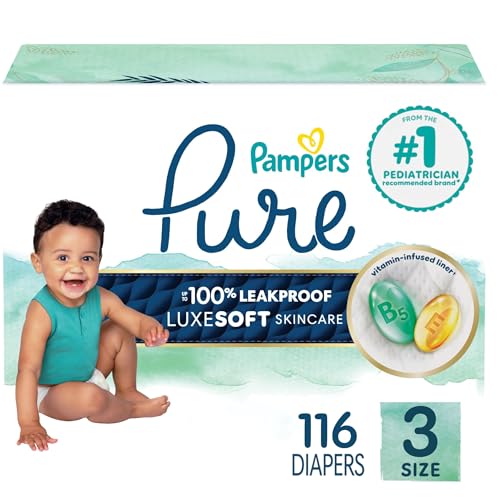 Best Widely AvailablePampers Pure Protection |
Fragrance-FreeIn Every Supermarket |
Check price → |
How we chose these diapers
Nothing here was ranked on how a diaper feels or how a box looks. Every pick had to clear five screens, and each screen is something you or a lab can verify independently of the brand's marketing.
- The skin-contact layer is named. The brand has to say what the top sheet or liner actually is — cotton, a plant-based nonwoven, bamboo viscose, polypropylene. "Soft" is not a material.
- No added fragrance, and no dye. These are the two things ANSES found had been put in deliberately, and the two it told manufacturers to stop using. Every pick below is fragrance-free.
- The bleaching method is stated. Totally chlorine free (TCF) preferred over elemental chlorine free (ECF). A box that just says "chlorine free" without saying which almost always means ECF.
- A named third-party certification. EWG VERIFIED, the Nordic Swan Ecolabel, Asthma Allergy Nordic, OK Biobased or OEKO-TEX Standard 100 — all of which require submitted test data. A brand's own "tested for safety" badge does not count.
- Buyable in the US, in every common size. A diaper you cannot reorder at 11pm on a Sunday is not a diaper you can actually use.
One thing no diaper cleared, and we are not going to pretend otherwise: none of them is plastic free. Every disposable diaper sold in the US uses sodium polyacrylate as its absorbent core and a polymer film as its waterproof back sheet. Coterie publishes exactly that, naming polypropylene, polyethylene, polyethylene terephthalate and styrene copolymers alongside its plant-derived pulp. What genuinely varies is the layer that touches skin, and how much of the rest was derived from plants rather than oil.
Our 7 top picks for 2026
Quick Picks
- Best overall: Kudos — the only one with a 100% cotton liner, so nothing plastic sits against skin
- Clearest ingredient list: Coterie The Diaper — publishes every component, TCF pulp, no fragrance, dye, lotion or latex
- Best third-party verified: HealthyBaby — the first and only EWG VERIFIED disposable diaper
- Most certified: Bambo Nature — Nordic Swan Ecolabel, Asthma Allergy Nordic, FSC, EU Ecolabel and OEKO-TEX
- Best plant-based top sheet: Eco by Naty — 100% plant-based materials on skin, Nordic Swan certified
- Best bamboo: DYPER — bamboo viscose top and back sheet, OEKO-TEX Standard 100
- Best widely available: Pampers Pure Protection — fragrance-free, paraben-free, on every supermarket shelf
1. Kudos Cotton-Lined Diapers
Best Overall
Kudos is built around a single structural decision: a 100% cotton liner. The brand says the cotton is US-sourced and dry-processed — no water, no chemical bath, no heat — and that the finished diaper is roughly 70% unbleached cotton materials. For a household trying to reduce how much synthetic polymer its baby lives against, that is the most consequential swap available in a disposable.
The rest of the specification holds up too. The pulp is totally chlorine free rather than elemental chlorine free, the diaper is certified to OEKO-TEX Standard 100 — which screens every component against a list of more than 1,000 regulated and unregulated substances — and the wood is FSC certified. It is free of latex, parabens, phthalates and chlorine.
The honest catch: the core is still sodium polyacrylate and the back sheet is still a film. Cotton-lined is not plastic free, and Kudos does not claim it is. It is also priced well above supermarket diapers, and the cotton liner is why.
Three years of round-the-clock wear is the longest, most constant skin contact of your baby's life. This is the one diaper that puts cotton there instead of polypropylene.
Why it's safe: 100% cotton skin-contact liner, totally chlorine free pulp, certified to OEKO-TEX Standard 100, and free of fragrance, dyes, latex, parabens and phthalates.
Check Today's Price on Amazon →Amazon prices change daily — tap to see today's price and any active discount.
- Free delivery & returns for Prime members
- Subscribe & Save available on most sizes
2. Coterie The Diaper
Clearest Ingredient List
Coterie's diaper is made with plant-based materials from sustainably managed forests using totally chlorine free pulp, and it is made with no added fragrance, latex, rubber, lotion, alcohol, parabens, phthalates, dyes or chlorine bleaching. It is dermatologist-tested, hypoallergenic, and certified to OEKO-TEX Standard 100 against 1,000-plus potentially harmful chemicals.
What sets it apart is not the list of absences — several brands here match that — it is the list of presences. Coterie publishes what the diaper is made of. That transparency is also what makes it a useful reality check for the whole category: even this diaper contains polypropylene, polyethylene and PET. Anyone selling you a "plastic-free disposable" is selling you a word.
The honest catch: it is one of the most expensive diapers on the US market, and the skin-contact layer, while plant-derived in part, is not cotton. You are paying for absorbency, fit and disclosure rather than for a different material against skin.
If a brand will not tell you what is in the product, you cannot evaluate it. Coterie tells you, and that is what makes its clean claims checkable.
Why it's safe: Totally chlorine free pulp, no added fragrance, dye, lotion, latex, parabens or phthalates, dermatologist tested, and certified to OEKO-TEX Standard 100.
Check Today's Price on Amazon →Amazon prices change daily — tap to see today's price and any active discount.
- Free delivery & returns for Prime members
- Sold in single packs and monthly bundles
3. HealthyBaby Non-Toxic Diapers
Best Third-Party Verified
HealthyBaby's diaper is built on plant-derived materials with organic cotton and FSC certified pulp, and is totally chlorine free. The brand states it is free of parabens, phthalates, latex, fragrance and PFAS, and that it is dermatologist tested and hypoallergenic. It also carries a Microbiome-Friendly certification, which is unusual in this category.
The reason this matters is structural. In a product with no mandatory ingredient disclosure, an independent certification is the only claim that had to be proved to someone other than the marketing department. EWG VERIFIED requires full ingredient disclosure as a condition of the mark, which is why so few diapers carry it.
The honest catch: it is a premium-priced, largely direct-to-consumer brand, so availability and pack sizes on Amazon are thinner than for the supermarket names. The skin-contact layer is plant-derived rather than the pure cotton liner Kudos uses.
A certification somebody else audits is worth more than a paragraph the brand wrote about itself.
Why it's safe: EWG VERIFIED and Microbiome-Friendly certified, totally chlorine free, FSC pulp, organic cotton, and free of fragrance, parabens, phthalates, latex and PFAS.
Check Today's Price on Amazon →Amazon prices change daily — tap to see today's price and any active discount.
- Free delivery & returns for Prime members
- Also sold as a monthly subscription direct
4. Bambo Nature Baby Diapers
Most Certified
Bambo Nature's Dream line was the first baby diaper certified under the Nordic Swan Ecolabel, the Nordic countries' official environmental mark, which sets requirements across a product's whole life cycle for health, quality and environment. Its fluff pulp is totally chlorine free, and the brand states the diaper contains 0% perfume, parabens, preservatives and lotions.
The Asthma Allergy Nordic label is the quietly useful one. It is awarded by the Nordic asthma and allergy associations and specifically screens for substances that provoke allergic and irritant reactions — exactly the complaint most parents are actually trying to solve when they go looking for a "non-toxic" diaper.
The honest catch: the skin-contact layer is a soft nonwoven rather than cotton, and the certifications are European, so some US parents will not recognize them. It also runs mid-to-high on price per diaper, though multipacks narrow the gap.
If your baby reacts to things, a diaper screened by an allergy association beats one screened by a copywriter.
Why it's safe: Nordic Swan Ecolabel and Asthma Allergy Nordic certified, totally chlorine free pulp, OEKO-TEX Standard 100, FSC wood, and no perfume, parabens, preservatives or lotions.
Check Today's Price on Amazon →Amazon prices change daily — tap to see today's price and any active discount.
- Free delivery & returns for Prime members
- Sold in bulk multipacks across sizes 1–6
5. Eco by Naty Baby Diapers
Best Plant-Based Top Sheet
Eco by Naty builds the skin side of the diaper from plant-based fibers rather than oil-derived nonwoven, and states the diapers are free of chlorine bleaching, fragrances and lotions. The brand carries the Nordic Swan Ecolabel, OEKO-TEX Standard 100, FSC wood pulp, and says it is the first diaper to receive OK Biobased certification from TÜV Austria — a mark that measures what share of a product is genuinely derived from renewable carbon rather than petroleum.
That last certification is the interesting one, because "plant-based" is otherwise an unregulated adjective that can describe a diaper that is 5% corn starch. A bio-based content mark puts a measured number behind it.
The honest catch: plant-based on skin does not mean plant-based throughout — the absorbent core is still sodium polyacrylate. Several parents also find Naty a slightly less absorbent overnight diaper than the premium US brands, so it is a better daytime pick than a 12-hour one.
A measured bio-based certification is the difference between a plant-based diaper and a diaper with a leaf printed on the box.
Why it's safe: 100% plant-based materials on the skin side, Nordic Swan Ecolabel and OK Biobased certified, OEKO-TEX Standard 100, FSC pulp, and free of chlorine bleaching, fragrance and lotion.
Check Today's Price on Amazon →Amazon prices change daily — tap to see today's price and any active discount.
- Free delivery & returns for Prime members
- Widely stocked in sizes newborn through 6
6. DYPER Bamboo Viscose Diapers
Best Bamboo
DYPER uses viscose made from bamboo for both the top sheet and the back sheet, replacing the polypropylene nonwoven that sits against skin in a conventional diaper. It is certified to OEKO-TEX Standard 100 and is made without chlorine, latex, alcohol, perfumes, PVC, lotions, parabens, sulfates or phthalates.
The company is also unusually specific about the parts that are not bamboo: the core uses elemental chlorine free wood pulp and sodium polyacrylate, the outer film is a PBAT and cornstarch blend, and there is a polypropylene acquisition layer beneath the top sheet. That is a more honest description than "no plastic touches your baby," which is how bamboo diapers are often sold — including sometimes by DYPER's own retail listings.
The honest catch: elemental chlorine free means chlorine dioxide was used, not chlorine gas — better than conventional, a step behind the TCF pulp in Kudos, Coterie, HealthyBaby and Bambo Nature. And bamboo viscose is a chemically regenerated fiber, not raw bamboo.
Swapping the synthetic nonwoven for a plant-derived fiber is the single change with the most skin contact behind it — and this is the affordable way to make it.
Why it's safe: Bamboo viscose top and back sheet, OEKO-TEX Standard 100 certified, and made without added fragrance, lotion, latex, PVC, parabens or phthalates.
Check Today's Price on Amazon →Amazon prices change daily — tap to see today's price and any active discount.
- Free delivery & returns for Prime members
- Monthly subscription boxes available
7. Pampers Pure Protection
Best Widely Available
Procter & Gamble states that Pure Protection is free of elemental chlorine bleaching, fragrance, parabens and latex, and that it is hypoallergenic. Pampers also publishes its materials: the top sheet is mainly polypropylene, the outer covers are polypropylene and polyethylene, and the core's main ingredient is superabsorbent polymer (sodium polyacrylate).
For most families this is the honest best-value answer. If the specialist brands are out of budget, moving from a scented conventional diaper to Pure Protection removes the deliberately added fragrance — which is the specific change the French assessment asked the industry to make — for a few dollars more per box.
The honest catch, and it is a real one: the Pure liner is coated with a shea butter, vitamin E and B5 lotion. Every other diaper in this guide is lotion-free. If your baby has reactive skin or you simply want nothing transferring onto it, that is a reason to spend up. "Free of elemental chlorine" also means ECF, not TCF.
The cheapest diaper that still drops the added fragrance and dye — the two things the one official assessment of diapers actually asked manufacturers to stop using.
Why it's safe: No added fragrance, no parabens, no latex, hypoallergenic, and bleached without elemental chlorine — with the materials published by the manufacturer.
Check Today's Price on Amazon →Amazon prices change daily — tap to see today's price and any active discount.
- Free delivery & returns for Prime members
- Stocked in every major supermarket and pharmacy
Comparison Table
| Diaper | Skin-contact layer | Pulp bleaching | Fragrance / lotion | Named certification |
|---|---|---|---|---|
| Kudos | 100% cotton | Totally chlorine free | Neither | OEKO-TEX 100, FSC |
| Coterie | Plant-derived nonwoven | Totally chlorine free | Neither | OEKO-TEX 100 |
| HealthyBaby | Plant-derived, organic cotton | Totally chlorine free | Neither | EWG VERIFIED, FSC |
| Bambo Nature | Soft nonwoven | Totally chlorine free | Neither | Nordic Swan, Asthma Allergy Nordic, OEKO-TEX 100, FSC |
| Eco by Naty | 100% plant-based | No chlorine bleaching | Neither | Nordic Swan, OK Biobased, OEKO-TEX 100, FSC |
| DYPER | Bamboo viscose | Elemental chlorine free | Neither | OEKO-TEX 100 |
| Pampers Pure | Plant-based and polypropylene blend | Elemental chlorine free | Shea butter lotion on liner | — |
What makes a diaper non-toxic?
In practice it comes down to four checkable things, because nothing else about a diaper is regulated or disclosed in the United States. First, the material of the layer touching skin — cotton, a plant-derived fiber, or a petroleum-based nonwoven. Second, whether fragrance or dye was added on purpose. Third, how the pulp was whitened. Fourth, whether any independent body has tested and certified the finished product. A diaper that answers all four in writing is doing more than any diaper that calls itself pure.
What is the difference between TCF and ECF diapers?
TCF means totally chlorine free: the wood pulp is whitened with oxygen, ozone or hydrogen peroxide, and no chlorine compound is used at any stage. ECF means elemental chlorine free: chlorine gas is not used, but chlorine dioxide is, which can still leave trace chlorinated by-products in the pulp. Kudos, Coterie, HealthyBaby and Bambo Nature are TCF. DYPER and Pampers Pure Protection are ECF. If a box says only "chlorine free" and will not say which, assume ECF — brands that have achieved TCF say so plainly, because it costs more.
Do any disposable diapers avoid plastic completely?
None of them do, and any brand telling you otherwise is stretching a word. Every disposable diaper on the US market uses sodium polyacrylate — a synthetic superabsorbent polymer — as the core that holds the liquid, plus a waterproof film on the outside. Coterie's own published ingredient list names polypropylene, polyethylene, polyethylene terephthalate and styrene copolymers right alongside its plant-derived pulp. What you can change is the layer in contact with skin, where cotton (Kudos), plant-based nonwoven (Eco by Naty, HealthyBaby) and bamboo viscose (DYPER) are all real alternatives to polypropylene. If you want to eliminate the plastic entirely, the answer is cloth, not a different disposable.
What to avoid in a diaper
Avoid Added fragrance
This is the one the only government assessment of diapers singled out. ANSES found fragrance ingredients including Lyral and Lilial in diapers at levels that exceeded health thresholds, noted that they had been added deliberately rather than arriving as contaminants, and recommended manufacturers stop using fragrances in diapers altogether. Both compounds have since been restricted in cosmetics in the EU as skin sensitizers. There is no functional reason for a diaper to smell of anything.
Avoid Dyes, inks and printed character art
Wetness-indicator stripes and cartoon prints are pigment sitting on the inside face of the diaper. Several of the picks above are entirely dye-free, and none of them is worse at its job for it. If you want a wetness indicator, it is a reasonable trade — just know you are choosing it, rather than receiving it because a licensing deal put a character on the box.
Avoid Lotions on the liner
A lotion-coated liner is designed to transfer onto skin; that is the entire point of it. Even when the lotion is benign — shea butter, vitamin E, panthenol — it is an added substance in constant contact with a barrier that is still developing. Six of the seven picks above have no lotion at all.
Avoid Unverifiable marketing words
"Pure," "natural," "clean," "gentle," "eco" and "non-toxic" have no legal definition on a diaper package. A brand's own badge saying "tested for safety" is written by the brand. Named third-party marks — EWG VERIFIED, Nordic Swan Ecolabel, Asthma Allergy Nordic, OK Biobased, OEKO-TEX Standard 100 — require data submitted to somebody outside the company, which is the whole reason they are worth paying attention to.
The ANSES assessment is still quoted across the internet as proof that diapers are dangerous. The scientific follow-up says otherwise. A 2022 re-evaluation in the International Journal of Environmental Research and Public Health found ANSES had assumed a 100% rewet factor where about 1% is realistic and used detection limits two orders of magnitude coarser than food-testing standards; with realistic inputs the hazard quotients fall below 1. A companion study that actually measured PAHs in diapers put the excess skin-cancer risk at 1.44 in 10 million and found breast milk delivers roughly 171 times more total PAHs. Choose a cleaner diaper because the fragrance, dye and lotion are avoidable and the phthalate gap between brands is 63-fold — not because anyone has shown a diaper is making babies ill.
Want the Full Room-by-Room Protection Guide?
The Complete Plasticproof Guide covers every room in your home — kitchen, nursery, bathroom, bedroom — with the full research and complete swap list. 47+ peer-reviewed studies, 80+ product recommendations.
Frequently Asked Questions
Kudos is our top pick because it is the only mainstream disposable diaper whose skin-contact liner is 100% cotton rather than polypropylene, and its pulp is totally chlorine free and certified to OEKO-TEX Standard 100. Coterie The Diaper is the runner-up for the clearest published ingredient list and totally chlorine free pulp with no added fragrance, dye, lotion or latex. HealthyBaby is the only diaper to carry EWG VERIFIED certification. Bambo Nature carries the most named third-party labels, including the Nordic Swan Ecolabel and Asthma Allergy Nordic.
The measured risk is far smaller than the headlines suggest. France's health agency ANSES reported in 2019 that safety thresholds were exceeded for polycyclic aromatic hydrocarbons, dioxins and formaldehyde in diapers, but a 2022 re-evaluation published in the International Journal of Environmental Research and Public Health found ANSES had used worst-case assumptions — a 100% rewet factor where about 1% is realistic — and that the hazard quotients fall below 1 once realistic values are used. A companion 2022 study that measured 16 priority PAHs in real diapers put the excess skin-cancer risk at 1.44 in 10 million and found breast milk delivers roughly 171 times more total PAHs than diapers do. The deliberate additions ANSES flagged — added fragrance and dyes — are the part worth avoiding, and they are the part a parent can control.
Some do, and the spread between brands is enormous. A 2019 study in Reproductive Toxicology by Park and colleagues measured volatile organic compounds and phthalates in diapers and sanitary pads and found a 3-fold difference in VOC concentrations and a 63-fold difference in phthalate concentrations between diaper brands — and that phthalate levels in these products were significantly higher than in common commercial plastic items. That gap is the practical argument for choosing a brand that publishes its full ingredient list and carries OEKO-TEX Standard 100, which screens every component against more than 1,000 regulated and unregulated substances.
Not reliably. Price tracks absorbency, softness and brand positioning at least as much as it tracks what was left out. Pampers Pure Protection is the cheapest diaper in this guide and is still fragrance-free, paraben-free and latex-free — though its liner carries a shea butter and vitamin lotion and its pulp is only elemental chlorine free. The one claim that costs money and is hard to fake is a named third-party certification: EWG VERIFIED, the Nordic Swan Ecolabel, Asthma Allergy Nordic and OEKO-TEX Standard 100 all require submitted test data rather than a marketing word on a box.
For eliminating plastic against skin, yes — an organic cotton or hemp cloth diaper is the only option with no synthetic polymer in the absorbent layer at all, and no superabsorbent polymer core. The trade-offs are real: washing load, up-front cost, and the fact that a polyester or PUL cover is still plastic on the outside. Plenty of families land on a mix, using cloth at home and a clean disposable for nights and travel. If you stay with disposables, the cotton-lined and plant-based picks above are the closest you can get while keeping the convenience.
Sources
- Park CJ, Barakat R, Ulanov A, et al. "Sanitary pads and diapers contain higher phthalate contents than those in common commercial plastic products." Reproductive Toxicology, 2019; 84: 114–121. DOI 10.1016/j.reprotox.2019.01.005
- Bernard A. "Dermal Exposure to Hazardous Chemicals in Baby Diapers: A Re-Evaluation of the Quantitative Health Risk Assessment Conducted by ANSES." International Journal of Environmental Research and Public Health, 2022; 19(7): 4159. DOI 10.3390/ijerph19074159
- Bernard A, Dudler V. "Health Risk Assessment of Dermal Exposure to Polycyclic Aromatic Hydrocarbons from the Use of Infant Diapers." International Journal of Environmental Research and Public Health, 2022; 19(22): 14760. DOI 10.3390/ijerph192214760
- ANSES (French Agency for Food, Environmental and Occupational Health & Safety). "ANSES recommends improving baby diaper safety," 2019.
- ANSES. "ANSES proposes an EU-wide restriction of hazardous chemicals in disposable diapers."
- Environmental Working Group. "EWG VERIFIED" certification program.
Protect Every Room in Your Home
From the nursery to the kitchen to the bathroom — the Complete Plasticproof Guide covers every swap that matters, backed by 47+ studies.