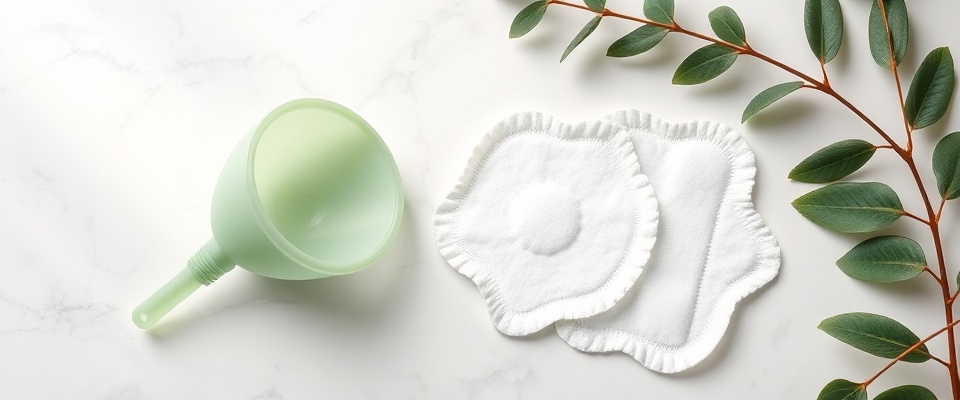
The average menstruating person uses somewhere between 10,000 and 16,000 disposable menstrual products over a lifetime. That is a staggering amount of intimate contact with materials that, until recently, received almost no regulatory scrutiny for chemical safety. When researchers finally started testing conventional pads, tampons, and liners, what they found was alarming: plastics, phthalates, volatile organic compounds, and other endocrine-disrupting chemicals pressed directly against some of the most absorptive tissue in the human body.
This guide breaks down exactly what the science says about plastics in menstrual products, why it matters for your health, and which plastic-free period products in 2026 offer genuinely safer alternatives. We share research, not medical advice — always consult a healthcare provider for personal health decisions.
- ~90% of a conventional pad is plastic-derived materials — polypropylene, polyethylene, and superabsorbent polymers in direct contact with sensitive tissue.
- Phthalates and other endocrine disruptors have been detected in conventional pads and tampons in multiple studies.
- Medical-grade silicone menstrual cups, organic cotton pads/tampons, and period underwear are the primary plastic-free alternatives — all widely available in 2026.
- Switching to organic cotton tampons or a silicone menstrual cup eliminates the majority of chemical exposure from conventional products.
The Plastic Problem in Conventional Period Products
When you open a standard disposable pad, you are looking at a multi-layered product that is overwhelmingly synthetic. The top sheet that contacts your skin is typically polypropylene. The absorbent core relies on superabsorbent polymers — essentially tiny plastic beads. The waterproof backsheet is polyethylene, the same plastic used in grocery bags. And the adhesive strips and individual wrappers add even more plastic to the equation.
A single conventional pad contains the plastic equivalent of approximately four plastic bags. Multiply that by a lifetime of use, and you begin to understand the scale — both for personal chemical exposure and environmental waste.
Tampons are not plastic-free either
Tampons may seem like a simpler product, but conventional versions still contain significant synthetic components. Plastic applicators (made from polyethylene or polypropylene) are the most obvious source. But the tampon itself often blends cotton with rayon, and the string is frequently made from polyester or a polyester-cotton blend. Some brands add a thin polyester or polypropylene overwrap around the absorbent core to control fiber shedding.
Panty liners: small product, same plastics
Daily panty liners use the same construction as full-size pads — polypropylene top sheets, polyethylene backsheets, and plastic-based adhesives — just in a thinner format. Because many people wear liners daily and for extended hours, the cumulative exposure can be significant.
What Researchers Have Found: Phthalates, VOCs, and More
The concern about plastics in menstrual products is not theoretical. Multiple peer-reviewed studies have identified specific harmful chemicals in these products.
Phthalates and reproductive toxicants. A 2019 study by Park and colleagues published in Reproductive Toxicology tested sanitary pads available on the Korean market and detected volatile organic compounds (VOCs) including toluene, xylene, and methylene chloride. The researchers found that some pads released measurable quantities of these chemicals, several of which are classified as reproductive toxicants or suspected endocrine disruptors. The study raised concerns about chronic low-dose exposure through vaginal and vulvar tissue, which has significantly higher permeability than skin on most other parts of the body.
Dioxins and furans. Research by Scranton (2013) highlighted that the chlorine bleaching process used to whiten rayon and conventional cotton in tampons can produce trace amounts of dioxins and furans — persistent organic pollutants that accumulate in the body over time. While individual product levels were low, the concern is cumulative lifetime exposure through repeated, prolonged contact with highly absorptive mucosal tissue.
Broad chemical contamination. A comprehensive review by Wendee Nicole published in Environmental Health Perspectives (2014) examined the wider issue of chemicals in feminine care products. Nicole noted that menstrual products fall into a regulatory gap — classified as "medical devices" in the US, they are not required to list ingredients on packaging. The review called for more transparency and systematic testing, noting that pesticide residues, fragrance chemicals, and plasticizers had all been detected in various menstrual products.
Why vaginal exposure matters more. The vaginal and vulvar mucosa is highly vascularized and permeable. Chemicals absorbed through this tissue bypass first-pass liver metabolism, meaning they enter the bloodstream at higher effective concentrations than the same chemicals absorbed through the gut or regular skin. This is why the plastics in menstrual products deserve special scrutiny.
For a deeper look at how plasticizers interact with the endocrine system, see our guide on microplastics and hormones. And if you have heard that "BPA-free" means a product is safe, our article on why BPA-free is not necessarily safe explains why replacement chemicals can be equally problematic.
Plastic-Free Period Products: The Best Alternatives in 2026
The good news is that the market for genuinely plastic-free menstrual products has expanded significantly. Here are the categories worth considering, along with specific product recommendations.
1. Organic cotton pads and tampons
Organic cotton menstrual products use 100% certified organic cotton for the absorbent core, top sheet, and (in tampons) the string. The best options skip synthetic backsheets entirely, using compostable plant-based films instead. Look for products that are GOTS-certified (Global Organic Textile Standard) and explicitly free of chlorine bleaching, fragrances, and dyes.
Organic cotton pads work the same way as conventional pads — you will not notice a performance difference. The key benefit is eliminating direct plastic-to-skin contact during every cycle.
100% organic cotton top sheet and core. Plant-based backsheet free of polyethylene. Unscented, hypoallergenic, and individually wrapped in compostable film. Available in multiple absorbency levels including overnight with extended coverage.
Users like that these organic cotton pads are "not bulky" — thin enough to be "barely noticeable" — and appreciate the unscented, chemical-free cotton against skin. On a light-to-medium flow they absorb well without discomfort. The honest downsides: the adhesive is the weak point, with several reviewers saying it "will stick barely for 5 minutes" before the pad bunches up and shifts out of place; and on a heavy flow the pad is "not thick enough," leaking through after a few hours. Best for lighter days and paired with underwear the glue can actually grip.
✓ Ships free with Prime · Free returns · Amazon A-to-z purchase guarantee (on eligible items)
Tip: When shopping for organic cotton pads, check that both the absorbent core and the backsheet are plastic-free. Some brands market an "organic cotton top sheet" while still using a standard polyethylene backsheet underneath.
2. Menstrual cups (medical-grade silicone)
Menstrual cups are one of the most effective ways to eliminate plastic from your period routine entirely. Made from medical-grade silicone (which is silicone, not a plastic polymer), a single cup lasts 5 to 10 years with proper care. That is thousands of disposable products avoided.
Medical-grade silicone is biocompatible, meaning it does not leach chemicals or react with body tissue. It contains no phthalates, no BPA, no dioxins, and no microplastic-shedding components. The material is also non-porous, so it does not harbor bacteria when cleaned properly.
Cups do have a learning curve. Most people need two to three cycles to feel fully comfortable with insertion and removal. But once you have it down, many users report fewer cramps, less odor (because blood is not oxidizing against absorbent material), and significantly less waste.
100% medical-grade silicone with no dyes, BPA, phthalates, or chemical coatings. Available in two sizes and two firmness levels. Lasts up to 10 years. Comes with a cotton carry bag. One of the most recommended cups for beginners due to its smooth rim design.
Users report the Saalt cup prevents leaks reliably once it is sized right — several describe "no leaks" through overnight sleep and active days, plus fewer cramps than with tampons, and a single cup lasts years. The honest downsides all cluster at the start: there is a real learning curve, and reviewers say the "first time" removal was a challenge, "grabbing high enough inside to coax it down," which can be messy and even painful; long nails make removal harder; and a few report odor from the cup that needs a thorough wash. Expect two or three cycles before it feels routine.
✓ Ships free with Prime · Free returns · Amazon A-to-z purchase guarantee (on eligible items)
3. Period underwear
Period underwear has undergone a significant evolution. The earliest versions relied on PFAS-treated fabrics for leak resistance, which was essentially trading one chemical problem for another. In 2026, several brands have moved to PFAS-free, plastic-minimized designs that use tightly woven organic cotton and plant-based moisture barriers instead.
Period underwear works best for lighter flow days, as backup protection alongside a cup, or for overnight wear. Most styles hold the equivalent of two to three tampons and feel like regular underwear when worn.
One caveat: even the best period underwear typically contains some synthetic fibers (like a nylon-spandex blend for stretch). Truly 100% plastic-free period underwear is difficult to manufacture because you need some elasticity for fit. However, the total plastic content is dramatically lower than disposable products, and because the garment is washed and reused hundreds of times, the per-use plastic exposure is minimal.
PFAS-free and OEKO-TEX certified. Organic cotton gusset with a plant-based moisture barrier. Available in multiple styles (bikini, hipster, high-waist) and absorbency levels. Machine washable, designed to last 2+ years with regular use.
Users like the everyday comfort of Saalt's cotton period underwear — soft, breathable, with a gusset that "dries fast" and a waistband reviewers call sturdy. It works best as backup or for lighter days. The honest downsides pull the rating to about 4.2 out of 5: some reviewers report the seam where the gusset meets the cotton "takes up blood and causes massive leakage," and one on heavy absorbency "experienced leaks within 3 hours on medium flow"; others found the gusset "disappointingly narrow" and the underwear rode up. Sizing and flow matter a lot here, so do not rely on a single pair for a heavy day.
✓ Ships free with Prime · Free returns · Amazon A-to-z purchase guarantee (on eligible items)
4. Organic cotton tampons (cardboard applicator)
For those who prefer tampons, switching to an organic cotton version with a cardboard applicator removes the two biggest sources of chemical exposure: the plastic applicator and the synthetic fiber blend in conventional tampon cores. Look for GOTS-certified organic cotton, chlorine-free processing, and no added fragrances or dyes. The cardboard applicator is compostable and biodegrades far faster than plastic.
100% certified organic cotton with a cardboard applicator and organic cotton string. No chlorine bleaching, fragrances, dyes, or synthetic fibers. One of the longest-established organic tampon brands with verified third-party certification. Available in regular and super absorbency.
Users choose Natracare for the plain organic cotton and absence of harsh chemicals — reviewers report "no irritation" and feel safer with a chemical-free tampon. The honest downsides center on the cardboard applicator: with no coating it can be difficult to insert and "gets stuck if it gets wet," and some find it uncomfortable going in, though twisting it first helps; the tampons also run a touch less absorbent than mainstream brands, so you may change more often; and reviewers note the occasional dud that "doesn't absorb anything" and leaks. The trade-off is chemical-free cotton for a less slick applicator.
✓ Ships free with Prime · Free returns · Amazon A-to-z purchase guarantee (on eligible items)
5. Reusable cloth pads
Reusable cloth pads are the oldest form of menstrual management and, in many ways, the simplest plastic-free option. Modern cloth pads use organic cotton or bamboo fabric with snap closures (metal, not plastic) and a moisture-resistant but breathable inner layer. They wash easily in a cold rinse followed by a regular machine cycle.
A set of 6 to 8 cloth pads typically lasts 3 to 5 years, which means one purchase replaces roughly 1,500 to 2,500 disposable pads. The upfront cost is higher, but the long-term savings are significant.
Soft organic cotton top layer with a waterproof but breathable inner shell. Metal snap closures — no plastic hardware. Machine washable. The 8-pack covers most of a typical cycle, with multiple absorbency sizes included. A strong value entry point into reusable pads without sacrificing material quality.
Users are surprised by how absorbent these cloth pads are — the charcoal microfiber layers hold more than expected, several saying they outperform disposables, and the pads wash easily and come with a wet bag for changes on the go. The honest downsides: like most cloth pads, they "shift around during activity," so an active day can leave them out of position; and the single wing snap "seems somewhat flimsy" and needs two hands to fasten securely. One accuracy note from reviews: the absorbent core is charcoal and polyester microfiber rather than organic cotton, so buy them for absorbency, not for an all-natural fiber.
✓ Ships free with Prime · Free returns · Amazon A-to-z purchase guarantee (on eligible items)
Cost comparison: At roughly $8 per pack of 28 disposable pads, a person spending $80–$100/year on disposables will spend approximately $3,000–$4,000 over a menstruating lifetime. A menstrual cup ($29) plus a set of cloth pads ($40–$60) costs under $100 and lasts years.
What to Avoid: Greenwashing Red Flags
As demand for plastic-free period products has grown, so has greenwashing. Here are the claims to scrutinize.
- "Natural" or "pure" on the label — These terms are unregulated and meaningless. A pad can be labeled "natural" while still containing a polyethylene backsheet.
- "Organic cotton top sheet" — This only describes the layer touching your skin. The absorbent core and backsheet may still be entirely synthetic.
- "Fragrance-free" but not "chemical-free" — Removing fragrance is a good step, but it does not address the plasticizers, adhesives, and SAPs that make up most of the product.
- "Biodegradable" packaging with a plastic product inside — Some brands wrap a conventional plastic-laden pad in compostable packaging and call it eco-friendly. Check the product itself, not just the wrapper.
PFAS in period underwear: In 2022, independent testing found PFAS (per- and polyfluoroalkyl substances) in several popular period underwear brands, including some marketed as "organic" and "non-toxic." Always look for third-party PFAS-free certification (such as OEKO-TEX Standard 100) rather than relying on brand marketing claims alone.
Vaginal Absorption and Why Material Choices Matter
The reason plastics in menstrual products are more concerning than plastics in, say, a water bottle comes down to the route of exposure. Vaginal and vulvar tissue is among the most permeable in the body. A frequently cited principle in pharmacology is that drugs administered vaginally achieve higher bioavailability than oral administration for certain compounds, precisely because the tissue absorbs chemicals efficiently and delivers them to the bloodstream without hepatic first-pass metabolism.
This same absorption pathway applies to any chemical in direct contact with this tissue — including phthalates, BPA/BPS, and volatile organic compounds present in conventional menstrual products. The contact duration matters too: a pad or tampon is worn for hours at a time, in a warm, moist environment that can accelerate chemical migration from material to tissue.
Research on microplastics and reproductive health is still emerging, but the existing evidence is concerning enough to warrant precaution. Our article on microplastics and fertility covers the latest findings on how plastic-derived chemicals may affect reproductive outcomes.
Building Your Plastic-Free Period Routine
Switching to plastic-free period products does not have to be all-or-nothing. Here is a practical approach.
- Start with one swap. Replace your most-used product first. If you primarily use pads, try organic cotton pads. If you use tampons, try a menstrual cup.
- Give yourself a trial period. Menstrual cups take 2 to 3 cycles to feel natural. Do not judge the experience on your first try.
- Layer your system. Many people find the best approach is a menstrual cup for the heaviest days, period underwear for lighter days and overnight, and a couple of organic cotton pads as backup when needed.
- Use up what you have. There is no need to throw away existing products. Use them up and replace them with plastic-free versions as you go.
- Check the full ingredient list. If a brand will not disclose every material in their product, that itself is a red flag.
For teens and first-time users: Organic cotton pads are the easiest entry point — they work identically to conventional pads with zero learning curve. A menstrual cup can be introduced later once someone is more comfortable with their cycle.
The Environmental Dimension
Beyond personal health, there is a significant environmental case for plastic-free period products. Menstrual waste accounts for an estimated 200,000 tonnes of plastic landfill waste per year in the United States alone. Conventional pads take 500 to 800 years to decompose. Tampon applicators are among the most common items found in ocean beach cleanups.
Organic cotton pads without synthetic backsheets are industrially compostable (though not suitable for home composting due to biohazard considerations in most municipalities). Menstrual cups and period underwear, as reusable products, reduce waste by 99% compared to disposables over their usable lifetime.
What About Menstrual Discs?
Menstrual discs are a newer alternative that sits at the vaginal fornix rather than lower in the canal like a cup. Reusable versions made from medical-grade silicone offer the same plastic-free benefits as cups. Some users prefer discs because they can be worn during intercourse and may cause less awareness of pressure than cups.
Disposable menstrual discs, however, are typically made from a polymer blend and are not plastic-free. If you want to try the disc format, go directly for a reusable medical-grade silicone version.
100% medical-grade silicone with no dyes, BPA, or phthalates. Sits at the vaginal fornix for a no-pressure fit that many users find more comfortable than a cup. Can be worn during intercourse. Holds up to 5 tampons' worth of flow and lasts up to 10 years with proper care.
Users rate the Saalt disc highly — about 4.3 out of 5 across more than 1,500 reviews — for leak-free wear that holds "up to 6 tampons' worth of flow," and because it uses no suction, people with bladder sensitivity or a weaker pelvic floor find it more comfortable than a cup. The honest downsides: removal is the sticking point, and reviewers repeatedly call it "messy," since the disc can rotate so the removal notch is not at the front and you may have to "hook your finger fully around the rim"; there is a learning curve of several cycles to master the fold and placement; and opinions on sizing vary, with some wishing they had gone larger. Give it a few cycles before judging.
✓ Ships free with Prime · Free returns · Amazon A-to-z purchase guarantee (on eligible items)