A crib mattress protector is one of the most overlooked sources of chemical exposure in a nursery. It sits directly beneath the sheet, in contact with the mattress surface your baby sleeps on for the majority of every 24-hour cycle. Yet most protectors sold at major retailers are made with vinyl (PVC), polyurethane coatings, or treated with PFAS — chemicals that off-gas, break down, and migrate into the air your baby breathes all night long.
The stakes are higher for infants than for adults. Babies spend 12–16 hours per day sleeping, their lungs are still developing, their breathing rate is twice that of adults, and their faces are inches from the mattress surface. Pound for pound, infants inhale significantly more air relative to their body weight than adults do. When that air is coming off a vinyl-coated surface, the exposure math is not in their favor.
This guide covers what to avoid, what to look for, and the five best non-toxic crib mattress protectors available in 2026 — all organic, waterproof without vinyl or PFAS, and genuinely safe for the surface where your baby spends the most time.
Why Most Crib Mattress Protectors Are a Problem
Walk through the baby aisle of any big-box store and pick up a crib mattress protector. Flip it over. The waterproof backing on most affordable protectors is one of three things: vinyl (PVC), polyurethane laminate, or a PFAS-treated fabric. Each carries specific concerns for infant health.
Avoid Vinyl (PVC) waterproof backing
Vinyl is the most common waterproof material in budget crib protectors. PVC contains phthalates — plasticizers that keep the vinyl flexible — which are classified as endocrine disruptors. Phthalates leach out of vinyl over time, particularly in warm environments (like a crib warmed by a sleeping baby). A 2019 study in Environmental Science & Technology found that PVC products release phthalates into indoor air at rates significantly higher than non-PVC alternatives. Vinyl also releases chlorine-based VOCs during off-gassing, which is why new vinyl products often have that distinctive "plastic smell."
Avoid PFAS-treated waterproof fabrics
Some protectors marketed as "fabric-feel" or "breathable waterproof" achieve their water resistance through PFAS (per- and polyfluoroalkyl substances) chemical treatments rather than a physical waterproof layer. PFAS are called "forever chemicals" because they do not break down in the environment or the human body. They accumulate over a lifetime. A 2021 study in Environmental Science & Technology Letters detected PFAS in a range of consumer products marketed as water-resistant, including baby products. PFAS exposure in infants has been linked to immune suppression, reduced vaccine efficacy, and thyroid disruption.
Avoid Polyurethane coatings with flame retardants
Some protectors use polyurethane laminate (PUL) as the waterproof layer. While PUL is generally considered safer than PVC, some manufacturers add chemical flame retardants to the polyurethane layer to meet flammability standards. These flame retardants — often organophosphate compounds — are associated with neurodevelopmental effects in infants. If a protector uses PUL, verify that it does not contain added flame retardants. The same added-flame-retardant issue shows up in another piece of gear your baby spends hours in: our best non-toxic car seat guide explains how to choose a seat that passes flammability standards without chemical treatments.
Look at the materials list on any crib mattress protector before purchasing. If you see "vinyl," "PVC," "polyvinyl chloride," or vague terms like "waterproof coating" without further specification, avoid it. Safe waterproof layers will be explicitly labeled as "food-grade polyethylene," "PE film," or "TPU" (thermoplastic polyurethane without flame retardant additives). GOTS-certified products cannot contain PVC, PFAS, or synthetic flame retardants by definition.
"The crib mattress is the single highest-exposure surface in an infant's life. What that surface is made of — and what it off-gases — matters more here than almost anywhere else in the home."
For a deeper look at why the nursery is the most important room to address, see the full Plasticproof Nursery Guide. And for mattress-level concerns (fiberglass, foam off-gassing, and certified organic options), see Best Non-Toxic Baby Mattress 2026.
What to Look For in a Non-Toxic Crib Mattress Protector
A genuinely safe crib mattress protector should meet all of the following criteria:
- Organic cotton or natural fiber top surface. GOTS (Global Organic Textile Standard) certification is the gold standard. It ensures no synthetic pesticides, no toxic dyes, no formaldehyde finishes, and fair labor practices throughout the supply chain. The same standard applies to the rest of the bed — see our guide to the best organic cotton sheets for 2026 for GOTS-certified bedding the whole family sleeps on.
- Waterproof layer made from food-grade polyethylene or TPU. Food-grade polyethylene (PE) is the same material used in milk jugs and cutting boards. It contains no phthalates, no BPA, no chlorine, and does not off-gas VOCs. TPU (thermoplastic polyurethane) is another safe option when it does not contain flame retardant additives.
- No vinyl, no PVC, no PFAS. These should be explicitly absent, not just unlisted.
- No added flame retardants. Organic cotton and wool are naturally flame-resistant and do not require chemical treatment to meet flammability standards.
- Third-party certifications. GOTS, GREENGUARD Gold (low chemical emissions testing), and OEKO-TEX Standard 100 (tested for harmful substances) are all meaningful verifications.
Quick Picks: Best Non-Toxic Crib Mattress Protectors at a Glance
Quick Picks
- Best overall: Naturepedic Organic Cotton Waterproof Protector Pad — $$
- Best breathable: Avocado Organic Waterproof Crib Protector — $$
- Best budget: American Baby Company Organic Cotton Waterproof Crib Protector — $
- Best airflow: Naturepedic Organic Breathable Ultra Crib Cover — $$$
- Best Fair Trade: Whisper Organics Waterproof Crib Mattress Protector — $$
| Pick | Product | Price | Key Feature |
|---|---|---|---|
| Best Overall | Naturepedic Organic Cotton Waterproof Protector Pad | $$ | GOTS + MADE SAFE, hidden waterproof barrier |
| Best Breathable | Avocado Organic Waterproof Crib Protector | $$ | GOTS cotton, breathable PFAS-tested film |
| Best Budget | American Baby Company Organic Cotton Waterproof Protector | $ | Organic cotton top, vinyl-free TPU film |
| Best Airflow | Naturepedic Organic Breathable Ultra Crib Cover | $$$ | 3D airflow pad + protector in one |
| Best Fair Trade | Whisper Organics Waterproof Crib Mattress Protector | $$ | Fairtrade + GOTS organic cotton |
Price key: $ = budget · $$ = mid-range · $$$ = premium. Amazon prices change daily — tap any "Check Today's Price" button for the current number.
The 5 Best Non-Toxic Crib Mattress Protectors for 2026
1. Naturepedic Organic Cotton Waterproof Protector Pad
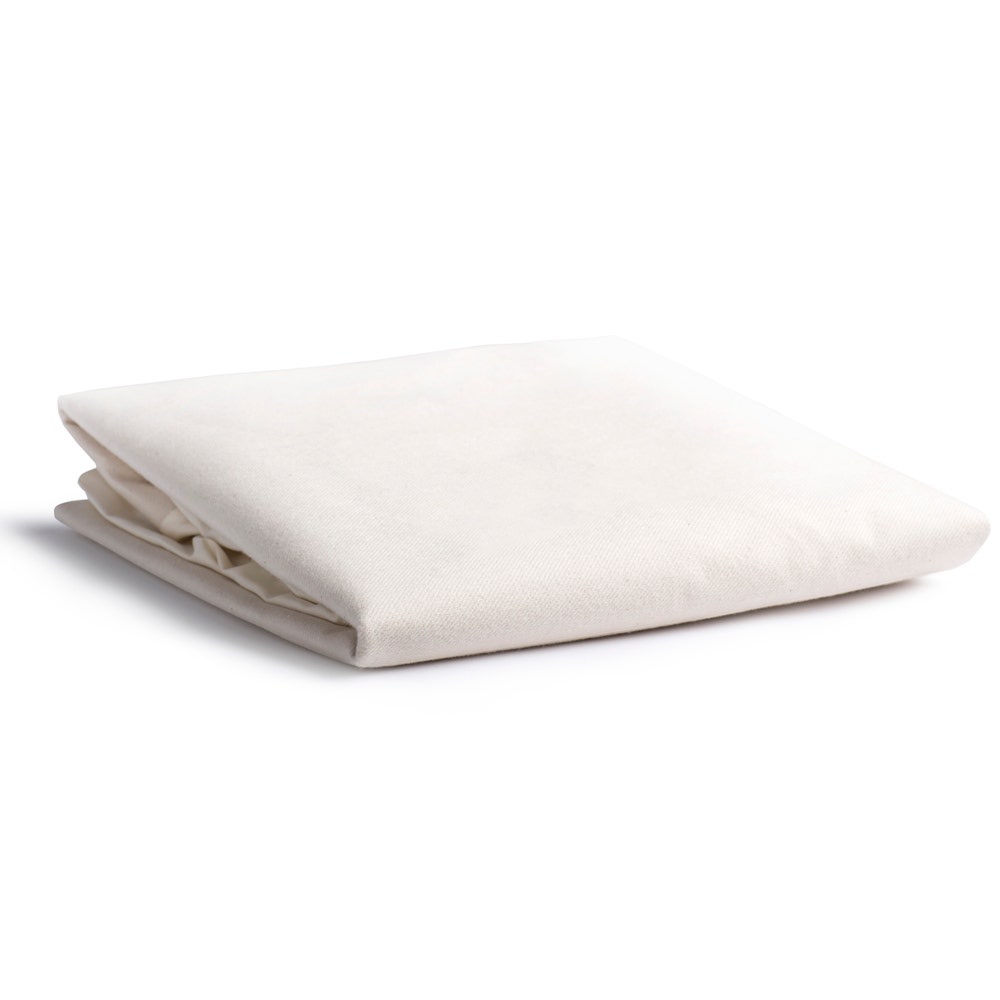 Best Overall
Two layers of GOTS-certified organic cotton sandwich an ultra-thin waterproof barrier that blocks every liquid while still letting water vapor escape (Naturepedic calls this DrySleep). No vinyl, no PVC, no phthalates, no PFAS, and no added flame retardants. Fitted style with deep pockets that stay secure on a standard 28×52 crib mattress. Fully machine washable and dryer safe.
This is the top pick because it combines the highest level of organic certification with a genuinely safe waterproof layer. Naturepedic publishes its full material certifications and is independently verified by GOTS, GREENGUARD Gold, and MADE SAFE — about as airtight as third-party proof gets in this category.
Parents pick this pad for how quiet and soft it is — the waterproof layer is a thin TPU membrane sandwiched between organic cotton, which reviewers describe as "noiseless" and non-crinkly, unlike the plastic-backed pads that wake a sleeping baby. It breathes enough to let some water vapor escape, so backs stay less sweaty, and it holds up to repeated washing. The honest downsides: it costs well above a basic pad; and like every polyurethane-based waterproof layer, its protection gradually weakens with age, flexing and many wash cycles, so it is not a buy-once-forever barrier. Reviews are mostly positive, so treat this as a premium pick rather than a bargain.
Full waterproof protection for the surface your baby's face is pressed against 14+ hours a day — with the strongest stack of independent safety certifications on this list.
Why it's safe: The waterproof barrier is sealed between two layers of GOTS organic cotton — no vinyl, PVC, phthalates, or PFAS to off-gas or leach, and GREENGUARD Gold verifies low chemical emissions into nursery air.
Check Today’s Price on Amazon →Amazon prices change daily — tap to see today's price and any active discount.
- Free delivery & returns for Prime members
- Sold & shipped by Amazon
- Thousands of verified reviews
2. Avocado Organic Waterproof Crib Protector
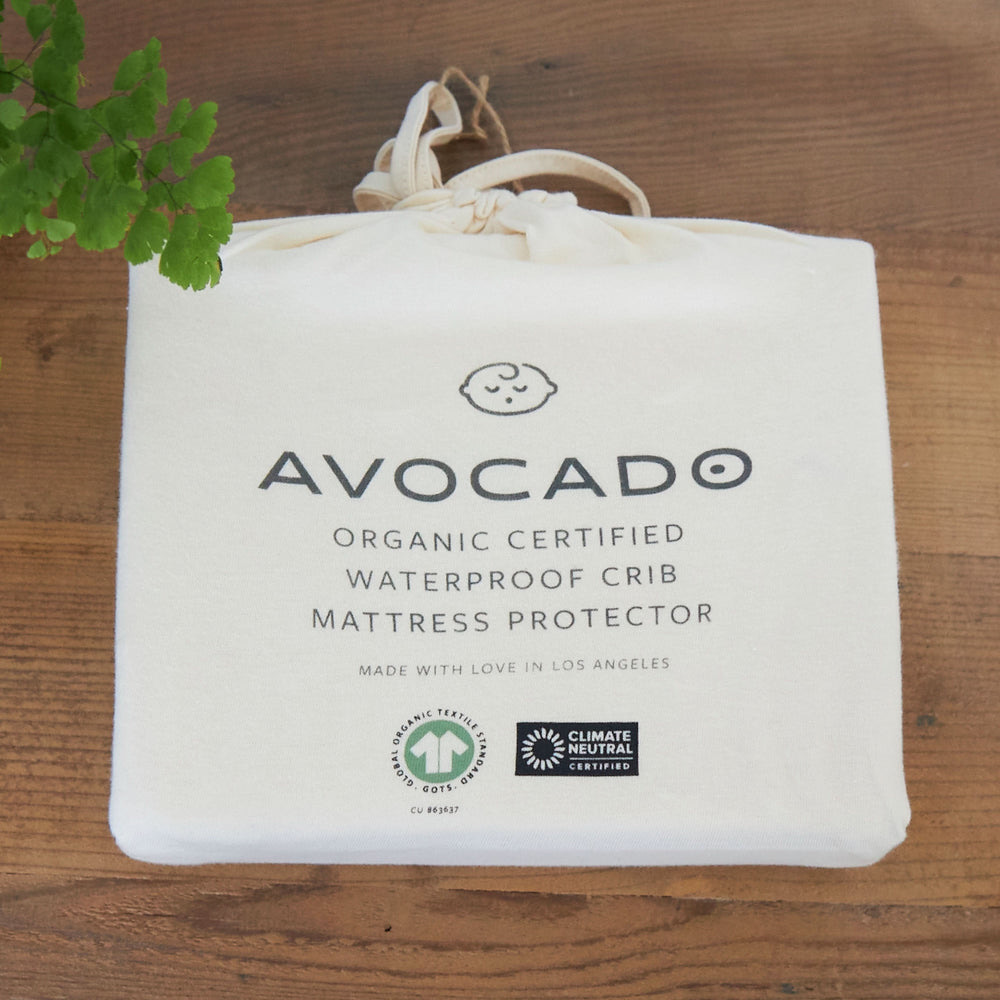 Best Breathable
Avocado wraps a super-thin polyurethane waterproof film between two layers of GOTS-certified organic cotton. It blocks liquids completely while still letting water vapor pass through — the breathable construction that helps a baby who runs warm sleep cooler. No vinyl, no PVC, no phthalates. Machine washable, and made in a GOTS-certified factory.
This is the best option for parents worried about overheating. Many waterproof protectors trap heat against the mattress; Avocado's film is engineered to breathe. It is also independently tested for PFAS and meets OEKO-TEX Standard 100 and MADE SAFE non-toxicity standards.
Parents like that the Avocado protector combines organic cotton comfort with real waterproofing — one tester poured wine on it and "no wine soaked through," and it stays quiet and lightweight where plastic-backed pads feel stiff. The cross-quilting looks and feels nice under a sheet. The honest downsides: it ships intentionally oversized because the cotton shrinks, so it "may take up to three washes" to reach the right fit; the polyurethane waterproof membrane weakens over time with UV, flexing and repeated washing; and it sits at a premium price. Wash it a few times before you trust the fit.
Full liquid protection that still breathes — so a hot-sleeping baby isn't lying on a sweaty plastic layer all night.
Why it's safe: The waterproof layer is a thin polyurethane film (no vinyl, PVC, or phthalates), it's been independently tested for PFAS, and the cotton is GOTS-certified organic where it touches your baby's skin.
Check Today’s Price on Amazon →Amazon prices change daily — tap to see today's price and any active discount.
- Free delivery & returns for Prime members
- Sold & shipped by Amazon
- Thousands of verified reviews
3. American Baby Company Organic Cotton Waterproof Crib Protector
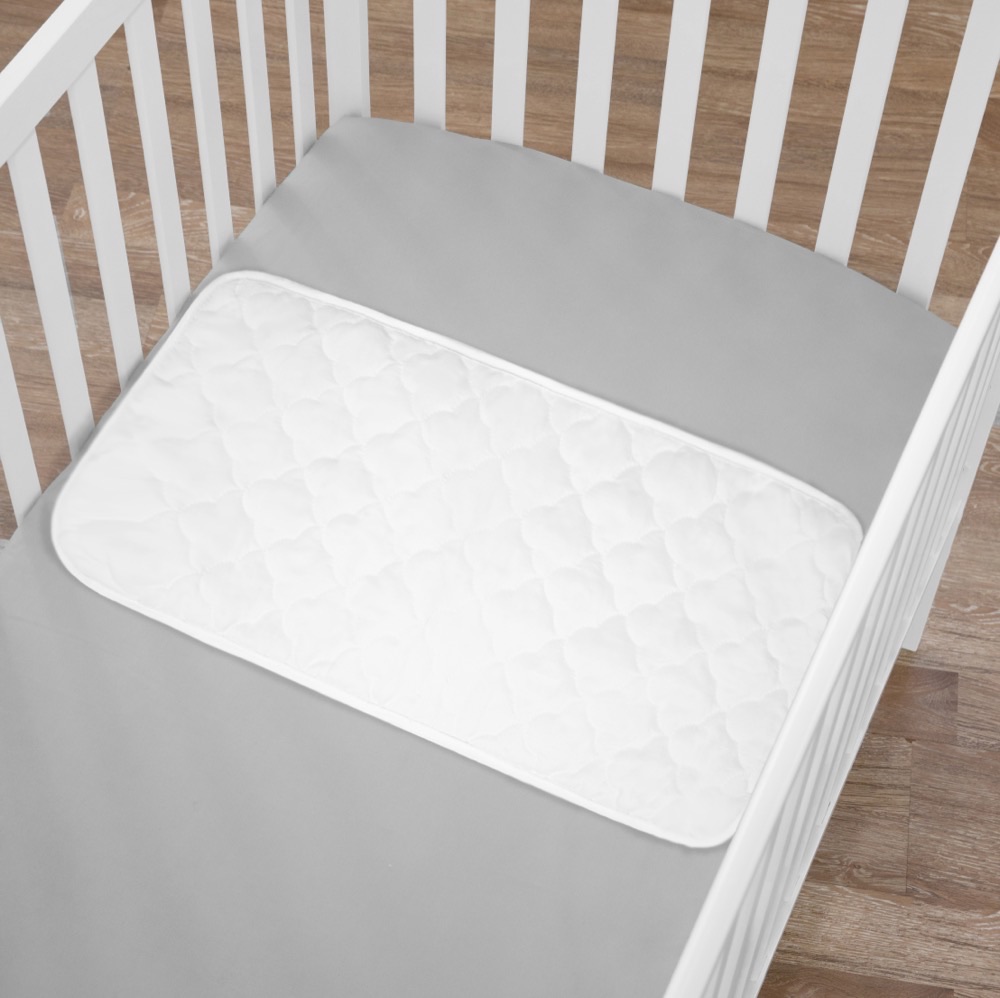 Best Budget
The quilted top layer is made with organic cotton, laminated to an organic-cotton-backed TPU (thermoplastic polyurethane) waterproof film — no vinyl, no PVC. Soft, fully waterproof, and engineered to stay quiet (no crinkly plastic sound) for a fitted 28×52 crib mattress. Machine washable and dryer safe.
At well under the price of the premium options, this is the entry point for parents who want a vinyl-free, organic-cotton-topped waterproof protector without paying premium-tier prices. It's the best-reviewed budget option in the category, which makes buying two for rotation an easy call.
This is the value pick, and parents say it punches above its price — the fit is snug, it is "high-quality for the price," and reviewers report it catches spit-ups and even "the biggest leaks" without soaking through to the mattress, then washes and dries easily. The honest downsides: the waterproof backing can be noticeably noisy under a sheet, and the brand has since marketed a quieter "noiseless" version, so check which one you are buying; and it is thinner and more utilitarian than the premium organic pads, so it feels less plush. For a spare or a second crib, the value is hard to beat.
A genuinely waterproof, vinyl-free organic-cotton-topped protector cheap enough to buy two — so one is always clean while the other is in the wash.
Why it's safe: The waterproof barrier is a TPU film (not vinyl or PVC, so no phthalates leach out), and the surface your baby contacts is an organic cotton top layer.
Check Today’s Price on Amazon →Amazon prices change daily — tap to see today's price and any active discount.
- Free delivery & returns for Prime members
- Sold & shipped by Amazon
- 1,179+ verified reviews
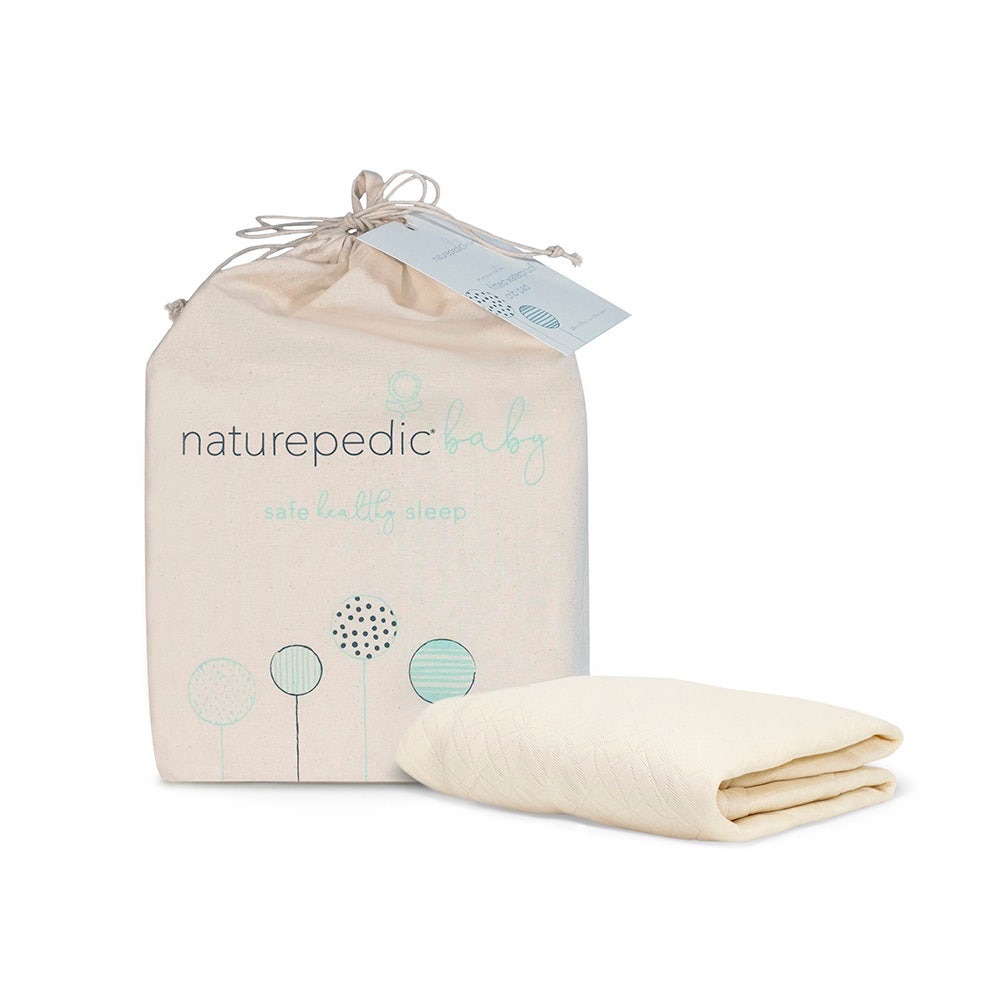
4. Naturepedic Organic Breathable Ultra Crib Cover
 Best Airflow
This Naturepedic cover features a soft organic cotton face over a 3-dimensional polyester lattice that creates a breathable space under the baby for 360-degree airflow. It works as both a fitted mattress pad and a washable protector in one piece, so there are fewer layers to bunch on the crib. GOTS-certified organic cotton, GREENGUARD Gold certified, with no flame retardants. Removable and machine washable.
This is the premium, most practical option. By combining a padded comfort layer with airflow into a single fitted cover, it reduces the number of layers on the mattress (fewer layers means less bunching, a better fit, and easier laundry rotation) while addressing the overheating concern that comes with fully sealed waterproof pads.
Parents choosing this cover are usually after airflow, not waterproofing — its 3D polyester lattice creates a breathable space under the baby that reviewers credit with "less sweaty backs" and reduced overheating, wrapped in a soft organic cotton face, and it doubles as a washable protector. Fit is snug with no gapping. The honest downsides: it is expensive, roughly $159 for the cover alone and far more as part of the full mattress system; the snug fit "took a little effort" to get back on after washing; and, importantly, it is a breathable cover, not a waterproof barrier, so if your goal is blocking leaks this is the wrong tool. Buy it for temperature regulation, not spill protection.
One organic cover that is both the soft pad and the washable protector — with a 3D airflow layer that keeps air moving under your baby instead of trapping heat.
Why it's safe: The face your baby contacts is GOTS-certified organic cotton with no added flame retardants, and GREENGUARD Gold certification verifies low chemical emissions into the nursery.
Check Today’s Price on Amazon →Amazon prices change daily — tap to see today's price and any active discount.
- Free delivery & returns for Prime members
- Sold & shipped by Amazon
- Thousands of verified reviews
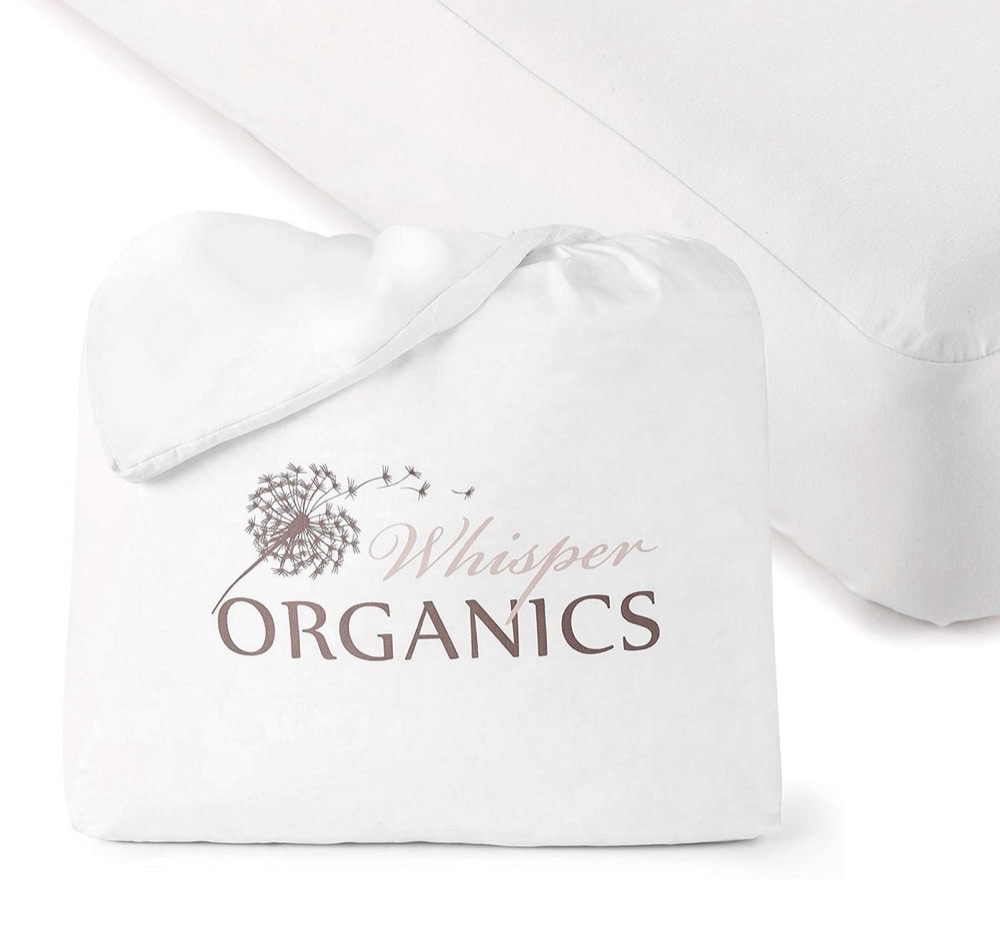
5. Whisper Organics Waterproof Crib Mattress Protector
 Best Fair Trade
A breathable triple-layer design with a soft, stretchy jersey-knit organic cotton top and bottom and a thin, GOTS-approved waterproof polyurethane layer in the center — no vinyl, phthalates, or latex. The cotton is grown and picked in Fairtrade-certified fields in India and produced in Fairtrade-certified mills. Quiet (no crinkly plastic sound), fitted for a standard 28×52 crib mattress, and machine washable.
For parents who prioritize ethical sourcing alongside non-toxic materials, Whisper Organics is the standout. Fairtrade certification means fair wages, safe working conditions, and community investment at the production level — layered on top of GOTS organic certification and a genuinely vinyl-free waterproof barrier.
Parents describe the Whisper Organics protector as thick, "well constructed" and reassuringly substantial, with soft organic cotton on top, a genuinely waterproof layer, low noise and a good fit. The honest downsides: the waterproof membrane traps heat, and the company itself acknowledges this, steering warm sleepers to its non-waterproof version, so a baby who runs hot may sleep sweatier on it; and at least one buyer reported uneven stitching, a sign quality can vary unit to unit. If overheating is your main worry this may not be the pick; if leak protection is, it delivers.
A vinyl-free waterproof protector that also clears the highest ethical-sourcing bar — Fairtrade cotton from field to mill, not just an organic label.
Why it's safe: The waterproof layer is a thin polyurethane film with no vinyl, PVC, phthalates, or latex, and the top your baby touches is GOTS-certified, Fairtrade organic cotton.
Check Today’s Price on Amazon →Amazon prices change daily — tap to see today's price and any active discount.
- Free delivery & returns for Prime members
- Sold & shipped by Amazon
- Thousands of verified reviews
What About the Mattress Itself?
A non-toxic protector is important, but it sits on top of the mattress. If the crib mattress underneath contains polyurethane foam, fiberglass fire barriers, or vinyl covers, those chemicals can still migrate into the crib environment. The protector helps, but it is not a complete solution for a toxic mattress.
For a full breakdown of what to look for (and avoid) in the crib mattress itself, see the Best Non-Toxic Baby Mattress 2026 guide. And for the adult bedroom, Best Non-Toxic Mattress 2026 covers the same ground for queen and king sizes.
Practical Tips for Crib Mattress Protector Care
Choosing a non-toxic protector is the first step. Keeping it safe and effective over time requires a few specific practices:
- Buy two. Having two protectors on rotation means one is always clean and ready while the other is in the wash. This makes the 1–2 week washing cadence practical rather than stressful.
- Wash with fragrance-free detergent. Synthetic fragrances in laundry detergent deposit chemical residue on fabric that your baby then breathes all night. Use a genuinely fragrance-free, plant-based detergent. Avoid fabric softeners and dryer sheets entirely — they coat fabric with a synthetic chemical film.
- Warm wash, low tumble dry. Hot water and high heat can degrade the waterproof layer over time. Warm water (not hot) and low-heat tumble drying preserves the integrity of the polyethylene or TPU waterproof membrane.
- Replace when the waterproof layer fails. If you notice moisture seeping through to the mattress, the waterproof layer has worn through. Replace the protector rather than adding another layer on top — stacked layers can bunch and create an uneven sleep surface.
- Skip the mattress pad perfumes and sprays. Some parents use linen sprays or mattress fresheners. These are unnecessary chemical additions to the crib environment. A clean, organic cotton protector does not need fragrance.
For more on reducing chemical exposure across the entire nursery — including bottles, toys, diapers, and feeding supplies — the Plasticproof Nursery Guide covers every surface and product category. And for bottle-specific concerns, see Safest Baby Bottles 2026; once solids begin, a non-toxic high chair keeps mealtimes off treated plastic too.
The Bigger Picture: Why Nursery Exposure Matters Most
The nursery is not just another room. It is the room where the most vulnerable member of your household spends the most time, in the most direct contact with surfaces and airborne particles, during the most critical period of development.
Research increasingly shows that early-life chemical exposure — particularly to endocrine disruptors like phthalates and PFAS — can have effects that do not manifest until years or decades later. A 2020 study in The Lancet Planetary Health found associations between prenatal and early postnatal phthalate exposure and neurodevelopmental outcomes in children at ages 3–5. The effects are subtle but measurable: attention, language development, and behavioral regulation.
This is not about creating fear. It is about making informed choices where they matter most. A crib mattress protector is a small product, but it is the product that your baby's face is pressed against for 14+ hours a day. Choosing one without vinyl, PFAS, or phthalates is one of the simplest, most impactful changes a parent can make.
For more on the specific risks of chemical exposure during pregnancy and early infancy, see Microplastics During Pregnancy: What the Research Says.
Want the Complete Nursery Protection Guide?
The Complete Plasticproof Guide covers every room in your home — with a dedicated nursery chapter covering mattresses, bottles, toys, diapers, clothing, and more. 47+ peer-reviewed studies, 80+ product recommendations.
Frequently Asked Questions
No. Vinyl (PVC) mattress protectors contain phthalates — plasticizers that keep vinyl flexible — which are known endocrine disruptors. Vinyl also off-gases volatile organic compounds (VOCs) including chlorine-based chemicals. Babies are especially vulnerable because their respiratory and hormonal systems are still developing, and they spend 12–16 hours per day on the crib mattress surface. A 2019 study in Environmental Science & Technology found that PVC-containing products release phthalates into indoor air at rates significantly higher than non-PVC alternatives. Safer options include crib mattress protectors made with organic cotton and food-grade polyethylene waterproof backing, such as the Naturepedic Organic Cotton Waterproof Protector Pad.
A truly non-toxic crib mattress protector meets several criteria: (1) No vinyl or PVC in the waterproof layer — look for food-grade polyethylene or TPU instead. (2) No PFAS (per- and polyfluoroalkyl substances), which are sometimes used for water resistance. (3) Organic cotton or natural fiber top surface — GOTS certification is the gold standard. (4) No added flame retardants — organic cotton and wool are naturally flame-resistant. (5) No formaldehyde, phthalates, or heavy metal-based dyes. Certifications to look for include GOTS (Global Organic Textile Standard), GREENGUARD Gold (low chemical emissions), and OEKO-TEX Standard 100 (tested for harmful substances).
Some do. PFAS (per- and polyfluoroalkyl substances) — often called "forever chemicals" — are used in some waterproof textiles for their water-repellent properties. PFAS do not break down in the environment or the human body and have been linked to immune suppression, thyroid disruption, and developmental delays in children. A 2021 study in Environmental Science & Technology Letters found PFAS in a range of consumer products marketed as water-resistant, including some baby products. To avoid PFAS, choose protectors that use polyethylene film or TPU as the waterproof barrier instead of chemical water-repellent treatments. All five protectors recommended in this guide are PFAS-free.
Wash a crib mattress protector at least once every 1–2 weeks under normal conditions, and immediately after any diaper leak, spit-up, or illness. Babies spend 12–16 hours per day on the crib surface, and their developing immune systems benefit from a clean sleep environment. Use a gentle, fragrance-free detergent — ideally one that is free of synthetic fragrances and optical brighteners. Wash on warm (not hot) to preserve the waterproof layer's integrity, and tumble dry on low or line dry. Avoid fabric softeners and dryer sheets, which deposit a synthetic chemical film on the fabric. Having two protectors on rotation makes this schedule practical.
Yes. Organic certification (like GOTS) applies to the textile components — the cotton or wool surface fabric. The waterproof layer is a separate component, typically a thin film of food-grade polyethylene or TPU bonded to the underside of the organic fabric. Polyethylene is considered one of the safest plastics — it is the same material used in food-grade cutting boards and milk jugs. It does not contain phthalates, BPA, or chlorine, and it does not off-gas VOCs. The Naturepedic Organic Waterproof Crib Pad, for example, uses GOTS-certified organic cotton on top with a food-grade polyethylene waterproof backing — fully waterproof and fully organic where it contacts the baby's skin.
Sources
- Bi C, Liang Y, Xu Y. "Fate and Transport of Phthalates in Indoor Environments and the Influence of Temperature." Environmental Science & Technology, 2019.
- Schaider LA, Balan SA, Blum A, et al. "Fluorinated Compounds in U.S. Fast Food Packaging." Environmental Science & Technology Letters, 2017.
- Sunderland EM, Hu XC, Dassuncao C, et al. "A Review of the Pathways of Human Exposure to Poly- and Perfluoroalkyl Substances (PFASs) and Present Understanding of Health Effects." Journal of Exposure Science & Environmental Epidemiology, 2019.
- Grandjean P, et al. "Serum Vaccine Antibody Concentrations in Children Exposed to Perfluorinated Compounds." JAMA, 2012.
- Gascon M, Valvi D, Forns J, et al. "Prenatal exposure to phthalates and neuropsychological development during childhood." International Journal of Hygiene and Environmental Health, 2015.
- Jenner LC, et al. "Detection of microplastics in human lung tissue using μFTIR spectroscopy." Environment International, 2022.
- Trasande L, et al. "Phthalates and the diets of US children and adolescents." Environmental Research, 2018.
- Landrigan PJ, et al. "The Lancet Commission on pollution and health." The Lancet, 2018.
Protect Every Surface in Your Baby's World
From the crib to the high chair to the bath — the Complete Plasticproof Guide covers every swap that matters for your nursery and beyond, backed by 47+ studies.