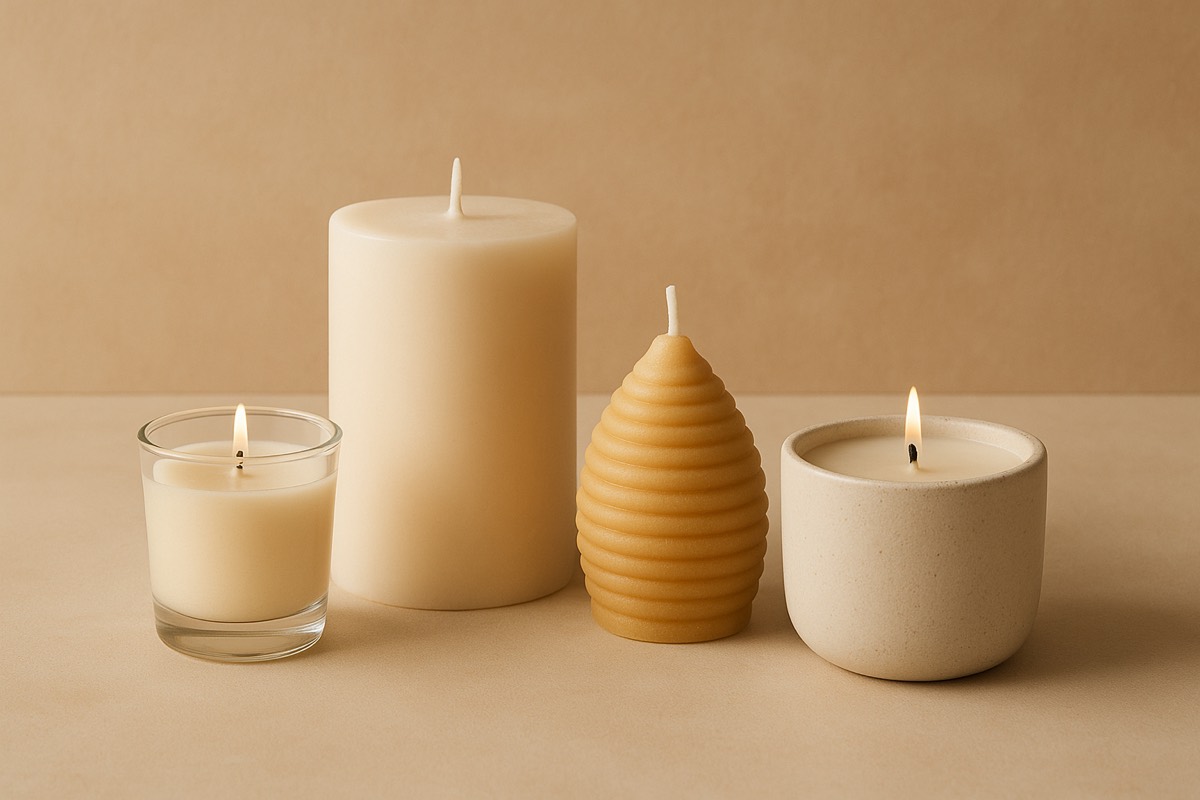
Candles set a mood. They make a room feel warmer, calmer, more intentional. But what most people don't realize is that the vast majority of candles sold in the United States are made from paraffin wax — a petroleum refining byproduct — and scented with synthetic fragrance oils that contain undisclosed chemical compounds. When you light a paraffin candle, you're not just creating ambiance. You're burning a low-grade petroleum product indoors, at face level, in an enclosed space.
The problem goes beyond the wax. Most mass-produced candle wicks contain zinc or tin cores to keep them rigid while burning. The word "fragrance" on a candle label can represent dozens of synthetic chemicals — including phthalates, which are endocrine disruptors used as fragrance fixatives. And the containers are frequently lined with plastic or use plastic lids that off-gas when heated.
The good news: cleaner alternatives exist at every price point. Soy, beeswax, and coconut wax candles with cotton or wood wicks and essential oil-based scents burn cleanly and eliminate the indoor air quality concerns associated with paraffin. We tested and researched dozens of candle brands to identify six that meet our standards.
Why Paraffin Candles Are a Problem
Paraffin wax is the cheapest candle material available, which is why it dominates the market. It's derived from the residue left over after crude oil is refined into gasoline. When burned, paraffin undergoes incomplete combustion — the same process that occurs in a car engine — releasing volatile organic compounds (VOCs) into your indoor air.
The specific chemicals are concerning. Toluene is a solvent that affects the central nervous system at sustained exposure levels. Benzene is classified as a Group 1 carcinogen by the International Agency for Research on Cancer. Formaldehyde, another paraffin combustion byproduct, is a known respiratory irritant and probable carcinogen. Individually, the levels from a single candle session may be low. But candle use is cumulative — people who burn candles regularly, especially in bedrooms and bathrooms with limited ventilation, build up chronic low-level exposure over months and years.
Then there's the fragrance issue. Under current U.S. regulations, candle manufacturers can list "fragrance" as a single ingredient without disclosing the dozens of individual chemicals that comprise it. Many synthetic fragrance blends contain phthalates — specifically diethyl phthalate (DEP) — which function as fixatives to make scent last longer. Phthalates are endocrine-disrupting compounds linked to hormonal disruption, reproductive harm, and developmental issues in children.
"The candle industry has no obligation to disclose individual fragrance ingredients. A single 'fragrance' listing on a label can represent 50 to 200 undisclosed synthetic chemicals."
Finally, the wick. The U.S. banned lead-core candle wicks in 2003, but imported candles — particularly inexpensive ones from unregulated supply chains — may still use lead or zinc cores. Zinc-core wicks are legal and common; they emit trace heavy metals when burned. A simple test: rub an unburned wick across white paper. If it leaves a gray metallic mark, it contains a metal core.
What We Screened For
At Plasticproof, we evaluated candle brands across five criteria. Every product recommended in this guide had to pass all five.
- Wax type: 100% soy wax, 100% beeswax, or 100% coconut wax. No paraffin. No "blends" that include paraffin. No gel wax (a polymer-based material).
- Wick material: 100% cotton wicks or natural wood wicks only. No metal cores — no zinc, no tin, no lead.
- Fragrance source: Essential oils only, or fragrance-free. Any candle listing "fragrance" or "fragrance oil" without full ingredient disclosure was excluded.
- Packaging: No plastic containers, no plastic lids, no plastic-wrapped packaging. Glass, ceramic, or tin containers with metal or cork lids preferred.
- Transparency: The brand must clearly disclose wax type, wick material, and fragrance source — either on the product label or on their website. Brands that obscure ingredients were excluded regardless of other qualities.
Our 6 Top Picks for 2026
Quick Picks
- Best overall: Keap Candles — coconut wax, cotton wick, essential oils, glass jar (~$38)
- Best value: Mrs. Meyer's Soy Candle — soy wax, cotton wick, widely available (~$10)*
- Best for purity: Bee & Willow Beeswax Candle — 100% beeswax, cotton wick, unscented (~$18)
- Best fair trade: Prosperity Candle — soy wax, cotton wick, made by women artisans (~$32)
- Best scent throw: P.F. Candle Co. Soy Candle — soy wax, cotton wick, amber glass (~$22)
- Best soy budget pick: Fontana Candle Company — 100% soy, cotton wick, essential oils (~$22)
*Mrs. Meyer's contains some synthetic fragrance — see full review below.
1. Keap Candles
2. Fontana Candle Company
3. Bee & Willow Beeswax Candle
4. P.F. Candle Co. Soy Candle
5. Prosperity Candle
6. Mrs. Meyer's Clean Day Soy Candle
Comparison Table
| Product | Wax Type | Wick | Fragrance Source | Price |
|---|---|---|---|---|
| Keap Candles | Coconut wax | Cotton | Essential oils | ~$38 |
| Fontana Candle Co. | 100% Soy | Cotton | Essential oils | ~$22 |
| Bee & Willow | 100% Beeswax | Cotton | Unscented | ~$18 |
| P.F. Candle Co. | 100% Soy | Cotton | EO + phthalate-free fragrance | ~$22 |
| Prosperity Candle | 100% Soy | Cotton | EO + phthalate-free fragrance | ~$32 |
| Mrs. Meyer's | Soy | Cotton | EO + synthetic fragrance* | ~$10 |
*Mrs. Meyer's does not fully disclose fragrance ingredients. All other brands on this list provide full or near-full ingredient transparency.
What to Avoid
The following candle types and ingredients should be avoided if indoor air quality and chemical exposure are priorities for your household.
Avoid Paraffin wax candles
Any candle listing "paraffin" or "mineral wax" as an ingredient is petroleum-derived. This includes the majority of candles sold at Bath & Body Works, Yankee Candle, and most grocery store brands. Even "soy blend" candles often contain a significant percentage of paraffin — if the label doesn't say 100% soy, assume paraffin is present.
Avoid Gel candles
Gel candles are made from a polymer resin (mineral oil + polymer powder). They burn at extremely high temperatures, produce significant soot, and release petroleum-derived compounds. The transparent, decorative appearance is appealing, but the combustion profile is worse than even standard paraffin.
Avoid Lead-core and zinc-core wicks
Lead wicks are banned in the U.S. but still found in some imported candles. Zinc-core wicks are legal and common — they release trace heavy metals when burned. The paper test works: rub an unlit wick on white paper. A gray metallic streak indicates a metal core. Stick with 100% cotton or wood wicks.
Avoid "Fragrance" without disclosure
If a candle label lists "fragrance" or "fragrance oil" as an ingredient without specifying the source, it almost certainly contains synthetic compounds. Reputable non-toxic candle brands are transparent about their scent sources — they list "essential oils" by name (lavender, eucalyptus, cedarwood, etc.) or explicitly state "phthalate-free fragrance" with IFRA compliance. Vague labeling is a red flag.
Tips for Cleaner Candle Burning
Even with a clean candle, burning practices matter. A few simple habits reduce soot and maximize burn quality:
- Trim the wick to 1/4 inch before every burn. A longer wick produces a larger flame, more soot, and incomplete combustion — even with soy or beeswax.
- Burn for at least 1 hour per inch of diameter on the first use. This creates a full melt pool and prevents tunneling, which wastes wax and causes uneven burning.
- Ventilate the room. Even clean candles consume oxygen and produce carbon dioxide. Crack a window or keep a door open, especially in small rooms like bathrooms.
- Use a snuffer instead of blowing out. Blowing creates a burst of smoke and particulates. A snuffer extinguishes the flame cleanly.
- Avoid burning for more than 4 hours continuously. Extended burns overheat the wax, destabilize the wick, and increase soot production regardless of wax type.
Want the Full Room-by-Room Protection Guide?
The Complete Plasticproof Guide covers every room in your home — kitchen, nursery, bathroom, bedroom — with the full research and complete swap list. 47+ peer-reviewed studies, 80+ product recommendations.
Frequently Asked Questions
Yes. A 2014 study from South Carolina State University found that burning paraffin candles releases toxic chemicals including toluene and benzene — both recognized carcinogens. Paraffin is a petroleum byproduct, and its combustion also produces formaldehyde, acetaldehyde, and acrolein. These compounds accumulate in poorly ventilated rooms and contribute to indoor air pollution. Switching to 100% soy, beeswax, or coconut wax candles eliminates this exposure pathway.
The safest candle waxes are 100% beeswax, 100% soy wax, and 100% coconut wax. Beeswax is the cleanest-burning option — it produces virtually no soot and actually releases negative ions that can help purify air. Soy wax burns cleanly and is widely available at lower price points. Coconut wax has an excellent scent throw and burns evenly. Avoid paraffin wax (petroleum-derived), gel wax (polymer-based), and any blends that list paraffin as an ingredient.
Pure 100% soy wax candles burn significantly cleaner than paraffin candles and do not release toluene or benzene. However, the candle is only as clean as its other components. A soy candle with a lead-core wick or synthetic fragrance oils can still release harmful compounds. For a truly non-toxic soy candle, look for: 100% soy wax (not a soy blend), cotton or wood wick, and scent from essential oils only — or unscented. Also check that the container is glass or ceramic, not plastic-lined.
The United States banned lead-core candle wicks in 2003 through a Consumer Product Safety Commission ruling. However, imported candles — particularly inexpensive ones from unregulated markets — may still contain lead or zinc-core wicks. Zinc-core wicks are legal but can release trace heavy metals when burned. To be safe, choose candles with 100% cotton wicks or wood wicks. You can test a wick by rubbing it on white paper: if it leaves a gray metallic mark, it likely contains a metal core.
The word "fragrance" on a candle label is a catch-all term that can represent dozens of undisclosed synthetic chemicals. Under current regulations, companies are not required to list individual fragrance ingredients. Many synthetic fragrance blends contain phthalates — endocrine-disrupting chemicals used as fragrance fixatives. For a non-toxic option, choose candles scented exclusively with essential oils (which will be labeled as such) or buy unscented candles. If the label says only "fragrance" or "fragrance oil" without further specifics, assume it contains synthetic compounds.
Sources
- Massoudi R, Hamidi A. "A Comparison of the Emissions Produced by Petroleum-Based and Vegetable-Based Candles." South Carolina State University, presented at the American Chemical Society national meeting, 2014.
- Lau C, et al. "Soot and VOC emissions from candles and incense." Indoor Air, 2009.
- U.S. Consumer Product Safety Commission. "Final Rule: Ban of Lead-Containing Paint and Certain Consumer Products Bearing Lead-Containing Paint." 16 CFR Part 1303, 2003.
- Steinemann A. "Fragranced consumer products: exposures and effects from emissions." Air Quality, Atmosphere & Health, 2016.
- Koman PD, Mancuso P. "Endocrine Disruptors and the Human Immune System: A Systematic Review." International Journal of Molecular Sciences, 2021.
Protect Every Room in Your Home
From the bedroom to the kitchen to the nursery — the Complete Plasticproof Guide covers every swap that matters, backed by 47+ studies.