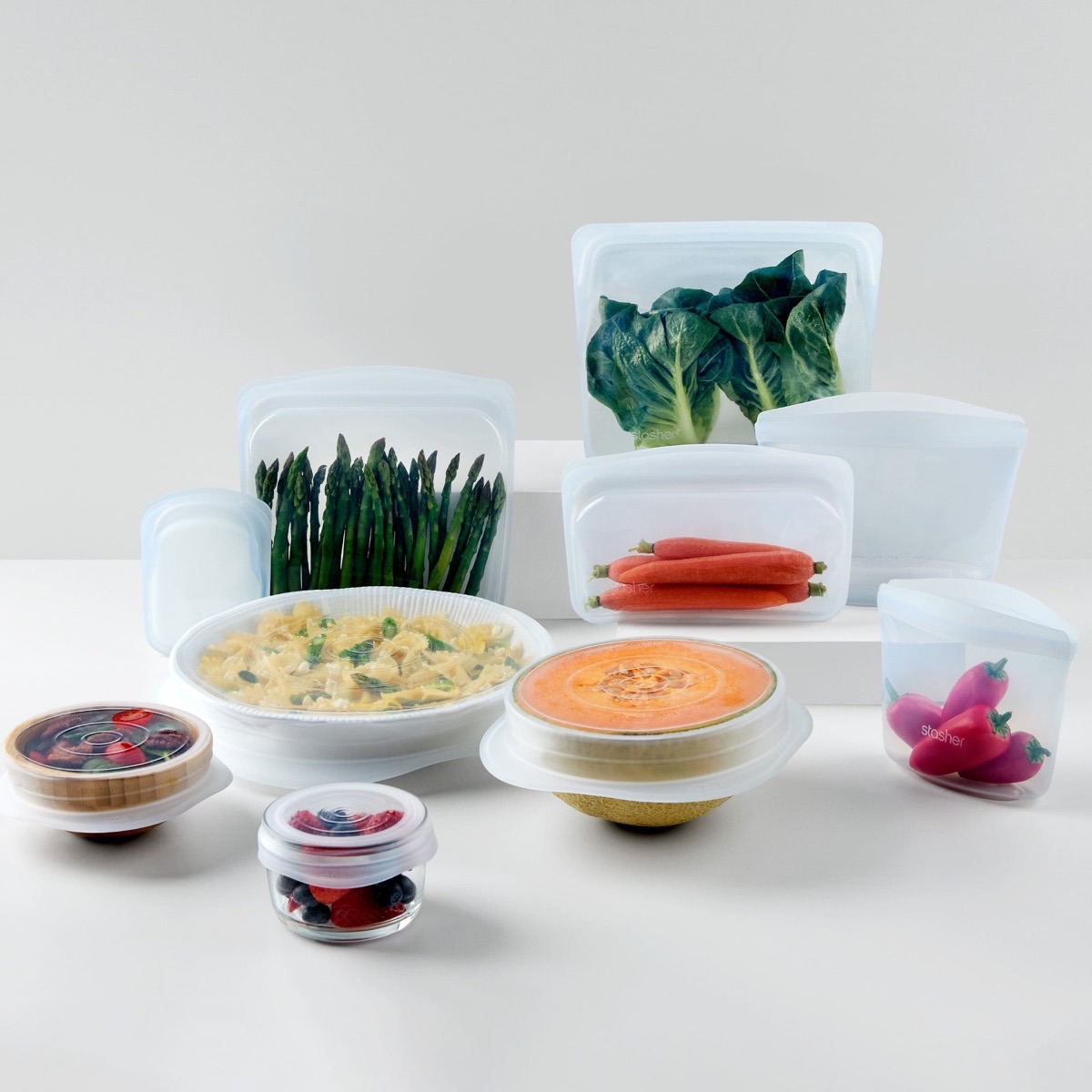
Stasher
Platinum-grade silicone rated to 400°F. Unlike plastic zip bags, pure silicone doesn't shed microplastics. Dishwasher, microwave, and freezer safe.
$$$Our price tier
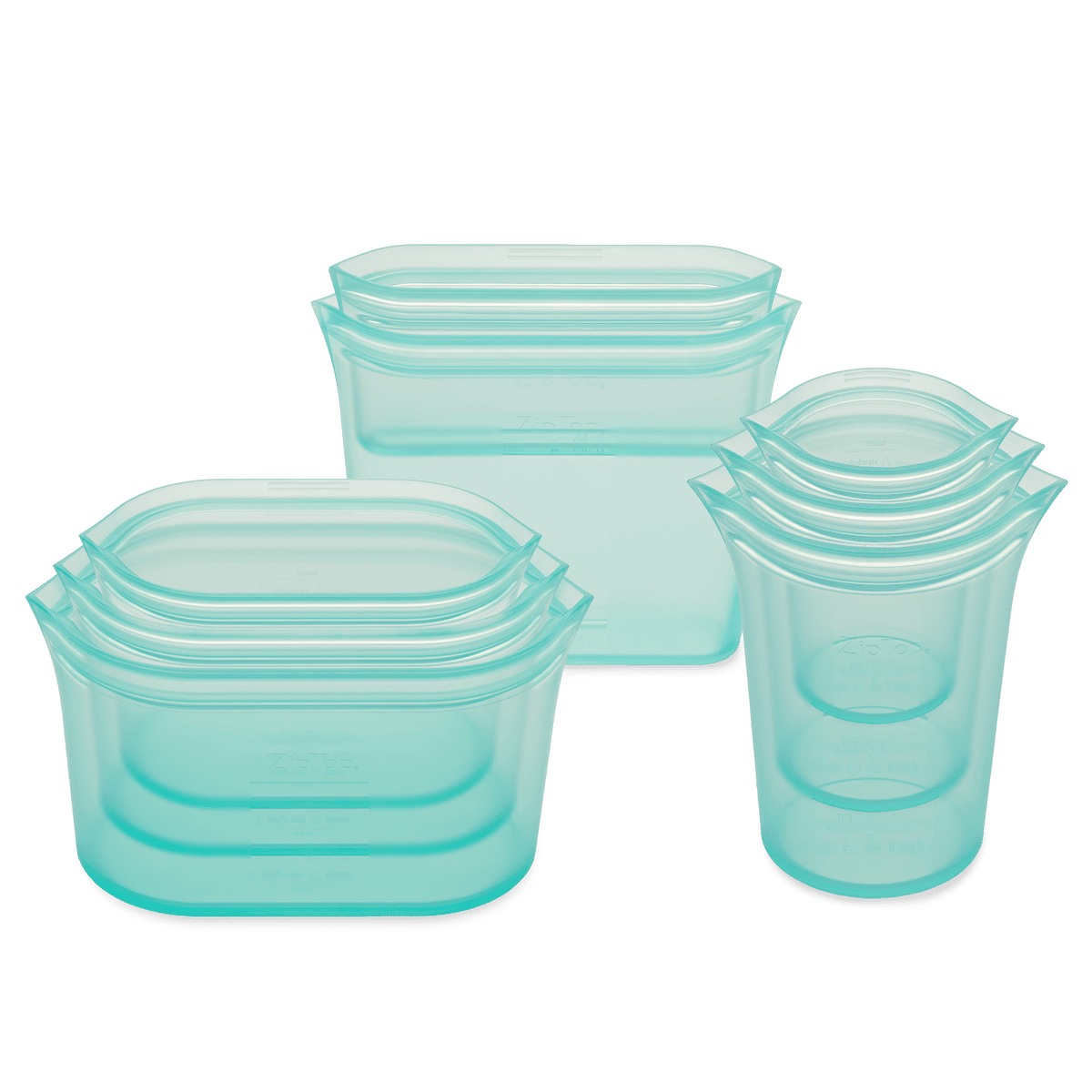
One-piece platinum silicone bags that stand up and pinch shut, replacing single-use plastic bags. Silicone is not plastic film — there is no zipper strip, no liner and no plasticizer.
As an Amazon Associate I earn from qualifying purchases — at no extra cost to you. We show a "Check price on Amazon" link rather than a number because Amazon prices change often.
Plastic bags are polyethylene film with a plastic zipper. These are moulded silicone — a silicon-oxygen elastomer with no plasticizers, cured with a platinum catalyst rather than a peroxide one. Different material family, different behavior with heat and fat.
What these are made of: one moulded piece of silicone. No film, no zipper strip, no liner.
Avoid single-use plastic bags for anything oily, hot or long-stored — hot leftovers straight into a thin plastic bag is the everyday version of the exposure. Be aware of the trade: silicone bags are bulkier than a box of plastic bags and cost far more up front, and they only pay off if they actually get used.
Straight answer: we're a research team, not a testing lab. Here's exactly what our rating is based on — and what it isn't — so you can weigh it honestly.
Anything that adds a known microplastic, PFAS, or off-gassing source — a non-stick coating, a plastic surface against food or skin, vinyl/PVC — is downgraded or cut. We only list what clears that bar.
Platinum-grade silicone rated to 400°F. Unlike plastic zip bags, pure silicone doesn't shed microplastics. Dishwasher, microwave, and freezer safe.
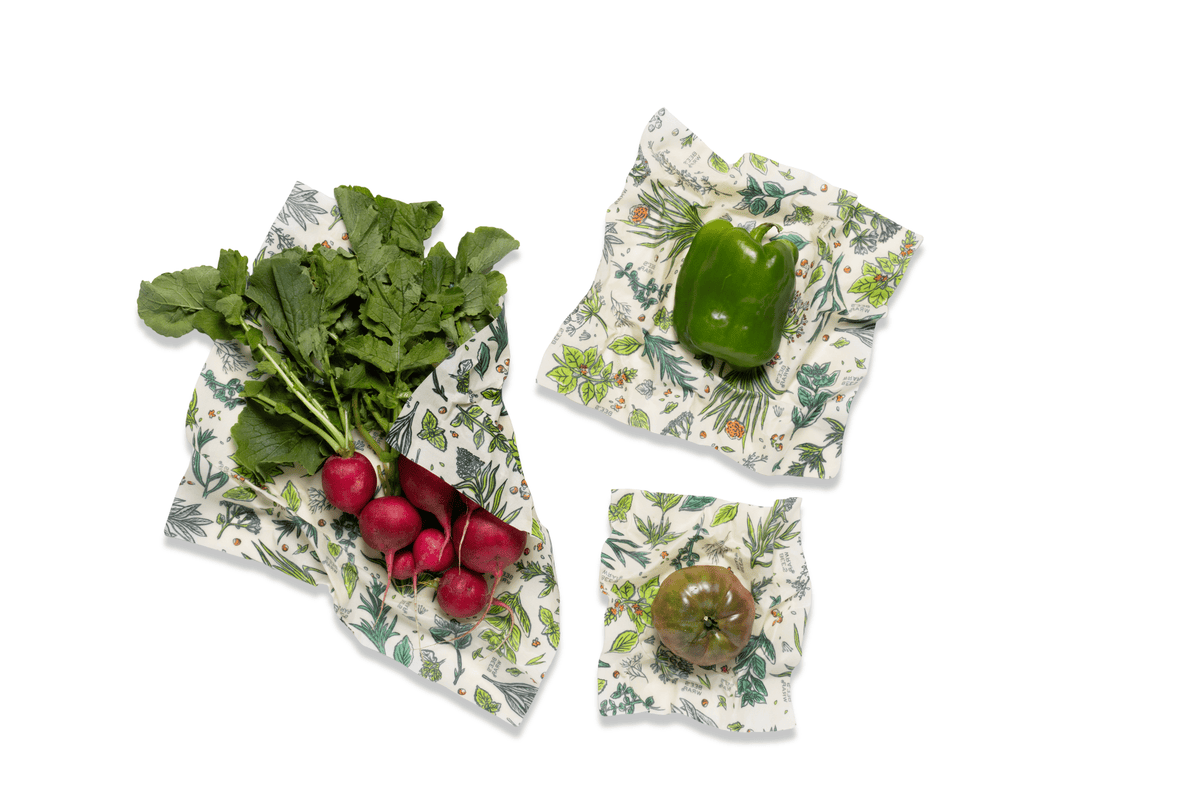
Organic cotton coated in beeswax and tree resin replaces plastic cling wrap entirely. Compostable after about a year of regular use.
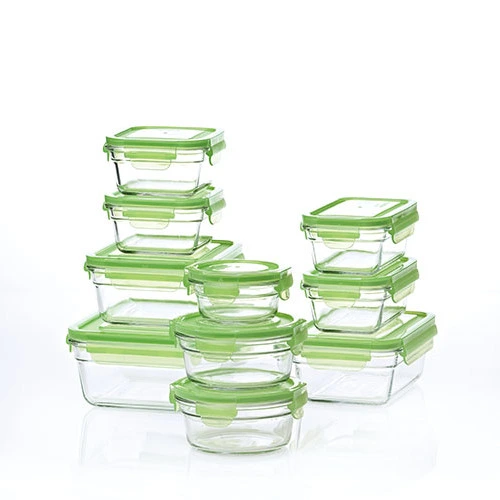
Tempered glass containers that take leftovers from oven to freezer with no plastic against the food. The lid is polypropylene, which Glasslock states is BPA-free — the honest detail most listings skip.
Affiliate disclosure: some links on this page are affiliate links. As an Amazon Associate I earn from qualifying purchases. We earn a small commission from qualifying purchases at no extra cost to you. This does not influence our recommendations — every product is selected based on peer-reviewed research.