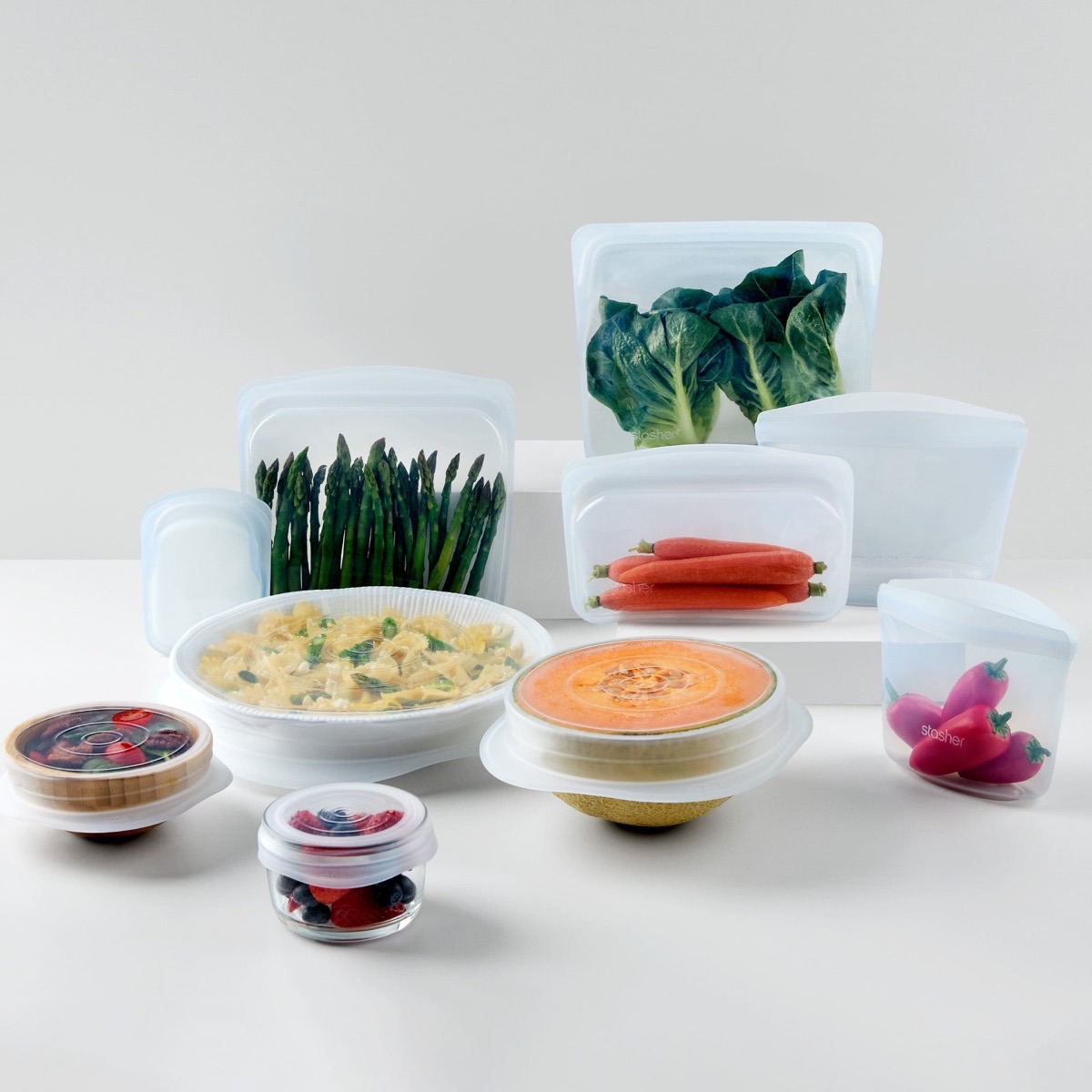
Stasher Silicone Storage Bags (Bundle)
Platinum-grade silicone rated to 400°F. Unlike plastic zip bags, pure silicone doesn't shed microplastics. Dishwasher, microwave, and freezer safe.
As an Amazon Associate I earn from qualifying purchases — at no extra cost to you. We show a "Check price on Amazon" link rather than a number because Amazon prices change often.
Why it's safe for your family
- Made from platinum food-grade silicone, which Stasher states is free of lead, latex, phthalates, BPA and BPS.
- Silicone is a cured, stable material rather than a thermoplastic, so it does not soften, cloud or become brittle through repeated washing and freezing the way plastic zip bags do.
- Rated for the dishwasher, microwave, freezer and oven up to 425°F, so the bag never has to be replaced because a cleaning cycle wore it out.
- The Pinch-Loc seal is molded from the same single piece of silicone — there is no separate plastic zipper strip or slider.
Is this really plastic-free? Yes — and here's why
Silicone and plastic are often lumped together, but they behave differently: plastic film is a thermoplastic that softens with heat and grows brittle with cold and age, while cured silicone stays flexible across that whole range. That stability is why this bag can go from freezer to oven and back without the surface degrading.
What this bag is made of: a single molded piece of platinum silicone, seal included. No zipper strip, no slider, no laminate layers.
Quick specs
What to avoid instead
This replaces single-use plastic zip bags. Those are thin polyethylene film, and every reuse, wash and freeze cycle abrades that surface — which is the mechanism by which food-contact plastics shed particles into what they hold.
How we verify — and what we don't
Straight answer: we're a research team, not a testing lab. Here's exactly what our rating is based on — and what it isn't — so you can weigh it honestly.
What we check
- What the product is made of, from the maker's own specs and product listing.
- Whether any part that touches you or your food uses PTFE, PFAS, plastic, or a coating that can degrade.
- Peer-reviewed research on how that material behaves when heated, scratched, washed, or worn.
- Known failure modes — how the product actually breaks down in a real home.
What we don't do
- We have not chemically tested this specific unit in a lab.
- We don't take payment to rate a product higher — there is no sponsored placement.
- We don't show star ratings or "trusted by thousands" counts we can't stand behind.
Anything that adds a known microplastic, PFAS, or off-gassing source — a non-stick coating, a plastic surface against food or skin, vinyl/PVC — is downgraded or cut. We only list what clears that bar.