Fellow

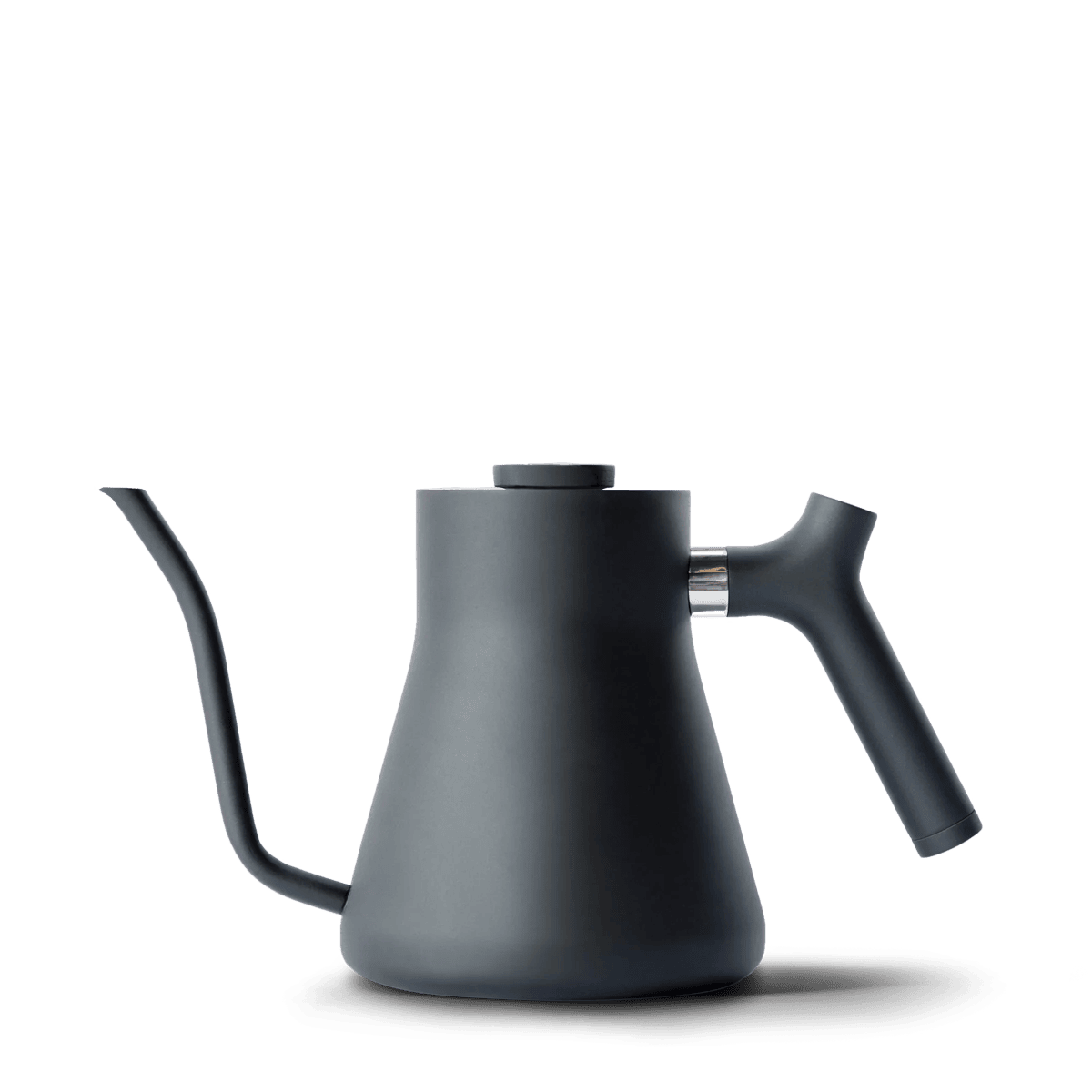
Stagg Pour-Over Stovetop Kettle

Plasticproof Excellent $$$Our price tier

Stainless steel gooseneck kettle — water heats in bare metal on the stove, with none of the plastic reservoir, window or lid gasket an electric kettle puts in the water path.

Check price on Amazon
Steel water pathNo plastic tank or window.
Nothing electronicNothing to age into the water.
Gooseneck controlPour-over that actually works.
See exactly how we verify this

As an Amazon Associate I earn from qualifying purchases — at no extra cost to you. We show a "Check price on Amazon" link rather than a number because Amazon prices change often.

Why it's safe for your family

  • Water heats in stainless steel and nothing else. That is the entire argument against the standard plastic-bodied electric kettle, where near-boiling water sits against plastic and a plastic sight window every single time.
  • The gooseneck spout is a brewing tool rather than a style choice: a slow, aimed pour is what lets you wet coffee grounds evenly, and it is the difference between pour-over that works and pour-over that channels.
  • A stovetop kettle has no electronics, no heating element in contact with the water and no seals to perish, so there is nothing in it that ages into the water.
  • The handle is set away from the body so it stays cool enough to hold, and it is the only part of the kettle that is not steel.

Quick specs

Body
Stainless steel
Spout
Precision gooseneck
Heat
Stovetop, including induction on the compatible model
Water path
Steel only — no plastic window, tank or gasket

What to avoid instead

Avoid plastic-bodied electric kettles, which hold boiling water against plastic and a plastic sight gauge daily. If you want the speed of electric, buy an all-metal or glass electric kettle — the plastic-bodied ones are the specific thing worth replacing.

How we verify — and what we don't

Straight answer: we're a research team, not a testing lab. Here's exactly what our rating is based on — and what it isn't — so you can weigh it honestly.

What we check

  • What the product is made of, from the maker's own specs and product listing.
  • Whether any part that touches you or your food uses PTFE, PFAS, plastic, or a coating that can degrade.
  • Peer-reviewed research on how that material behaves when heated, scratched, washed, or worn.
  • Known failure modes — how the product actually breaks down in a real home.

What we don't do

  • We have not chemically tested this specific unit in a lab.
  • We don't take payment to rate a product higher — there is no sponsored placement.
  • We don't show star ratings or "trusted by thousands" counts we can't stand behind.
What gets a product rejected

Anything that adds a known microplastic, PFAS, or off-gassing source — a non-stick coating, a plastic surface against food or skin, vinyl/PVC — is downgraded or cut. We only list what clears that bar.

Don't take our word for it — check the sources yourself Fellow's product details

Common questions

Is it slower than an electric kettle?
On a gas burner, usually a little; on induction, roughly comparable. What you get for the wait is a water path with no plastic in it and a kettle with nothing electronic to fail.
Do I need a gooseneck?
For pour-over coffee and for tea you actually care about, yes — a narrow, controllable stream is how you avoid pouring a hole through the coffee bed. For filling a French press or a pot, any kettle works.
Will it discolor?
Stainless can develop faint heat marks and hard-water film. Neither affects the water; both come off with vinegar or a stainless cleaner. Nothing is coated, so there is no finish to wear through.
Related reading
Do Electric Kettles Have Microplastics?

More safe picks

Affiliate disclosure: some links on this page are affiliate links. As an Amazon Associate I earn from qualifying purchases. We earn a small commission from qualifying purchases at no extra cost to you. This does not influence our recommendations — every product is selected based on peer-reviewed research.