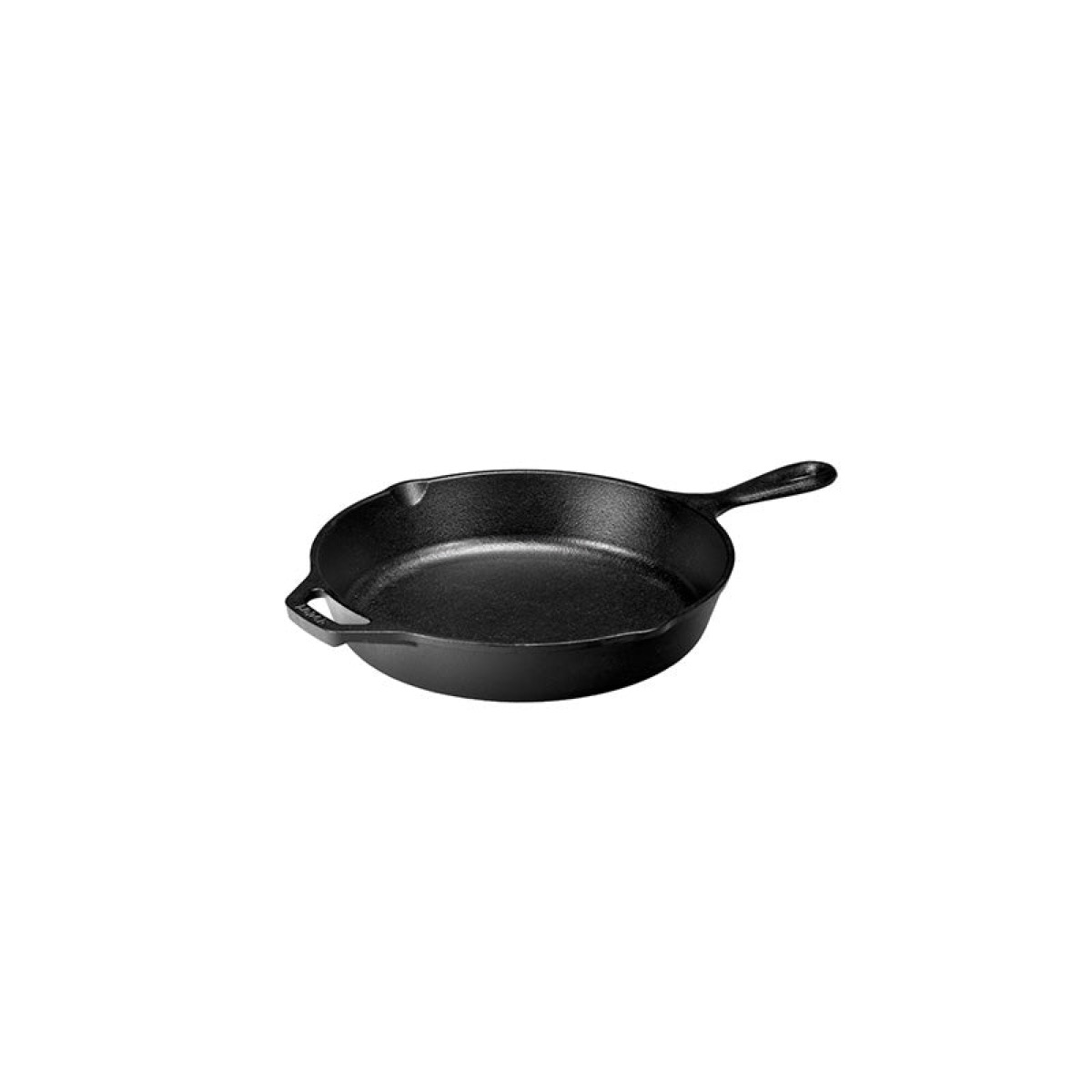
Lodge
Zero coating to degrade — naturally nonstick when seasoned. Unlike Teflon pans, cast iron releases no PFAS or microplastics, even at high heat.
$$$Our price tier
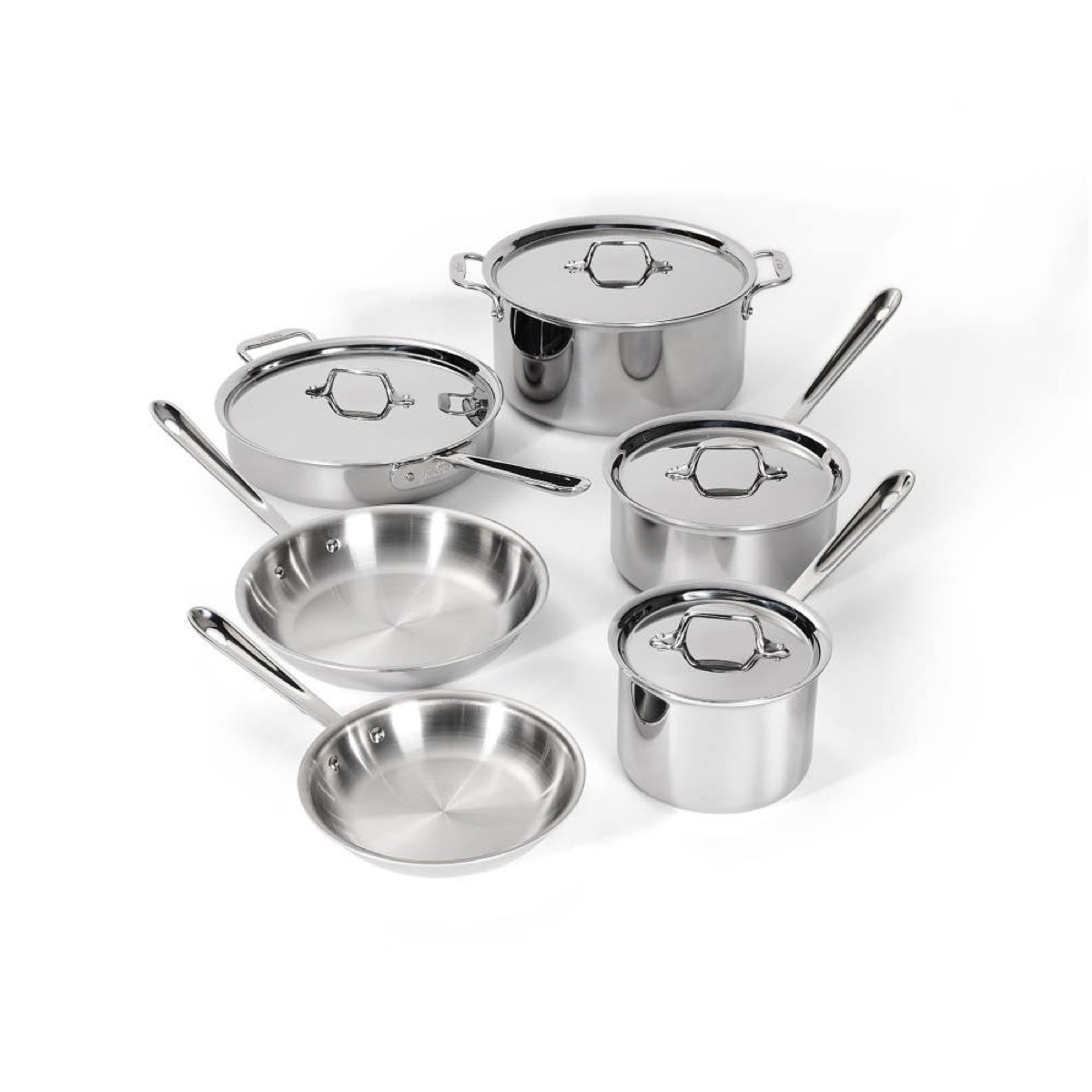
Tri-ply 18/10 stainless steel with no coatings that degrade. Professional-grade cookware with a limited lifetime warranty — zero microplastic risk at any temperature.
As an Amazon Associate I earn from qualifying purchases — at no extra cost to you. We show a "Check price on Amazon" link rather than a number because Amazon prices change often.
PFAS live in the non-stick coatings applied to cookware. Tri-ply stainless steel has no coating at all — it is bonded layers of stainless steel around an aluminum core, a solid metal cooking surface. With nothing coated on, there is nothing fluorinated to scratch off into your food.
What this set is made of: solid bonded metal — stainless steel and aluminum. No PTFE, no PFOA, no non-stick layer to degrade.
Nonstick cookware sets with PTFE coating are one of the most common sources of microplastic contamination in the kitchen. Once scratched — which happens with normal use — the coating sheds directly into your food.
Research shows that scratched nonstick cookware releases millions of microplastic particles per use. A single scratch can compromise the entire cooking surface. Switching to stainless steel eliminates this risk completely.
Straight answer: we're a research team, not a testing lab. Here's exactly what our rating is based on — and what it isn't — so you can weigh it honestly.
Anything that adds a known microplastic, PFAS, or off-gassing source — a non-stick coating, a plastic surface against food or skin, vinyl/PVC — is downgraded or cut. We only list what clears that bar.
Zero coating to degrade — naturally nonstick when seasoned. Unlike Teflon pans, cast iron releases no PFAS or microplastics, even at high heat.
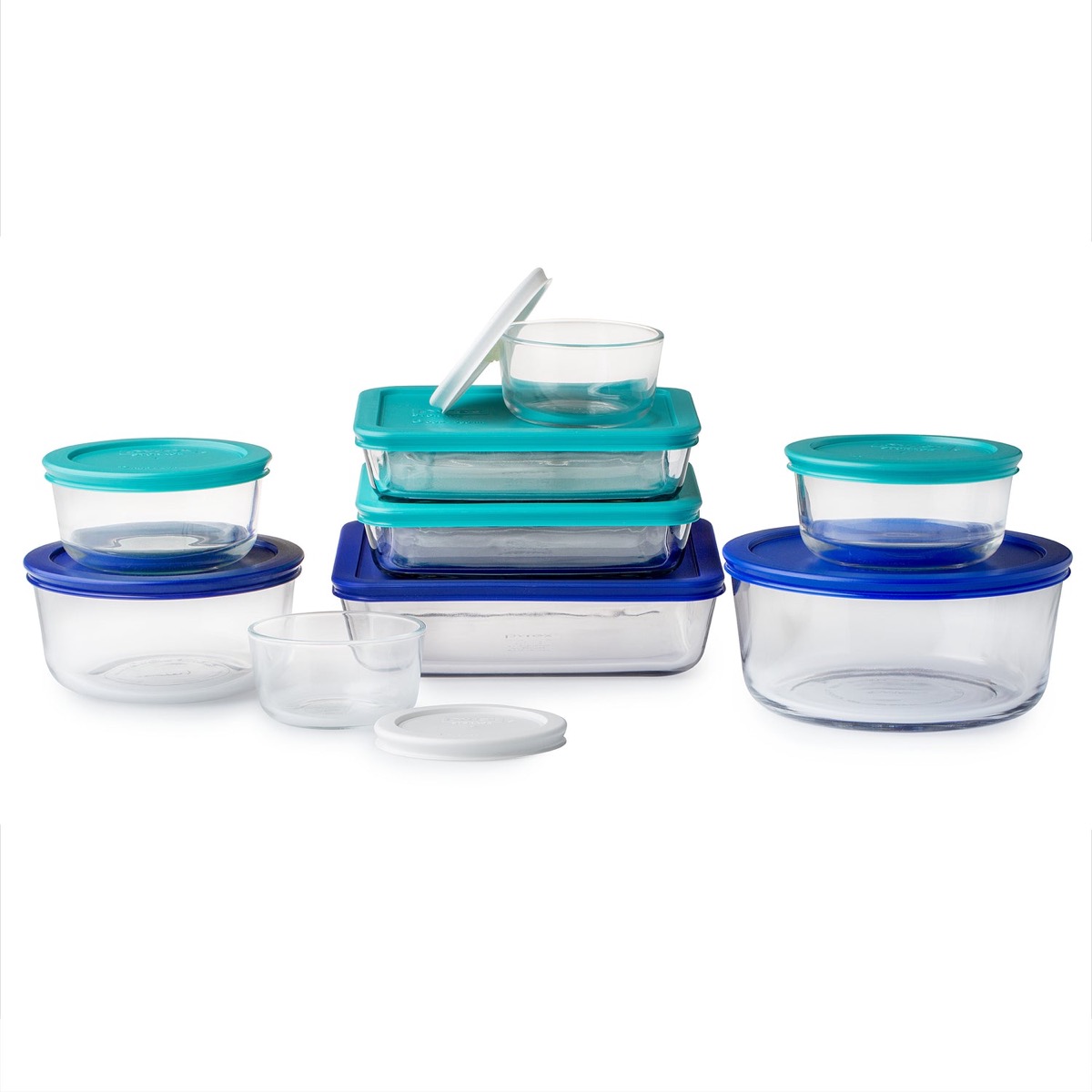
Borosilicate glass is chemically inert — no microplastics leach into food, even when heated in the microwave or dishwasher.

Hard maple is naturally antimicrobial and sheds zero plastic particles. Research shows plastic boards release up to 79 million microplastics per year.
Affiliate disclosure: some links on this page are affiliate links. As an Amazon Associate I earn from qualifying purchases. We earn a small commission from qualifying purchases at no extra cost to you. This does not influence our recommendations — every product is selected based on peer-reviewed research.