Quick Picks
Single-use plastic bags (Ziploc, Glad, store brands) are made from low-density polyethylene (LDPE) — a plastic that sheds microparticles with every use, especially when exposed to heat or acidic foods. A 2023 study in Environmental Science & Technology found that a single LDPE bag can release thousands of microplastic particles per use when storing food at room temperature.
Reusable alternatives fall into three categories: (1) silicone bags — heat-resistant, airtight, and dishwasher safe, (2) beeswax wraps and bags — natural, compostable, but not heat-proof, and (3) fabric bags — organic cotton or hemp for dry goods and produce. Each has trade-offs in durability, convenience, and cost.
We evaluated bags by four criteria: (1) material safety — food-grade silicone, organic cotton, or natural beeswax only, (2) seal quality — airtight for liquids and freezer storage, (3) heat tolerance — microwave, sous vide, and dishwasher safe, and (4) longevity — how many uses before replacement. Every pick below is BPA-free, PVC-free, and phthalate-free.
Stasher Platinum Silicone Bag
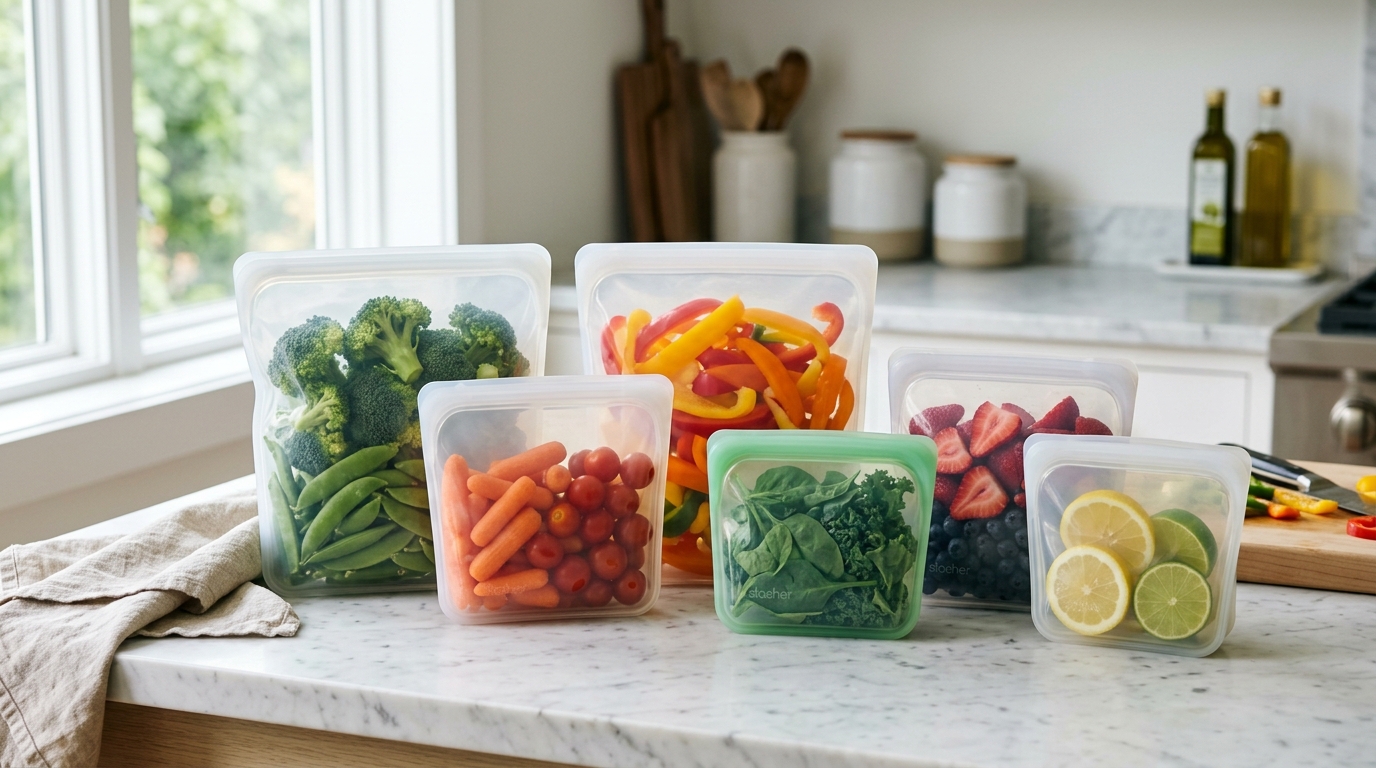
Stasher pioneered the reusable silicone bag category and remains the gold standard. Made from pure platinum food-grade silicone (no fillers, no plastic). The patented Pinch-Loc seal creates an airtight closure for liquids, soups, and marinades. Safe for microwave, dishwasher (top rack), freezer, boiling water, and oven up to 400°F. Available in sandwich, snack, half-gallon, and stand-up sizes. Each bag replaces approximately 3,000 single-use plastic bags over its lifespan.
Pros
- Platinum food-grade silicone — highest purity
- Airtight Pinch-Loc seal for liquids
- Microwave, dishwasher, freezer, oven safe
- Replaces ~3,000 single-use bags
Cons
- Higher upfront cost than Ziploc
- Pinch-Loc seal requires practice to close properly
- Can retain odors from strong-smelling foods
Zip Top Silicone Containers
Zip Top's unique design stands upright and stays open on the countertop — making it as easy to fill as a bowl but as portable as a bag. Made from 100% platinum food-grade silicone, manufactured in the USA. The zip closure is intuitive (just press to close) and keeps liquids sealed. Dishwasher, microwave, and freezer safe. Available in cup, dish, and bag shapes. Designed by a former OXO product designer.
Pros
- Stands upright — easy to fill
- Made in USA
- Platinum food-grade silicone
- Intuitive zip closure
Cons
- Takes up more cabinet space than flat bags
- Slightly heavier than Stasher
- Cup sizes don't fold flat for travel
Bee's Wrap Beeswax Food Bags
Bee's Wrap bags are made from GOTS-certified organic cotton infused with sustainably sourced beeswax, organic jojoba oil, and tree resin. The warmth of your hands molds the wrap around food, and the beeswax creates a breathable seal that keeps food fresh. Ideal for sandwiches, snacks, cheese, bread, and produce. Fully compostable at end of life (approximately 1 year of regular use). Not suitable for heat, liquids, or raw meat.
Pros
- 100% natural and compostable
- GOTS-certified organic cotton
- Breathable seal keeps produce fresh
- Beautiful artisan prints
Cons
- Cannot be used with heat (melts beeswax)
- Not suitable for liquids or raw meat
- Must wash with cold water only
- Shorter lifespan than silicone (~1 year)
Stasher Stand-Up Mega (Half-Gallon)
The Stasher Stand-Up Mega is the largest bag in the Stasher lineup — a half-gallon capacity that stands upright for easy filling. Same platinum food-grade silicone as the standard Stasher. The gusseted base keeps it stable on countertops or in the fridge. Ideal for batch meal prep, marinating proteins, storing soups, or freezing large portions. The Pinch-Loc seal handles liquids without leaking.
Pros
- Half-gallon capacity for meal prep
- Stands upright with gusseted base
- Handles liquids and soups
- Oven safe to 400°F for reheating
Cons
- $22 for a single bag is a significant investment
- Large size is bulky in small freezers
- Heavier than standard Stasher bags
(re)zip Lay-Flat Lunch Bags
(re)zip bags use a PEVA liner (a non-chlorinated, BPA-free vinyl alternative) with a leak-proof zip closure. While not as pure as silicone, PEVA is widely considered a safer plastic alternative — it is free from chlorine, BPA, lead, and phthalates. The lay-flat design makes them easy to store. Freezer safe and top-rack dishwasher safe. Available in snack, lunch, and gallon sizes. Each bag replaces ~300 single-use bags.
Pros
- Most affordable reusable option
- Familiar Ziploc-style closure
- PEVA is BPA/lead/phthalate-free
- Lay-flat storage
Cons
- PEVA is still a plastic alternative (not silicone)
- Less durable than Stasher — ~300 use lifespan
- Not microwave or oven safe
- Cannot be used for hot foods
Organic Cotton Produce Bags by Flip & Tumble
For dry goods, produce, bread, and bulk bin shopping, organic cotton mesh bags eliminate plastic entirely. Flip & Tumble's bags are made from GOTS-certified organic cotton with drawstring closures. The mesh design is breathable — produce lasts longer than in sealed plastic bags because ethylene gas escapes. Machine washable and fully compostable. Tare weight is printed on the tag for bulk shopping convenience.
Pros
- 100% GOTS-certified organic cotton
- Breathable mesh extends produce life
- Machine washable and compostable
- Tare weight printed for bulk shopping
Cons
- Not suitable for liquids or wet foods
- No airtight seal
- Not freezer safe for long-term storage
- Cotton can stain from berries and greens
| Bag | Material | Airtight? | Heat Safe? | Lifespan | Price | Best For |
|---|---|---|---|---|---|---|
| Stasher | Platinum Silicone | Yes | Yes (400°F) | 3,000+ uses | ~$13 | Best Overall |
| Zip Top | Platinum Silicone | Yes | Yes | 3,000+ uses | ~$13 | Standing Open |
| Bee's Wrap | Beeswax/Cotton | Breathable | No | ~1 year | ~$6/ea | Natural Option |
| Stasher Mega | Platinum Silicone | Yes | Yes (400°F) | 3,000+ uses | ~$22 | Meal Prep |
| (re)zip | PEVA | Yes | No | ~300 uses | ~$5/ea | Budget |
| Flip & Tumble | Organic Cotton | No | No | 2+ years | ~$3/ea | Produce |
Food-grade platinum silicone (like Stasher and Zip Top use) is one of the safest food storage materials available. It does not leach BPA, BPS, phthalates, or microplastics at any temperature. Platinum-cured silicone is made from purified silicon dioxide and contains no plastic. It is safe for microwave, oven (to 400°F+), freezer, and dishwasher. Look for 'platinum food-grade' or 'platinum-cured' on packaging — avoid peroxide-cured silicone, which is lower quality.
Yes. Ziploc and similar bags are made from low-density polyethylene (LDPE), which releases microplastic particles during normal use. A 2023 study found that LDPE food containers release thousands of micro- and nanoplastic particles per use, with higher release rates when food is acidic, fatty, or heated. Freezing and microwaving in Ziploc bags both increase particle release.
Quality platinum silicone bags (Stasher, Zip Top) last 3,000+ uses with proper care — roughly 8-10 years of daily use. They resist staining, odors, and degradation from heat cycling. At the end of their life, some manufacturers (Stasher) accept returns for recycling. The per-use cost of a $13 Stasher bag over 3,000 uses is less than half a cent — far cheaper than buying single-use Ziploc bags.
No. Beeswax wraps and bags should not be used for raw meat, fish, or poultry. The wraps cannot be washed in hot water (which would melt the beeswax), so they cannot be sanitized after contact with raw animal products. Use silicone bags (Stasher) or glass containers for raw meat. Beeswax wraps are ideal for sandwiches, cheese, bread, produce, and snacks.
PEVA (polyethylene vinyl acetate) is a non-chlorinated vinyl alternative used in some reusable bags like (re)zip. It is free from chlorine, BPA, lead, and phthalates — making it significantly safer than PVC. However, PEVA is still a plastic-based material and may release micro-particles over time, especially with wear. For the purest option, choose platinum food-grade silicone (Stasher, Zip Top) or natural materials (Bee's Wrap, organic cotton).
Sources
- Hussain KA, Romanova S, Okur I, et al. "Assessing the release of microplastics and nanoplastics from plastic containers and reusable food pouches." Environmental Science & Technology, 2023. PubMed
- Zimmermann L, Dierkes G, Ternes TA, et al. "Benchmarking the in vitro toxicity and chemical composition of plastic consumer products." Environmental Science & Technology, 2019. PubMed
- Hahladakis JN, Velis CA, Weber R, et al. "An overview of chemical additives present in plastics: migration, release, fate and environmental impact during their use, disposal and recycling." Journal of Hazardous Materials, 2018. PubMed