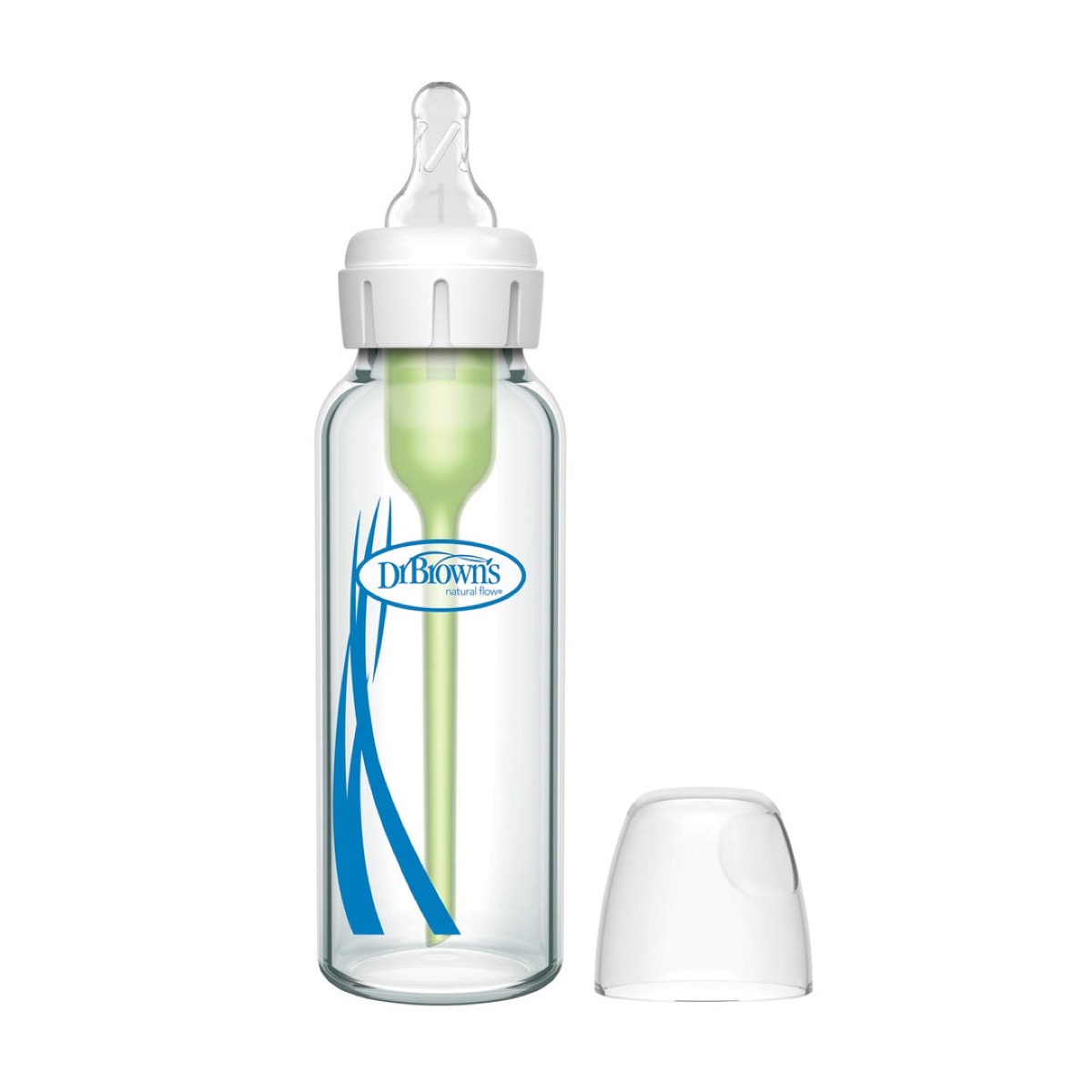
Dr. Brown's
Borosilicate glass releases zero microplastics during sterilization — unlike plastic bottles, which shed up to 16 million particles per cycle.
$$$Our price tier
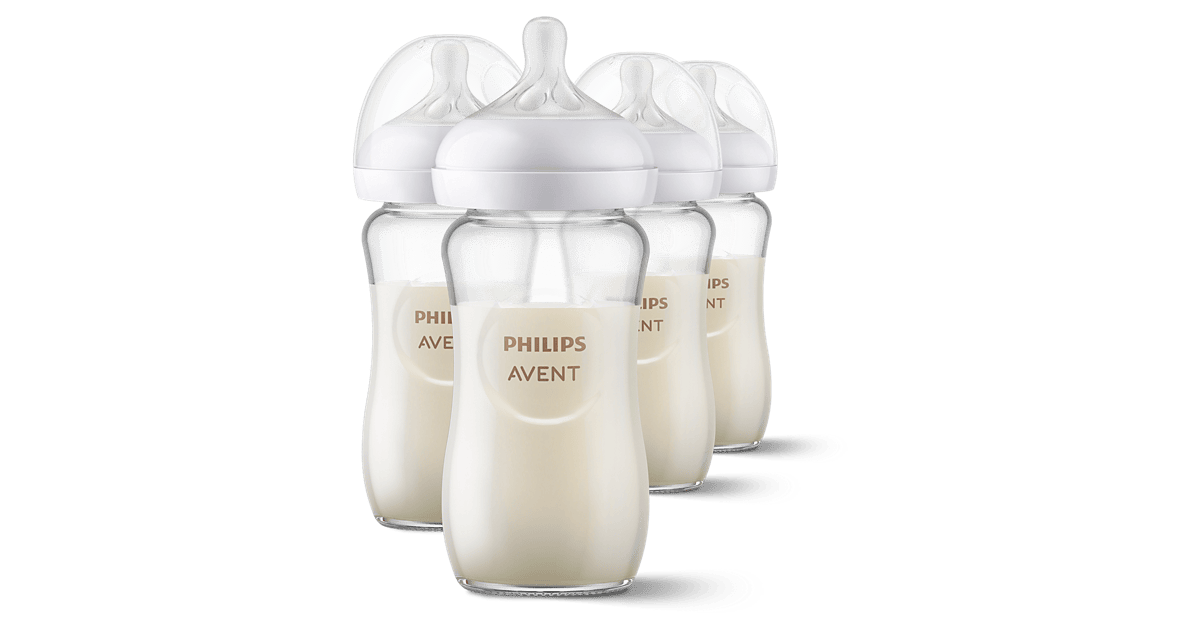
Glass feeding bottle with a silicone nipple, so milk is heated and held in glass rather than plastic. The screw collar is plastic, which is true of every glass bottle on the market.
As an Amazon Associate I earn from qualifying purchases — at no extra cost to you. We show a "Check price on Amazon" link rather than a number because Amazon prices change often.
Avoid heating milk in plastic bottles, and never microwave any bottle — it heats unevenly and scalds. The honest cost of glass is weight and breakage: a glass bottle dropped on tile breaks, and it is heavier for a baby learning to hold one. A silicone sleeve solves most of that.
Straight answer: we're a research team, not a testing lab. Here's exactly what our rating is based on — and what it isn't — so you can weigh it honestly.
Anything that adds a known microplastic, PFAS, or off-gassing source — a non-stick coating, a plastic surface against food or skin, vinyl/PVC — is downgraded or cut. We only list what clears that bar.
Borosilicate glass releases zero microplastics during sterilization — unlike plastic bottles, which shed up to 16 million particles per cycle.
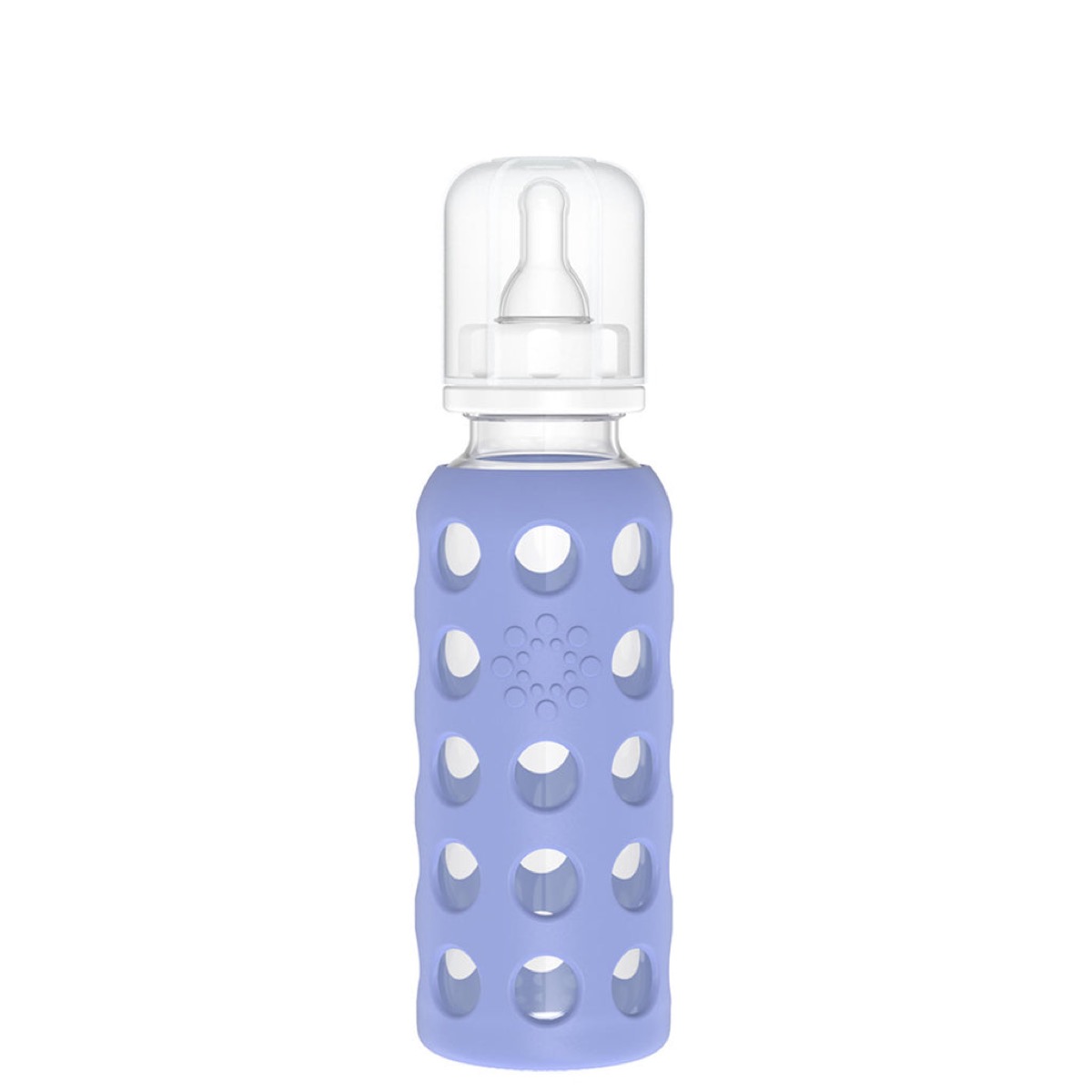
Glass bottle inside a silicone sleeve — the sleeve is what makes glass practical with a baby, because it grips and it contains the glass if it is dropped.
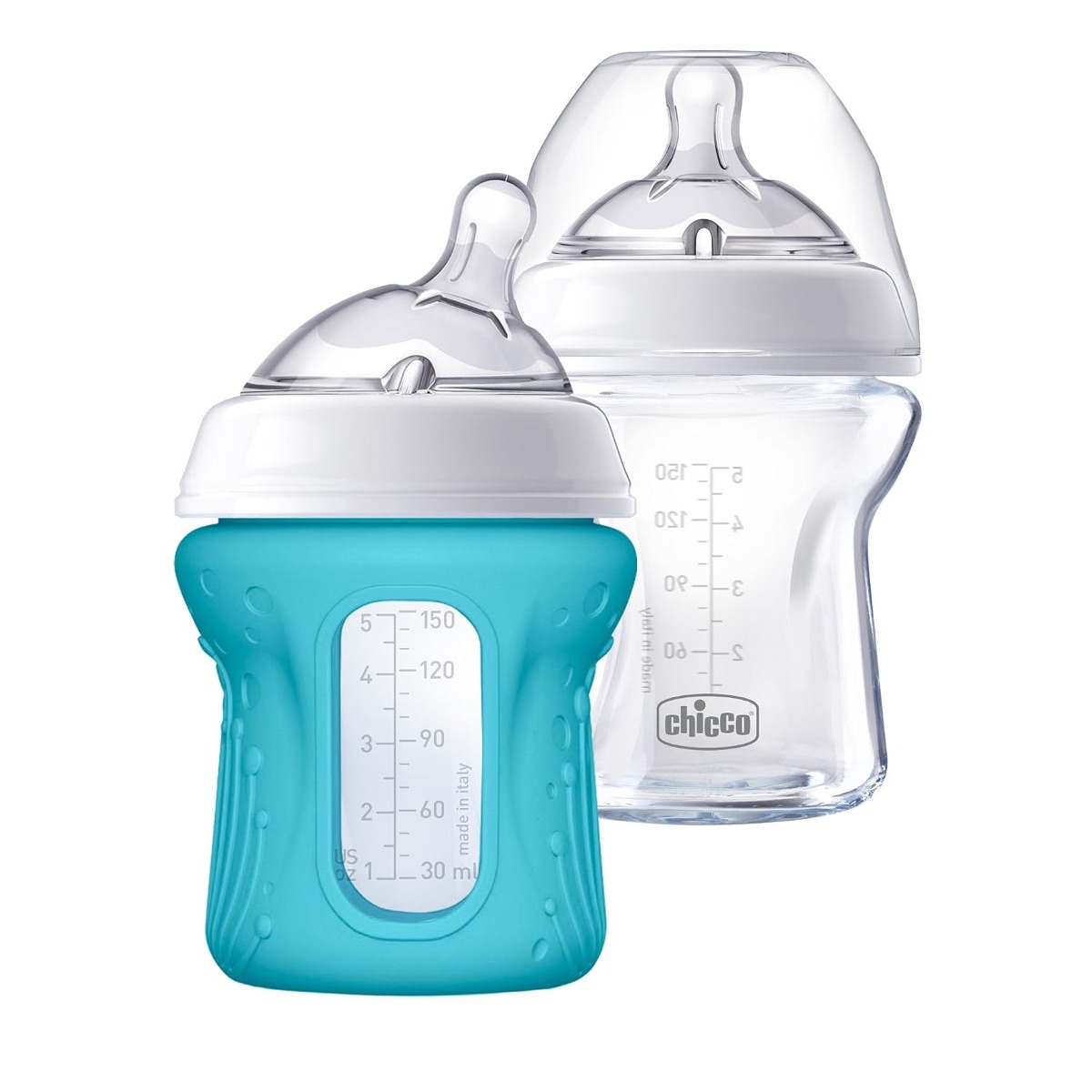
Glass bottle with a silicone sleeve included and an angled nipple designed for latch — glass for the milk, silicone for the mouth and the grip.
Affiliate disclosure: some links on this page are affiliate links. As an Amazon Associate I earn from qualifying purchases. We earn a small commission from qualifying purchases at no extra cost to you. This does not influence our recommendations — every product is selected based on peer-reviewed research.