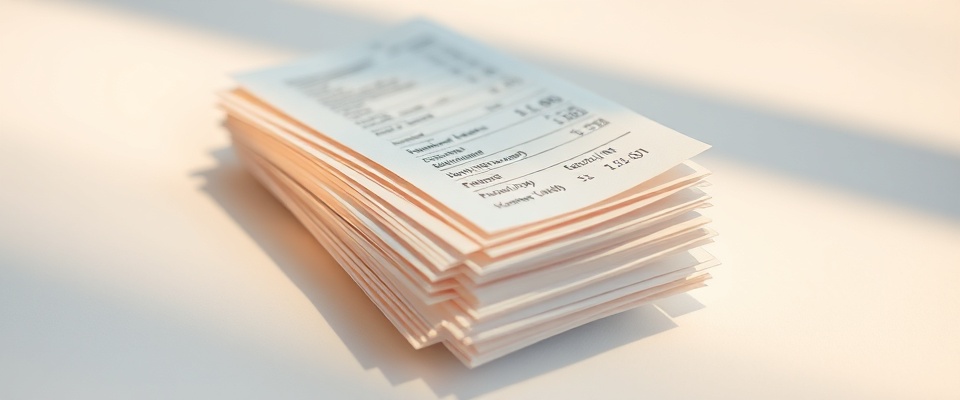
- Thermal receipt paper is coated with BPA or BPS that absorbs through skin in seconds — wet or recently sanitized hands increase absorption up to 100-fold.
- BPS ("BPA-free") replacements show similar endocrine-disrupting properties in research — the label is practically misleading.
- Request digital receipts or decline paper receipts when possible — this eliminates the exposure entirely.
- Cashiers and workers who handle receipts all day face significantly higher cumulative exposure; nitrile gloves provide an effective barrier.
What Makes Thermal Paper Different
Most receipts, parking tickets, boarding passes, and shipping labels are printed on thermal paper. Unlike standard paper that relies on ink, thermal paper uses heat-sensitive chemicals embedded in its coating. When the print head of a cash register or self-checkout machine applies heat, those chemicals react and produce the dark text you see.
The key developer chemical in that coating has, for decades, been bisphenol A (BPA). BPA is the same compound that triggered widespread concern in baby bottles and food can linings. In thermal paper, it is not locked inside a hard plastic polymer. It sits on the surface as a free, unbound powder — which is exactly why it transfers so easily to anything it touches, including your fingers.
A landmark 2011 study by Chunyang Liao and Kurunthachalam Kannan, published in Environmental Science & Technology, tested 103 thermal receipt papers collected from stores across the United States, Japan, Korea, and Vietnam. They found BPA in 94% of U.S. receipts at concentrations ranging from 0.8 to 13.9 milligrams per gram of paper. To put that in context, a single receipt can contain roughly 250 to 1,000 times more BPA than a polycarbonate water bottle.
BPA-Free Does Not Mean Safe
As public awareness of BPA grew, many paper manufacturers switched to bisphenol S (BPS) as a replacement developer. Products and receipts began carrying "BPA-free" labels. But the research tells a more complicated story.
BPS has a nearly identical molecular structure to BPA and binds to the same estrogen receptors. Multiple studies have shown it disrupts hormone signaling at similar or even lower concentrations. We covered this problem in depth in our article on why "BPA-free" labels can be misleading.
Liao and Kannan's study also detected BPS in many of the receipts that did not contain BPA, confirming that the industry was simply swapping one bisphenol for another. The total bisphenol load on thermal paper has not meaningfully decreased — it has just changed names.
Important: "BPA-free" thermal paper almost always contains BPS or another bisphenol analogue. The health implications of these substitutes are still being studied, but early evidence suggests they carry similar endocrine-disrupting risks. Do not assume a "BPA-free" receipt is harmless.
How BPA Enters Your Body Through Your Skin
You might assume that briefly touching a receipt is trivial. After all, you hold it for a few seconds, stuff it in a bag, and move on. But dermal absorption of BPA from thermal paper happens faster than most people realize.
A 2010 study by Biedermann, Tschudin, and Grob, published in Analytical and Bioanalytical Chemistry, demonstrated that simply holding thermal receipt paper for five seconds transferred roughly 1 microgram of BPA to a fingertip. Holding it for 60 seconds with wet or greasy fingers transferred approximately 10 times that amount. The researchers noted that BPA transfer was dramatically accelerated by moisture, oils, and lotions on the skin.
The Hand Sanitizer Problem
This is where the research gets especially concerning. A 2014 study by Annette M. Hormann and colleagues, published in PLOS ONE, investigated what happens when people use hand sanitizer before handling receipts — something millions of people do every day, particularly since the pandemic normalized frequent hand sanitizing.
The results were striking. Hand sanitizer increased the skin's absorption of BPA by a factor of roughly 100. Participants who used hand sanitizer and then held thermal paper for just a few seconds absorbed enough BPA to produce detectable increases in urinary BPA levels. When those same participants then handled French fries (mimicking a common fast-food scenario), BPA from their hands transferred to the food, adding an oral exposure pathway on top of the dermal one.
Key finding: Hormann et al. (2014) showed that using alcohol-based hand sanitizer before touching a receipt can increase BPA absorption through the skin by approximately 100-fold. The combination of hand sanitizer and receipt handling is one of the most significant acute BPA exposure events in everyday life.
The mechanism is straightforward. Hand sanitizers contain penetration-enhancing ingredients — primarily ethanol and sometimes propylene glycol — that temporarily disrupt the skin's lipid barrier. When the barrier is compromised, free BPA powder on the receipt surface passes through the outer skin layers and enters the bloodstream far more efficiently.
Occupational Exposure: The Cashier Problem
If brief, occasional receipt handling raises concerns, consider the exposure profile of someone who handles thermal paper all day long. Cashiers, bank tellers, parking attendants, and warehouse workers who process shipping labels have among the highest occupational exposures to bisphenols.
Multiple biomonitoring studies have found that retail cashiers have significantly higher urinary BPA concentrations than the general population. A study of cashiers in the United States found their BPA levels were 30% higher on workdays compared to days off. The difference was even more pronounced for workers who did not wear gloves.
This is not just a matter of touching receipts. Thermal paper dust accumulates on counter surfaces, cash drawers, and hands throughout a shift. Workers touch their faces, eat meals, and handle other objects — all of which create secondary transfer pathways. The cumulative daily dose for a full-time cashier can be several times higher than for the average consumer who touches a few receipts per week.
For anyone who handles receipts frequently as part of their job, wearing nitrile gloves is one of the most effective protective measures available. Latex gloves are less effective because BPA can permeate latex more readily. Nitrile provides a reliable barrier.
Powder-free nitrile gloves create an effective barrier between thermal paper and skin. Ideal for cashiers, warehouse workers, or anyone who handles receipts frequently. Look for gloves that are at least 4 mil thick for reliable protection.
Search on Amazon Check Price on Amazon →✓ Ships free with Prime · Free returns · Amazon A-to-z purchase guarantee (on eligible items)
Beyond Receipts: Where Else Is Thermal Paper Hiding?
Receipts are the most common source of thermal paper exposure, but they are not the only one. The same BPA- or BPS-coated paper is used in:
- ATM transaction slips
- Parking garage tickets
- Airline boarding passes (printed at kiosks)
- Movie and event tickets
- Shipping labels (thermal-printed labels on packages)
- Lottery tickets
- Queue number tickets (deli counters, government offices)
- Credit card terminal paper
A useful rule of thumb: if the paper is smooth, glossy, and printed without visible ink cartridges, it is likely thermal paper. You can test by scratching it with a fingernail — thermal paper will leave a dark mark from the friction heat.
The Broader Hormone Disruption Picture
BPA and BPS belong to a class of chemicals known as endocrine disruptors. They mimic estrogen in the body, binding to estrogen receptors and interfering with the hormonal signaling that regulates reproduction, metabolism, immune function, and neurological development. This is the same mechanism behind the research connecting plastic-derived chemicals to microplastics and fertility.
Even at very low doses — levels once considered safe by regulators — bisphenols have been linked in peer-reviewed research to a range of health concerns. We explore the broader relationship between plastics and hormonal health in our guide to microplastics and hormones.
Receipt exposure is just one pathway, but it is a significant one because it delivers free, unbound BPA directly into the body through the skin. Unlike BPA that leaches slowly from a plastic container, the BPA on thermal paper is immediately bioavailable.
Context: This article is for informational purposes only and does not constitute medical advice. If you have specific health concerns related to chemical exposure, consult a qualified healthcare professional.
How to Reduce Your Receipt Exposure
The good news is that reducing your exposure to bisphenols from thermal paper is straightforward. Here are practical steps ranked from easiest to most impactful:
1. Decline the Receipt
The single most effective step is to not take the receipt at all. Most everyday purchases — coffee, groceries, gas — do not require a paper receipt. Many stores now ask "Would you like a receipt?" at checkout. Say no. If you need a record, use your bank or credit card statement.
2. Choose Digital Receipts
When a store offers email or text receipts, opt in. Major retailers including Target, Walmart, Apple, and most grocery chains now offer digital receipt options. These eliminate thermal paper contact entirely and make expense tracking easier.
3. Never Handle Receipts After Using Hand Sanitizer
Based on the Hormann et al. research, this is one of the most important behavioral changes you can make. If you have just sanitized your hands, do not touch thermal paper until your hands are completely dry and the sanitizer has fully evaporated — ideally, wait at least two minutes. Better yet, decline the receipt.
If you run a small business or manage a point-of-sale system, switching to phenol-free (BPA- and BPS-free) thermal paper is one of the most impactful changes you can make — for yourself and your customers. These rolls use Pergafast or similar non-bisphenol developer coatings and fit standard 80mm receipt printers.
Search on Amazon Check Price on Amazon →✓ Ships free with Prime · Free returns · Amazon A-to-z purchase guarantee (on eligible items)
4. Wash Your Hands After Handling Receipts
If you do handle a receipt, wash your hands with soap and water as soon as practical — especially before eating or touching your face. Soap and water removes surface BPA effectively. A good-quality hand wash that is free of additional endocrine disruptors is ideal.
Choose a plant-based, fragrance-free hand soap without synthetic fragrances, parabens, or triclosan. These reduce the total chemical load on your skin while effectively removing BPA residue from receipt handling.
Search on Amazon Check Price on Amazon →✓ Ships free with Prime · Free returns · Amazon A-to-z purchase guarantee (on eligible items)
5. Do Not Crumple Receipts Into Your Pocket or Wallet
Storing thermal paper in your pocket creates prolonged skin contact through the fabric. Storing it in your wallet contaminates other items — cash, cards, IDs — with BPA residue. If you must keep a receipt, fold it with the printed side inward and place it in a separate compartment or envelope.
If you need to keep receipts for taxes, warranties, or expense tracking, a compact scanner lets you digitize them immediately without prolonged handling — then discard the paper. Feed-through scanners compatible with most thermal paper widths save your records as searchable PDFs without repeated skin contact.
Search on Amazon Check Price on Amazon →✓ Ships free with Prime · Free returns · Amazon A-to-z purchase guarantee (on eligible items)
6. Keep Receipts Away From Children
Children are more vulnerable to endocrine disruptors due to their lower body weight and developing hormonal systems. Do not let children play with or hold receipts. If a child handles a receipt, wash their hands promptly.
7. Do Not Recycle Thermal Paper
This surprises many people, but thermal receipts should go in the trash, not the recycling bin. When BPA-coated thermal paper enters the recycling stream, it contaminates the entire batch of recycled paper. Studies have found elevated BPA levels in recycled paper products including napkins, paper towels, and even food packaging made from recycled content.
Do not recycle receipts. Thermal paper contaminates the recycling stream with BPA/BPS. Place receipts in the general waste bin to prevent bisphenols from spreading to recycled paper products.
8. If You Handle Receipts at Work, Wear Nitrile Gloves
For cashiers, bank tellers, and anyone whose job involves continuous receipt handling, nitrile gloves are the most practical defense. Change gloves regularly throughout your shift, and wash your hands when you remove them.
Building a Lower-Exposure Routine
Reducing thermal paper exposure fits into a broader strategy of minimizing contact with everyday sources of microplastics and endocrine disruptors. If you are already taking steps to filter your water, choose safer food storage, and avoid synthetic fragrances, adding receipt awareness to your routine is a natural next step.
For a comprehensive, room-by-room approach to reducing your plastic and chemical exposure, see our guide on how to detox microplastics from your daily life.
One practical addition to your routine: keep a small bottle of natural hand soap at your desk or in your bag for post-receipt hand washing when a full sink is not available. Foaming hand soap in a travel-size bottle works well for this purpose.
Keep a travel-size natural foaming hand wash in your bag, car, or desk drawer. Useful for washing BPA residue off your hands after handling receipts, tickets, or shipping labels when you are away from home.
Search on Amazon Check Price on Amazon →✓ Ships free with Prime · Free returns · Amazon A-to-z purchase guarantee (on eligible items)
As the Hormann et al. study showed, BPA from receipts on your hands can transfer directly to food. Switching to glass food storage containers eliminates a secondary contamination pathway — BPA from your hands or from plastic containers leaching into leftovers. Borosilicate glass with silicone lids is our preferred choice: no plastic contact with food surfaces at all.
Search on Amazon Check Price on Amazon →✓ Ships free with Prime · Free returns · Amazon A-to-z purchase guarantee (on eligible items)
What Needs to Change Systemically
Individual behavior changes are valuable, but they are not sufficient on their own. Thermal paper manufacturers have viable alternatives that do not require bisphenol developers. Pergafast 201, for example, is a non-bisphenol developer that several paper companies have adopted. The European Union has moved to restrict BPA in thermal paper under REACH regulations, and some jurisdictions have banned it outright.
Advocacy matters. When you decline a receipt and tell the cashier why, when you email a retailer asking them to switch to bisphenol-free paper or digital-first receipts, you contribute to the demand signal that drives industry change. Several major U.S. retailers have already made the switch after sustained consumer pressure.
The long-term solution is a combination of better regulation, industry reformulation, and the continued shift toward digital receipts. Until that transition is complete, awareness and simple behavioral changes can significantly reduce your personal exposure.