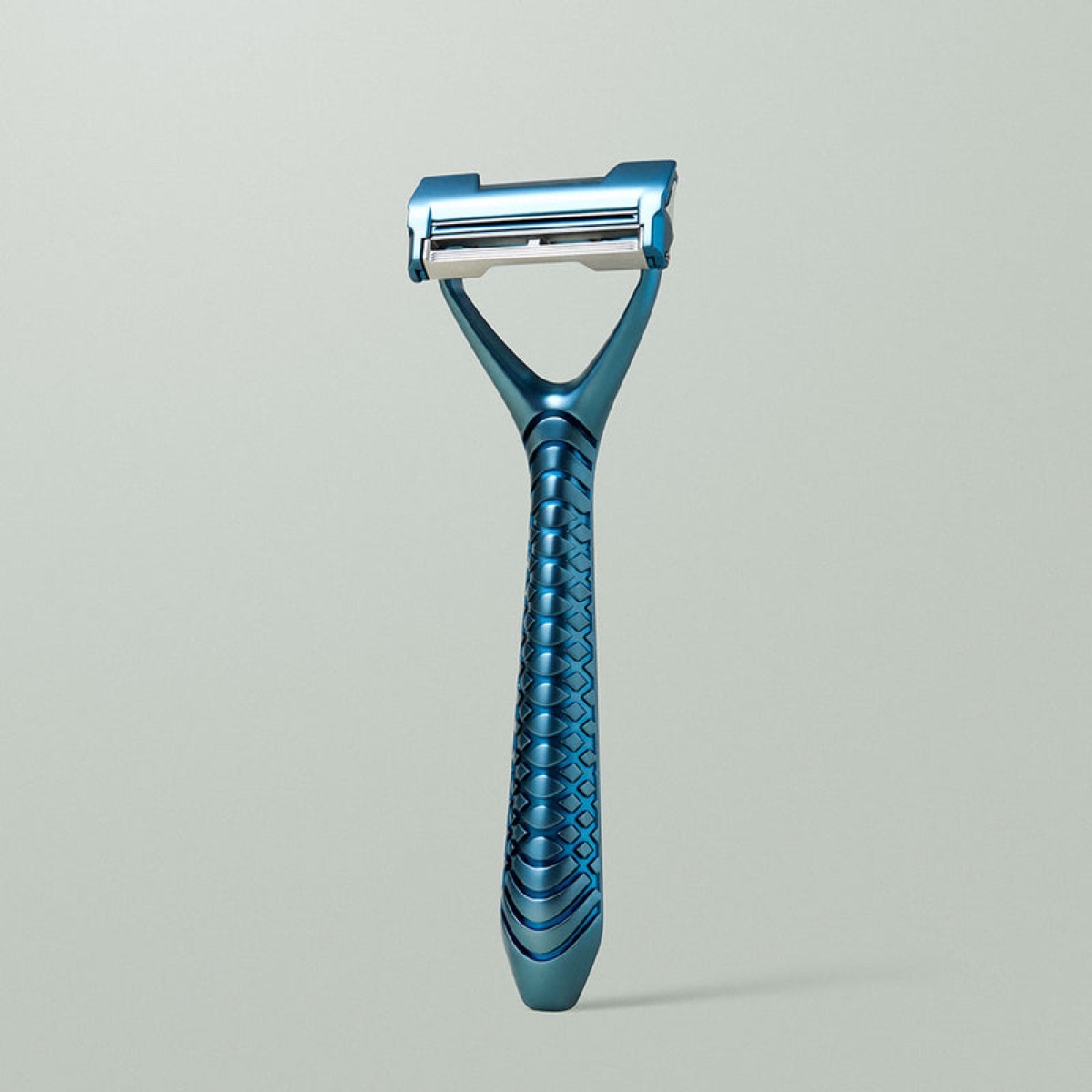
Leaf Shave Razor
All-metal pivoting razor eliminates disposable plastic razors. Uses standard double-edge blades — zero plastic waste, zero microplastic shedding.
As an Amazon Associate I earn from qualifying purchases — at no extra cost to you. We show a "Check price on Amazon" link rather than a number because Amazon prices change often.
Why it's safe for your family
- The razor body is all metal — zinc alloy and stainless steel, with brass and magnets in the head — so there is no plastic handle or plastic cartridge to wear down and discard.
- It takes standard double-edge safety razor blades, which are plain steel with no plastic lubrication strip or plastic cartridge housing.
- Because the blades are a commodity standard, you are never locked into one brand's proprietary plastic cartridge.
- Leaf states the pivot mechanism is tested past 1.1 million cycles, so the handle is built to outlast years of blade changes rather than be replaced.
Is this really plastic-free? Yes — and here's why
A disposable cartridge razor is mostly plastic by weight — the handle, the cartridge shell, the guard bar and the lubrication strip — and all of it is thrown away every few weeks. This razor moves everything except the blade into metal, and the blade itself is plain steel with no plastic parts attached to it.
What you throw away: a bare steel blade. Everything else is metal and stays.
Quick specs
What to avoid instead
This replaces disposable and cartridge razors, where a plastic cartridge with a lubricating strip is discarded every few weeks and the plastic handle eventually follows it.
How we verify — and what we don't
Straight answer: we're a research team, not a testing lab. Here's exactly what our rating is based on — and what it isn't — so you can weigh it honestly.
What we check
- What the product is made of, from the maker's own specs and product listing.
- Whether any part that touches you or your food uses PTFE, PFAS, plastic, or a coating that can degrade.
- Peer-reviewed research on how that material behaves when heated, scratched, washed, or worn.
- Known failure modes — how the product actually breaks down in a real home.
What we don't do
- We have not chemically tested this specific unit in a lab.
- We don't take payment to rate a product higher — there is no sponsored placement.
- We don't show star ratings or "trusted by thousands" counts we can't stand behind.
Anything that adds a known microplastic, PFAS, or off-gassing source — a non-stick coating, a plastic surface against food or skin, vinyl/PVC — is downgraded or cut. We only list what clears that bar.